
215kWh BESS Container for Construction Sites: Real-World Case Study & Cost Savings
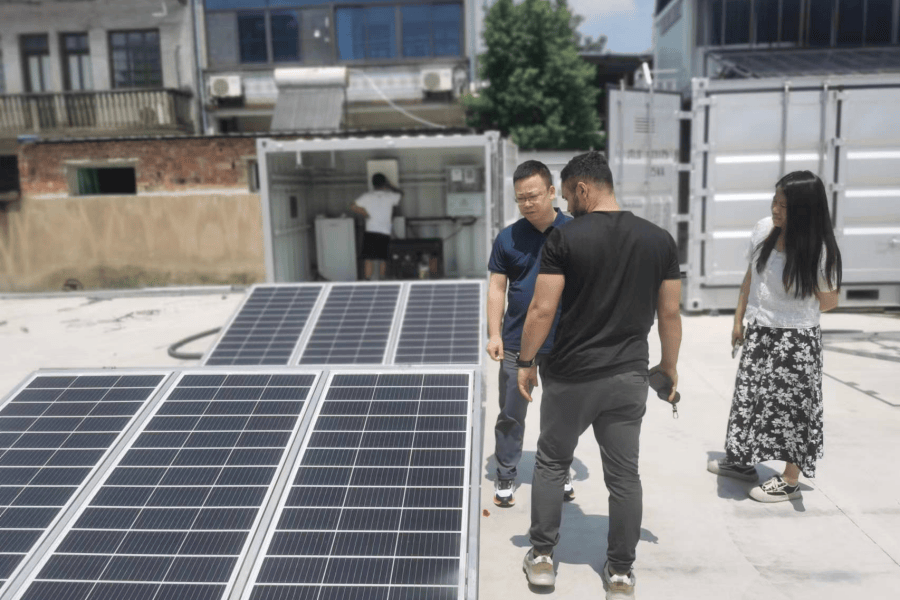
Table of Contents
- The Silent Power Problem on Every Construction Site
- When the Diesel Generator Bills Start to Add Up
- A Mobile, Smarter Solution: The 215kWh Energy Storage Cabinet
- Case Study: A 12-Month Build in Remote Texas
- The Tech Made Simple: Why This Container Works
- Thinking Beyond the Construction Fence
The Silent Power Problem on Every Construction Site
Let's be honest, when you're managing a construction project, power is often an afterthought. You need it for tools, site offices, lighting, and security. The default answer for decades? The diesel generator. It's loud, it's smelly, and honestly, on a remote site, it feels like the only option. I've been on sites from Nevada to North Rhine-Westphalia where the generator's hum is the background noise to progress.
But here's the phenomenon we're seeing more of: project managers and sustainability officers are pushing back. It's not just about the noise complaints from neighbors or the carbon footprint, though those are huge drivers, especially in Europe. It's about pure, hard economics and operational reliability. The traditional power setup for off-grid or weak-grid sites is becoming a complex, expensive headache.
When the Diesel Generator Bills Start to Add Up
Let's agitate that pain point a bit. I've seen this firsthand on site. A generator isn't a "set it and forget it" solution. You have fuel delivery logistics, which can be a nightmare in bad weather or on unimproved roads. Fuel theft is a real concern. The maintenance schedules are relentless - oil changes, filter replacements, major overhauls. And the efficiency? Terrible. A generator running at 20-30% load burns fuel almost as inefficiently as one at 80% load. You're literally burning money.
The International Energy Agency (IEA) has highlighted that diesel generators are among the least efficient and most polluting ways to produce electricity, a stark contrast to global decarbonization goals. On the financial side, the Levelized Cost of Electricity (LCOE) for a diesel generator - when you factor in all those fuel, maintenance, and capital costs - can be surprisingly high and wildly volatile, tied directly to diesel prices.
A Mobile, Smarter Solution: The 215kWh Energy Storage Cabinet
This is where the solution we deployed in our case study comes in. It's not about ripping out all generators overnight. It's about smart hybridization or even full replacement for a significant portion of the day. The core of this solution is a containerized, 215kWh Battery Energy Storage System (BESS). Think of it as a giant, silent, mobile power bank for your site.
At Highjoule, we designed this cabinet system with mobility and toughness in mind. It's built into a standard shipping container footprint for easy transport by truck, and it's engineered to meet the rigorous UL 9540 and IEC 62933 standards for safety that are non-negotiable in the US and EU markets. This isn't a prototype; it's a hardened, commercial product we've deployed in the field.
Case Study: A 12-Month Build in Remote Texas
Let me walk you through a real project. We deployed a 215kWh container for a utility-scale solar farm construction site in West Texas. The challenge: The nearest grid connection point was over 5 miles away. Tying in would have cost hundreds of thousands and taken months for permits and construction. The initial plan was a fleet of large diesel gensets.
Our solution: We paired a single 215kWh BESS container with a smaller, 50kW solar canopy built over the site office parking area. The system was configured to:
- Power the entire site office (AC, lighting, computers, small tools) directly from the battery/solar combo during the day.
- Use the battery to handle the high inrush currents from large equipment starts (like concrete mixers), which would normally cause a generator to lug and stall.
- At night, a much smaller generator than originally planned would kick in purely to recharge the battery at its optimal, efficient load point. It ran for 4-5 quiet hours instead of 24/7.
The results were stark:
| Diesel Fuel Consumption | Reduced by ~70% |
| Generator Runtime & Maintenance | Reduced by ~80% |
| Site Noise Pollution | Dramatically lowered, improving worker communication |
| Total Energy Cost (LCOE) for Site Ops | Reduced by an estimated 40% over the project life |
The project manager told me the biggest unexpected benefit was reliability. No more midday refueling stops halting critical path work. The power was just?- always on.

The Tech Made Simple: Why This Container Works
For the non-engineers making budget decisions, here's the expert insight on what makes this click. It boils down to three things: Battery Chemistry & C-rate, Thermal Management, and Intelligent Control.
We use Lithium Iron Phosphate (LFP) chemistry. Honestly, it's the workhorse for this job. It's inherently safer, has a longer lifespan, and can handle the high "C-rate" bursts needed for power tools. (C-rate is just a fancy term for how fast you can charge or discharge the battery safely).
Thermal management is everything. In a Texas summer or a German heatwave, a poorly cooled battery degrades fast. Our system uses a liquid cooling loop that keeps every cell within a perfect 2-3 degree band. This is the secret to hitting that 10+ year design life and ensuring safety, a core part of our UL certification strategy.
Finally, the brain: the energy management system (EMS). It doesn't just react; it learns the site's load patterns. It knows when to draw from solar, when to use the battery, and when to optimally fire up the backup generator for recharge. This intelligence is what turns a battery box into a true power solution.
Thinking Beyond the Construction Fence
The beauty of this containerized approach is its second life. Once the construction site is gone, this asset isn't scrap. We've had clients redeploy them as backup power for rural clinics, as grid-support units for small municipalities, or as the core of a permanent microgrid. The LCOE keeps improving because the capital cost is amortized over 15-20 years, not just one project.
So, the next time you're budgeting for site power, ask yourself: Are we just paying for diesel, or are we investing in a power asset? The calculus has changed. What would a 40% cut in your on-site energy costs do for your project's bottom line - and your sustainability targets?
Tags: Construction Site Power Energy Storage Container UL Standard BESS LCOE Microgrid Case Study
Author
James Zhang
20+ years agricultural energy storage engineer / Highjoule CTO