
All-in-One BESS Container for Coastal Salt-Spray: A Real-World Case Study
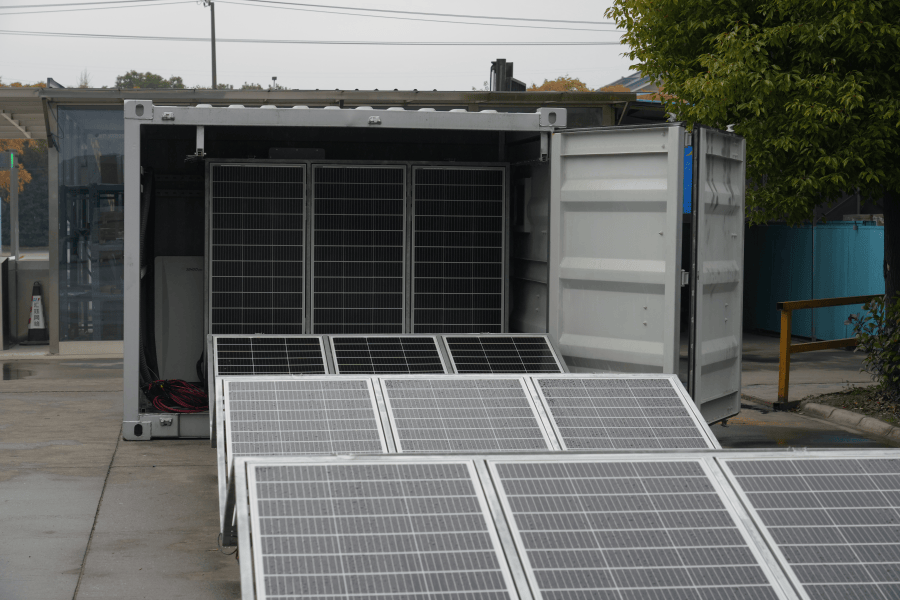
Table of Contents
- The Silent Killer on Your Coastline
- Beyond Rust: The Real Cost of Corrosion
- The All-in-One Answer: More Than Just a Box
- Case Study: A North Sea Microgrid's Lifeline
- From the Field: Engineering Insights That Matter
- Making the Right Choice for Your Coastal Site
The Silent Killer on Your Coastline
Let's be honest. When we talk about deploying battery energy storage systems (BESS) near the coast, everyone's first thought is about harnessing offshore wind or solar. The conversation is all about energy yield and grid stability. But after twenty-plus years of doing this, from the Gulf of Mexico to the North Sea, I can tell you there's a silent, relentless threat that gets overlooked until it's too late: salt spray.
It's not just about a bit of sea air. We're talking about a fine, pervasive mist of chloride ions that settles on every surface, penetrates every tiny gap, and initiates a chemical attack on your most critical C and expensive C assets. I've seen this firsthand on site: control cabinets with mysterious faults, cooling fans seizing up, and electrical contacts degrading faster than anyone predicted. The phenomenon is universal for coastal deployments, but the preparedness? That varies wildly.
Beyond Rust: The Real Cost of Corrosion
The problem isn't merely cosmetic rust. The agitation here is operational and financial. Salt-induced corrosion compromises safety systems, leads to unplanned downtime, and drastically shortens the asset's life. According to a NREL report on durability challenges, corrosion from environmental stressors is a leading cause of performance degradation in outdoor energy systems, potentially increasing lifetime costs by 20% or more. Think about that for your project's LCOE (Levelized Cost of Energy).
For a standard containerized BESS not built for this environment, you're looking at a constant cycle of: specialized (and costly) coatings, more frequent filter changes for thermal management systems, accelerated component replacement, and heightened fire safety risks from compromised electrical connections. It turns a "set-and-forget" asset into a high-maintenance liability.
The All-in-One Answer: More Than Just a Box
This is where the concept of a purpose-built, all-in-one integrated lithium battery storage container shifts from a nice-to-have to a non-negotiable solution. At Highjoule, when we design for coastal salt-spray environments, we're not just taking a standard container and painting it a different color. We're engineering a holistic defensive system.
The core philosophy is integration and isolation. The entire power conversion system (PCS), battery racks, and thermal management are housed in a single, sealed, and positively pressurized enclosure. This isn't just about the external shell meeting IEC 60068-2-52 or UL 50E for salt fog corrosion resistance. It's about every component inside C from the busbars to the battery management system's circuit boards C being selected or treated for a corrosive atmosphere. Our thermal management, for instance, uses a closed-loop liquid cooling system. This keeps the internal environment pristine and stable, which is absolutely critical for both battery longevity and maintaining the designed C-rate (the rate of charge/discharge) consistently, even when it's humid and salty outside.
Case Study: A North Sea Microgrid's Lifeline
Let me give you a concrete example from a project we completed last year. A remote fish processing plant and community microgrid on the Norwegian coast. Their challenge was twofold: integrate fluctuating local wind generation and provide critical backup power during storms. Their old diesel gensets were failing precisely when needed most C salt clogging the air intakes and corroding electrical panels.
The challenge was the site's extreme exposure. Winds regularly carried heavy salt spray directly over the intended pad location. A standard BESS would have been a capital risk.
Our solution was a 2 MWh all-in-one Highjoule Seaguard container. The deployment details mattered:
- Enclosure: The container used a specialized marine-grade aluminum alloy cladding with a multi-stage coating system, tested to exceed 1000 hours of salt spray testing.
- Internal Environment: We implemented a NEMA 4X rated, positive pressure system with chemical filtration to scrub incoming air of salt particles before it entered the main chamber for cooling electronics.
- Safety & Compliance: Every electrical component, down to the wire terminations, was chosen for corrosion resistance. The entire system was certified to UL 9540 and UL 1973, but the build spec went beyond the standard checklist for this environment.
Eighteen months on, the system has operated with 99.8% availability, even through a brutal winter. The plant's manager told me the difference was night and day C they finally have a resilient asset that matches the harshness of their environment. The LCOE projection is now solid, with no nasty surprises for corrosion-related OPEX.

From the Field: Engineering Insights That Matter
So, what should you, as a decision-maker, really focus on? Here's my take, drawn from getting my boots dirty on these sites.
First, Thermal Management is your best friend or worst enemy. In a salty environment, air-cooled systems that suck in external air are asking for trouble. Salt builds up on heat exchangers and fans, reducing efficiency until failure. A sealed, liquid-cooled system protects the batteries and the cooling system itself. It maintains optimal temperature for cell life and allows you to sustain high C-rates when the grid or the microgrid needs it, without worrying about external contamination.
Second, think in terms of system-level certification. It's great if the container is rated, but what about the PCS inside? The fire suppression system? Demand that your provider demonstrates compliance for the integrated unit under relevant UL and IEC standards for both safety and environmental durability. This isn't just paperwork; it's a proxy for rigorous engineering.
Finally, consider the total lifecycle. A slightly higher CAPEX for a truly hardened system saves multiples in OPEX, avoids catastrophic downtime, and protects your revenue stream or critical services. That's how you genuinely optimize LCOE in harsh conditions.
Making the Right Choice for Your Coastal Site
Deploying storage near the coast isn't just about the energy economics. It's a materials science and environmental engineering challenge. The "all-in-one" approach succeeds because it treats the container as a unified protective ecosystem, not just a housing.
At Highjoule, this mindset is baked into our design process for projects from California to the Baltic. We've learned that you can't bolt on corrosion protection as an afterthought. It has to be integral. So, the next time you're evaluating a BESS for a coastal site, don't just ask about the battery chemistry and price per kWh. Ask about the coating specs, the IP and NEMA ratings of internal components, the filtration on the thermal management, and demand to see the salt fog certification reports. Your future self, looking at a healthy, high-performing asset a decade from now, will thank you.
What's the single biggest environmental challenge you're facing at your proposed deployment site?
Tags: Energy Storage Container UL Standard BESS LCOE Salt-Spray Corrosion Coastal Microgrid
Author
James Zhang
20+ years agricultural energy storage engineer / Highjoule CTO