
All-in-One PV Storage for Military Bases: Solving Grid Resilience & Cost Challenges
Quick Navigation
- The Silent Problem: Mission-Critical Sites on a Fragile Grid
- Beyond the Spreadsheet: The Real Cost of "Standard" Solutions
- The Integrated Approach: Why All-in-One Changes the Game
- Case in Point: A European Forward Operating Base
- Key Technical Insights (For the Non-Engineer)
- Making It Work: Standards, Safety, and Long-Term Thinking
The Silent Problem: Mission-Critical Sites on a Fragile Grid
Let's be honest. When we talk about energy resilience, most commercial discussions center on peak shaving and demand charge reduction. Important, sure. But there's a tier of clients where the stakes are fundamentally different. I'm talking about military installations, communication hubs, and remote operational bases. For them, a power outage isn't a line item on a utility bill; it's a direct threat to operational readiness and personnel safety.
Here's the phenomenon I've seen firsthand across projects in the US and Europe: these sites are often caught between two bad options. They're either 100% reliant on the public grid - which, as we all know, is aging and increasingly vulnerable to both weather and... let's call it "human factors" - or they're running on 24/7 diesel generators. The first option is a single point of failure. The second is a logistical nightmare, incredibly expensive, and frankly, a tactical liability with its constant fuel convoys and thermal signature.
Beyond the Spreadsheet: The Real Cost of "Standard" Solutions
This is where the agitation really sets in. The traditional approach has been to bolt systems together: a solar array here, a bank of generators there, maybe a standalone battery storage unit from a different vendor over there. I've been on sites where the integration was an afterthought. The result? Complexity. Every additional interface - between PV inverters, battery management systems, and generator controllers - is a potential failure point. The system-level efficiency drops. The communications get messy. And when something goes wrong, you have multiple vendors pointing fingers.
From a pure cost perspective, the Levelized Cost of Energy (LCOE) for a pieced-together system with heavy diesel dependence is astronomically high over 15-20 years. You're not just buying fuel; you're paying for transport, security for that transport, maintenance on gen-sets, and the emissions compliance headache. The National Renewable Energy Lab (NREL) has shown that hybrid renewable+storage microgrids can reduce fuel use by over 50% in forward operating environments. That's not just savings; that's a massive reduction in risk.

The Integrated Approach: Why All-in-One Changes the Game
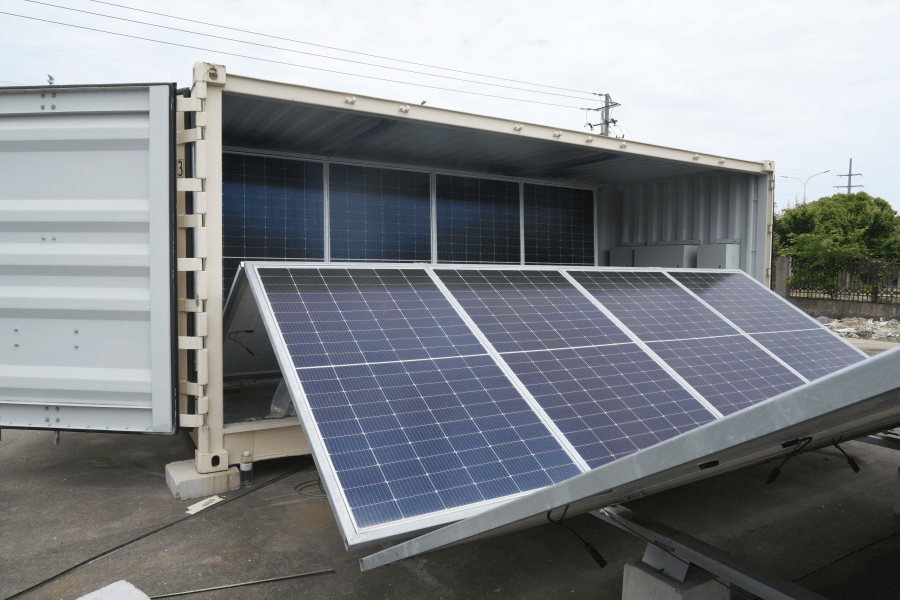
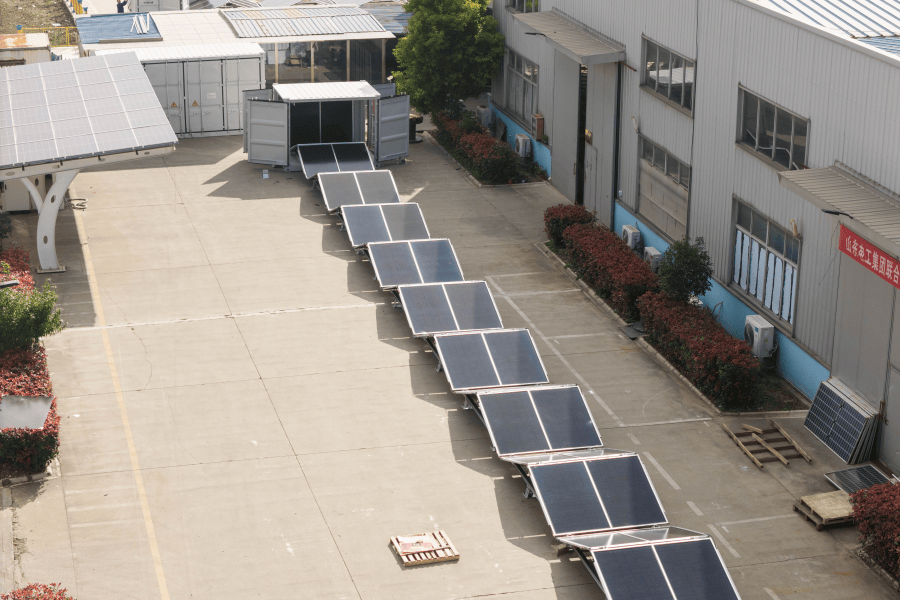
This brings us to the solution that's proving itself on the ground: the all-in-one integrated photovoltaic storage system. The core idea is simple but powerful: design the PV generation, battery storage, power conversion, and advanced control system as a single, pre-engineered, factory-tested unit. It's not a collection of parts; it's a purpose-built energy appliance.
For a military base commander or a facilities manager at a critical site, this shift is transformative. Suddenly, you're not managing a power plant; you're operating a tool. The system is designed to do one thing flawlessly: provide predictable, secure, and resilient power with minimal operator intervention. It turns sunlight and batteries into a reliable, dispatchable asset that can black-start a site, ride through grid outages for hours or days, and do it all while slashing that punishing LCOE.
Case in Point: A European Forward Operating Base
I can't name the specific base for obvious reasons, but I can walk you through a real project we at Highjoule Technologies completed recently in Southern Europe. The challenge was classic: a remote surveillance and communications post needed to cut its diesel dependence by 70% and achieve 72 hours of full autonomous operation during grid outages.
The old system was a patchwork. Our solution was a containerized, all-in-one unit housing:
- A high-density, UL 9540-certified battery rack (this safety standard is non-negotiable for indoor/adjacent deployments).
- Bi-directional inverters with built-in Maximum Power Point Tracking (MPPT) for the solar field.
- A unified control system that seamlessly orchestrated PV, batteries, and the existing backup generators - treating the gensets as a last resort, not the first.
The deployment was fast. Because it was pre-integrated and tested, we did the site work in weeks, not months. The real win? During acceptance testing, we simulated a three-day grid blackout. The system managed the load, cycled the batteries optimally, and only kicked on the generators for a brief period at night to top up the batteries - achieving an 85% fuel reduction versus the old operational mode. The commander's feedback was telling: "It's quiet, there's no fuel smell, and my energy team now has a simple dashboard instead of a library of incompatible manuals."
Key Technical Insights (For the Non-Engineer)
Let me break down two technical terms that matter in plain English:
1. C-rate & Thermal Management: The C-rate is basically how fast you charge or discharge a battery. For resilience, you sometimes need high power fast (a high C-rate). But doing that generates heat. If the heat isn't managed perfectly, it kills battery life and, in worst cases, creates a hazard. In an all-in-one system, the thermal management - the cooling system - is designed from day one for that specific battery chemistry and the expected duty cycle. It's not an add-on. This is something we obsess over in our designs at Highjoule, using liquid cooling for precise temperature control, which is why our systems can handle the harsh desert heat or freezing mountain temps without breaking a sweat.
2. LCOE in Action: Think of LCOE as the "true rent" you pay for each kilowatt-hour over the system's entire life. With an integrated system, the high upfront cost is offset by brutally low operating costs (sunlight is free), minimal maintenance (one vendor, one system), and long asset life (because of that careful thermal management). The integrated controls also "stack value" - using the same battery to provide backup power, time-shift solar, and stabilize the local microgrid - which drives the effective LCOE down even further.
Making It Work: Standards, Safety, and Long-Term Thinking
Deploying these systems isn't just about the hardware. It's about trust. For any critical infrastructure, especially in the market, compliance with UL, IEC, and IEEE standards is the baseline ticket to play. But it goes deeper. It's about designing for the site's specific threat profile - be it cyber security (IEC 62443 is key here), physical security, or electromagnetic pulse (EMP) hardening.
Our role as an provider doesn't end at delivery. The service model is critical. It means having local technicians who understand both the technology and the operational protocols of sensitive sites. It means remote monitoring that can predict a fan filter needing replacement before it causes an issue. It's this combination of a robust, pre-integrated product and localized, trusted support that turns a complex energy project into a reliable utility for the people who depend on it most.
The question for any organization managing critical assets isn't really "can we afford this?" anymore. Having stood next to these systems in the field, I'd argue the question has flipped: "Given what's at stake, can we afford not to think in terms of integrated, resilient energy solutions?" What's the single biggest vulnerability in your current power plan?
Tags: UL Standard BESS LCOE Photovoltaic Storage Microgrid Military Energy Security
Author
James Zhang
20+ years agricultural energy storage engineer / Highjoule CTO