
Black Start Capable BESS Container: A Game-Changer for Grid Resilience & Remote Electrification
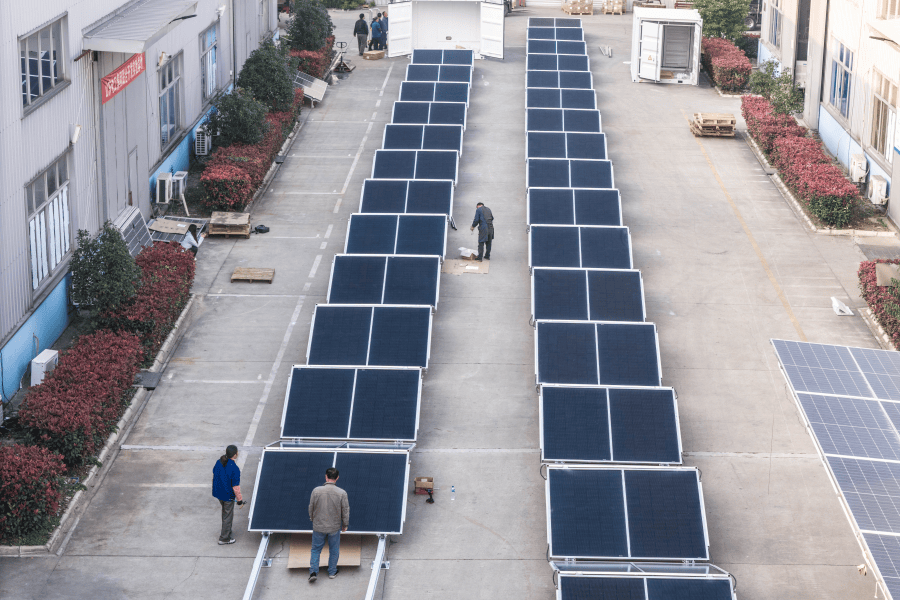
Table of Contents
- The Silent Problem: When the Grid Goes Dark, What's Your Plan?
- The Agitating Reality: The Staggering Cost of Unplanned Downtime
- A Solution From the Field: The "All-in-One" Power Plant in a Box
- Lessons from a Remote Island: A Philippines Case Study in Action
- Expert Deep Dive: Why "Black Start" is More Than Just a Buzzword
- Bringing It Home: Localizing the Solution for US & EU Markets
The Silent Problem: When the Grid Goes Dark, What's Your Plan?
Let's be honest. When we talk about energy storage in commercial or industrial settings here in the US or Europe, the conversation often starts with peak shaving and demand charge management. It's about the bottom line, and rightly so. But there's a more fundamental question lurking beneath the surface, one that gets painfully real during a hurricane, a wildfire-induced blackout, or even a major grid fault: what happens when the main grid completely collapses? Your beautiful, grid-following solar-plus-storage system? It goes quiet. It needs that grid reference to operate. Honestly, I've been on sites after major storms where the sun is shining, the panels are fine, but the facility is dark because the system can't "island" and restart on its own. This lack of true grid-forming and black start capability is a critical vulnerability we've been glossing over.
The Agitating Reality: The Staggering Cost of Unplanned Downtime
Now, let's amplify that pain with some hard numbers. According to a report by the National Renewable Energy Laboratory (NREL), power outages cost the U.S. economy tens of billions of dollars annually. For a data center, a manufacturing plant, or a critical community facility, minutes of downtime can translate into millions in lost revenue, spoiled product, or public safety risks. The traditional answer? Diesel generators. But they come with their own baggage: fuel supply chain issues, emissions, noise, maintenance headaches, and they're not exactly future-proof. We're building cleaner, smarter grids, yet our ultimate fallback is a 20th-century technology. There's a disconnect here.
And for remote electrification - think mining sites, agricultural processing hubs, or island communities - the challenge is even more pronounced. Deploying power infrastructure piece by piece (solar inverters over here, switchgear there, BESS somewhere else) in a remote location is a logistical and financial nightmare. Commissioning is slow, interoperability issues are rife, and the total installed cost balloons.
A Solution From the Field: The "All-in-One" Power Plant in a Box
This is where the concept of a pre-integrated, black start capable containerized solution moves from a nice-to-have to a game-changer. I'm not talking about a simple battery box. I'm describing a fully engineered, factory-tested microgrid in a shipping container. It combines high-density battery storage, a grid-forming inverter, PV controllers, climate control, and fire suppression into a single, plug-and-play unit. The core magic lies in its grid-forming inverter technology, which can create a stable voltage and frequency waveform from scratch - no external grid needed. It can black start itself using its stored energy and then seamlessly integrate solar and other sources to form a stable microgrid.

Lessons from a Remote Island: A Philippines Case Study in Action
We don't have to theorize. The real-world proof is in places where the grid is fragile or non-existent. I want to share insights from a project we were involved with for a remote island community in the Philippines. The goal was to move them from expensive, unreliable diesel to solar-hybrid power. The challenges were textbook: no grid connection, limited local technical expertise, a harsh coastal environment, and a need for 24/7 reliable power for a clinic, school, and small businesses.
The solution deployed was a black start capable, pre-integrated PV container. It was shipped from the factory, landed on the island, placed on a simple foundation, and was generating power from solar and storage within days of connection. The black start capability was crucial. During the commissioning phase, and later during maintenance, the system could be started up independently. When typhoons disrupted fuel supply for the old backup gensets, this system islanded itself and kept the critical loads running. The pre-integration meant everything was designed to work together from day one, minimizing on-site headaches. Seeing the reliability it brought firsthand?- it validated the entire approach.
Expert Deep Dive: Why "Black Start" is More Than Just a Buzzword
Let's break down the tech in simple terms. "Black start" isn't just about having energy in the batteries. It's about the brain of the system - the inverter. Most inverters are followers; they need a stable grid signal to sync to. A grid-forming inverter is a leader; it can establish that signal itself. Think of it like a conductor starting an orchestra without a tuning fork.
This capability ties directly into two things you care about: LCOE (Levelized Cost of Energy) and safety. By enabling a higher penetration of solar (because the system can stabilize the grid without fossil fuel gensets), the LCOE drops significantly over the project's life. On safety, a properly managed black start sequence is controlled and predictable, unlike the sudden surge of a large genset. Thermal management is also key here. These containers, like the ones we engineer at Highjoule, have sophisticated liquid cooling systems. Why? Because pulling high power (a high C-rate) for black start or peak load events generates heat. Consistent, precise cooling extends battery life and maintains safety, which is non-negotiable and baked into standards like UL 9540 and IEC 62933.
Bringing It Home: Localizing the Solution for US & EU Markets
So, how does a solution proven in the Philippines relate to a factory in Ohio or a microgrid in Germany? The core principles are identical. The difference is in the packaging and compliance.
For the US and European markets, the pre-integrated container isn't just about ease of deployment for remote sites. It's about speed and certainty. For an industrial customer in California looking to enhance resilience against PSPS (Public Safety Power Shutoff) events, a UL 9540-certified container solution dramatically simplifies permitting and interconnection studies. The local AHJ (Authority Having Jurisdiction) sees a single, certified system, not a bag of parts. Our experience has shown that this can cut project timelines by months.
In the EU, where grid codes are stringent, having a pre-tested system that complies with IEC standards and can provide grid-forming services (like frequency containment reserves) is a huge asset. It's a revenue stack and a resilience play in one. The key is working with a provider that doesn't just sell a box, but understands the local regulatory landscape, can provide localized service, and has the field experience to anticipate what can go wrong during the 2 AM commissioning call. That operational knowledge, built from projects in places as demanding as a tropical island or as regulated as Germany's grid, is what turns a promising technology into a reliable asset on your balance sheet.
What's the one critical load on your site that you simply cannot afford to lose power for, even for a few minutes? How would your operational strategy change if you knew you could have a resilient, renewable-powered microgrid online before the next storm season?
Tags: UL Standard BESS LCOE Black Start Grid Resilience Renewable Energy Pre-integrated Container
Author
James Zhang
20+ years agricultural energy storage engineer / Highjoule CTO