
C5-M Anti-corrosion BESS for Telecom Base Stations: A Real-World Case Study
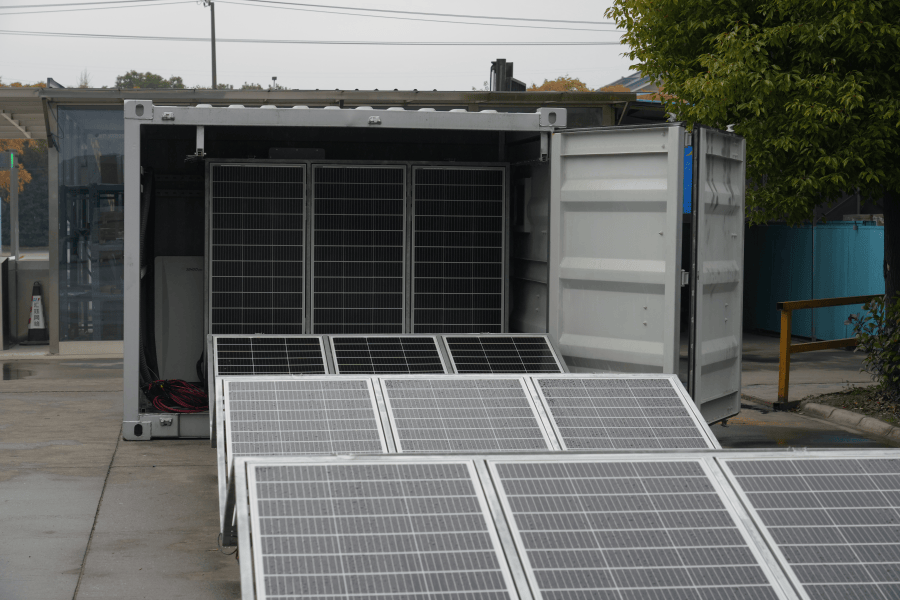
Table of Contents
- The Silent Problem: When Your Backup Power is Its Own Worst Enemy
- Beyond the Salt: The Real Cost of a Rusty Battery
- Meeting the Challenge Head-On: The C5-M Anti-corrosion Standard
- A Real-World Case Study: Coastal Reliability in the North Sea
- Why This Matters for Your Bottom Line: LCOE and Uptime
- Some Practical Advice from the Field
The Silent Problem: When Your Backup Power is Its Own Worst Enemy
Let's be honest. When you're planning a telecom base station, especially in a remote or challenging location, the battery storage system often gets boxed into the "necessary evil" category. It's a capital expense, it takes up space, and frankly, most folks hope they never have to think about it again after it's commissioned. The focus is on the tower, the radios, the network uptime. I've been on dozens of sites where the BESS is tucked away in a corner, expected to just work magically for a decade.
But here's the thing I've seen firsthand on site: the environment is relentless. We're not just talking about a dusty shed anymore. We're deploying in coastal areas where salt spray is a constant, in industrial zones with chemical pollutants, in regions with high humidity and temperature swings that would make anyone uncomfortable. The International Energy Agency (IEA) highlights the critical role of digital infrastructure, but its resilience hinges on reliable power in all conditions. Your battery enclosure might look robust on day one, but corrosion is a silent, incremental killer.
Beyond the Salt: The Real Cost of a Rusty Battery
So why should a bit of rust on a cabinet keep you up at night? Let's agitate that pain point a little. It's never just cosmetic.
First, safety. Corrosion compromises structural integrity. A corroded busbar or cable connection increases electrical resistance. Increased resistance means heat. In a battery system, unexpected heat is enemy number one, leading to accelerated degradation and, in worst-case scenarios, thermal runaway. The UL 9540 and IEC 62933 standards we all rely on for safety are built assuming the equipment maintains its designed state. Corrosion quietly undermines that.
Second, operational cost. A base station outage is astronomically expensive. When a standard battery system fails prematurely because its internal components are eaten away, you're not just replacing a battery rack. You're paying for an emergency service truck roll to a potentially remote site, technician hours, lost revenue from downtime, and a hit to your service-level agreements. The National Renewable Energy Lab (NREL) has done work showing how operations and maintenance costs can make or break the business case for distributed energy. A failed BESS is a major O&M event.

Meeting the Challenge Head-On: The C5-M Anti-corrosion Standard
This is where the conversation shifts from problem to solution. For truly harsh environments, the industry standard isn't a generic "weatherproof" box. It's the C5-M classification per ISO 12944. In simple terms, C5-M is the industrial and marine-grade heavyweight champion of corrosion protection.
While many enclosures might claim resistance, a C5-M certified system like the one in our case study is built differently from the ground up. We're talking about hot-dip galvanized steel structures, multi-layer epoxy and polyurethane paint systems measured in mils thick, stainless steel fasteners, and completely sealed cable entries. The goal is to withstand highly corrosive atmospheres (like coastal salt spray or industrial pollution) for 20+ years. For a telecom operator, this isn't an extra feature; it's essential insurance.
A Real-World Case Study: Coastal Reliability in the North Sea
Let me walk you through a project we completed for a major telecom provider off the coast of Germany. The site was a critical base station on a North Sea island, providing coverage for shipping lanes and coastal communities. The challenge was classic: constant, high-humidity salt air, strong winds, and limited maintenance access, especially in winter.
The previous lead-acid battery solution had failed after just 4 years. Corrosion had crept into the battery terminals and the cabinet's internal steelwork, causing intermittent faults and finally a total failure. The client needed a solution that would last at least 15 years with minimal touchpoints.
We deployed a containerized C5-M anti-corrosion BESS. The entire container shell, internal framework, and battery racks were manufactured to the C5-M specification. Beyond the shell, we integrated a smart, passive thermal management system. Honestly, active cooling with external vents is a point of failure in salty air - fans clog, filters salt over. Our design uses the thermal mass of the system and intelligent cell spacing to maintain optimal temperature without exposing the interior to the external atmosphere.
The result? The system has been operational for over three years now. Recent preventative maintenance showed zero signs of corrosive ingress. The battery degradation is tracking perfectly with expectations, and the client has avoided any unscheduled visits. The upfront investment in the C5-M protection has already paid for itself in avoided O&M costs.
Why This Matters for Your Bottom Line: LCOE and Uptime
As a decision-maker, you might hear "C5-M" and think "premium cost." Let's reframe that. Think about Levelized Cost of Energy (LCOE) for your backup power. LCOE isn't just the purchase price; it's the total cost over the system's life, including installation, fuel (or grid charge), maintenance, and replacement.
A standard BESS in a C5-M environment might have a lower purchase price but a shorter, problematic lifespan. Its LCOE skyrockets due to early replacement and high maintenance. The C5-M BESS has a higher initial cost but a much longer, predictable, and low-touch operational life. Over 15-20 years, its LCOE is often significantly lower. You're buying certainty. For telecom, where uptime is the product, this reliability translates directly to revenue protection and brand reputation.

Some Practical Advice from the Field
So, what should you look for when specifying a BESS for a harsh environment site? Here's my take, based on getting my boots dirty on these projects:
- Demand the Certification: Don't just take "corrosion-resistant" marketing copy. Ask for the ISO 12944 C5-M certification for the enclosure and internal metalwork. It's a tested, quantifiable standard.
- Think Thermally, Passively: In corrosive climates, simplicity in thermal management is key. Favor systems with robust, passive cooling designs over complex, vented active systems that suck in the very air you're trying to defend against.
- Consider the C-rate Wisely: For backup power, you don't always need a super high C-rate (discharge speed). A moderate C-rate design generates less intrinsic heat, reduces stress on cells, and complements a passive thermal system beautifully, enhancing longevity. Match the tech to the actual duty cycle.
- Partner with Local Expertise: At Highjoule, we've learned that successful deployment from California to Scandinavia means working with local engineering partners who understand the specific regional environmental codes and challenges. It ensures the solution isn't just good on paper, but is practical and compliant on the ground.
The right battery storage isn't a commodity purchase; it's a long-term reliability strategy. What's the one site in your network that keeps causing power-related headaches, and what's the true cost of that next failure going to be?
Tags: UL Standard Battery Energy Storage System Off-Grid Energy C5-M Anti-corrosion BESS Telecom Base Station Power
Author
James Zhang
20+ years agricultural energy storage engineer / Highjoule CTO