
Grid-Forming Hybrid Solar-Diesel Systems for Reliable EV Charging
The Silent Hero of Fleet Electrification: A Grid-Forming Hybrid System in Action
Honestly, if I had a dollar for every time a commercial client told me their dream of electrifying a fleet was stalled by the local grid, I'd have retired years ago. It's the single biggest conversation I have on site, from California to North Rhine-Westphalia. The ambition is there, the EVs are ready, but the power infrastructure? It's often playing catch-up. Today, I want to walk you through a solution that's not just theoretical C it's a real-world workhorse I've seen transform operations: the grid-forming hybrid solar-diesel system for EV charging stations. Let's grab a coffee and talk about how this isn't just an add-on; it's becoming the foundational energy asset for forward-thinking businesses.
Quick Navigation
- The Grid Bottleneck: More Than an Inconvenience
- Beyond Backup: The Agitation of Cost and Carbon
- The Hybrid Orchestrator: Our Core Solution
- A Case in Point: Logistics Depot in the American Southwest
- Why the Technical Details Matter (And How to Understand Them)
- Making It Real for Your Operation
The Grid Bottleneck: More Than an Inconvenience
Here's the universal phenomenon: A business decides to transition its delivery vans or municipal vehicles to electric. They get the quotes for the chargers, then they request a grid connection upgrade from their utility. That's when the reality check hits. The quote for new transformers, switchgear, and potentially miles of cable can run into hundreds of thousands of dollars. Worse, the lead time can be 18-24 months, sometimes longer. According to the National Renewable Energy Lab (NREL), grid interconnection delays are now a top barrier to rapid EV adoption, especially for medium- and heavy-duty vehicles. This isn't a minor hiccup; it's a full-stop blockade on sustainability and operational modernization goals.
Beyond Backup: The Agitation of Cost and Carbon
Let's agitate that pain point a bit. It's not just about the upfront capital for grid upgrades. Even if you could get the power, you're now subject to peak demand charges C utility fees based on your highest 15-minute power draw each month. A simultaneous fast-charge of multiple fleet vehicles is a perfect recipe for a massive, wallet-draining demand spike. On top of that, many of my clients, honestly, are under real pressure to meet Scope 1 and 2 emission targets. Relying solely on a diesel generator as backup for charging feels like a step backwards. So you're stuck: pay a fortune for grid upgrades, pay a fortune in demand charges, or compromise on your environmental commitments. I've seen this firsthand paralyze excellent projects.

The Hybrid Orchestrator: Our Core Solution
This is where the real-world case study of a grid-forming hybrid system comes in. Think of it not as separate pieces of equipment, but as an intelligent, self-sufficient mini-grid dedicated to your charging site. The core components are solar PV, a battery energy storage system (BESS) with a grid-forming inverter, and your existing diesel generator. The magic is in the brain C the advanced controller C and the specific capability of the grid-forming BESS.
Unlike traditional "grid-following" inverters that need an existing grid signal to sync to, a grid-forming inverter creates its own stable voltage and frequency waveform. It can start "black start" C meaning it can boot up the local power system from scratch, and then seamlessly integrate the solar and the generator as stable sources. At Highjoule, when we design these systems, the BESS isn't an afterthought; it's the central orchestrator. Our UL 9540-certified systems are built to be that resilient, intelligent core that manages the chaos of variable solar production, generator dispatch, and massive charging loads.
A Case in Point: Logistics Depot in the American Southwest
Let me give you a concrete example from a project we completed last year. A regional logistics hub in Arizona wanted to fast-charge 15 new electric delivery trucks overnight. The local substation was at capacity. A grid upgrade was quoted at over $800,000 with a 2-year wait.
The Challenge: Provide reliable, overnight charging for 15 trucks without grid upgrades, minimize diesel use, and avoid demand charges.
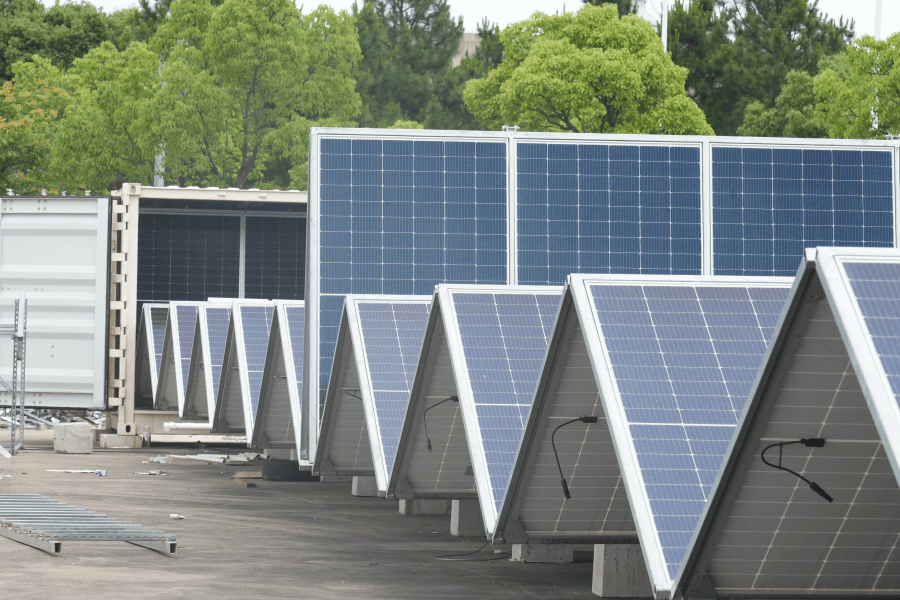
The Highjoule Solution: We deployed a 1.5 MW/3 MWh containerized BESS with grid-forming capability, paired with a 500 kW rooftop solar array and their existing 1 MW diesel generator. The system was designed to meet UL 9540 and IEEE 1547 standards for safety and grid interoperability.
How It Works:
- Daytime: Solar panels charge the BESS directly. Any excess solar offsets facility load.
- Overnight Charging Window: The BESS discharges to power the chargers. Its grid-forming capability maintains perfect power quality.
- Edge Case: If a rare, prolonged cloudy day depletes the battery, the system controller softly starts the diesel generator. The BESS's inverter immediately synchronizes with it, forming a stable hybrid microgrid. The generator runs at its optimal, efficient load (around 80-90%), charging the battery and/or powering loads, instead of ramping wildly to follow the erratic charging load directly. This cuts fuel use and wear and tear by up to 60% compared to a generator-alone scenario.
The result? The depot avoided the $800k grid upgrade, slashed their expected fuel costs for charging by over 70%, and met 85% of their charging energy from solar+storage. The project paid back in under 5 years on capital savings and operational cost avoidance alone.
Why the Technical Details Matter (And How to Understand Them)
When we talk about this on site, I break down three key concepts for the decision-makers:
- Grid-Forming Inverter (The Conductor): This is the heart. It's what allows the battery to create a "clean" and stable grid for sensitive charging equipment and to integrate other sources smoothly. It's non-negotiable for true resilience.
- C-rate (The Power Personality): Simply put, it's a measure of how quickly a battery can charge or discharge relative to its size. A high C-rate BESS can deliver huge bursts of power for fast charging without being oversized. In our Arizona case, we needed a high C-rate design to handle the simultaneous start of multiple chargers C a "power spike" the grid couldn't handle, but our BESS could.
- Thermal Management (The Longevity Engine): Batteries degrade with heat. In a desert climate or a sealed container, managing this is everything. Our systems use active liquid cooling, which, honestly, is more complex and costly upfront than air cooling, but it keeps cell temperatures uniform and stable. This extends the battery's life by years, directly improving your long-term Levelized Cost of Energy (LCOE) C the total cost of ownership per kWh delivered over the system's life.

Making It Real for Your Operation
The question isn't really if a hybrid system makes sense, but how to tailor it. The key is to start with your load profile C not just how much energy you need total, but the timing and magnitude of your biggest power draws. That dictates the size of the solar array, the battery's energy capacity (MWh), and its power rating or C-rate (MW).
At Highjoule, our approach is to model this for you, using real-world site data. We factor in everything from local solar irradiance (using NREL data) to future fleet expansion plans. The goal is to design a system with the right balance that maximizes your on-site clean energy use, protects your generator, and absolutely ensures your vehicles are charged and ready to roll, regardless of what's happening on the utility side of the meter.
So, the next time you're looking at a grid upgrade quote for your EV charging project with a two-year timeline, ask a different question: What if the grid didn't have to be the solution? What if your energy resilience became your competitive advantage?
Tags: UL Standard BESS EV Charging Infrastructure Solar-Diesel Hybrid Grid-Forming Inverter
Author
James Zhang
20+ years agricultural energy storage engineer / Highjoule CTO