
Grid-Forming BESS for Construction Sites: Solving Power & Cost Challenges
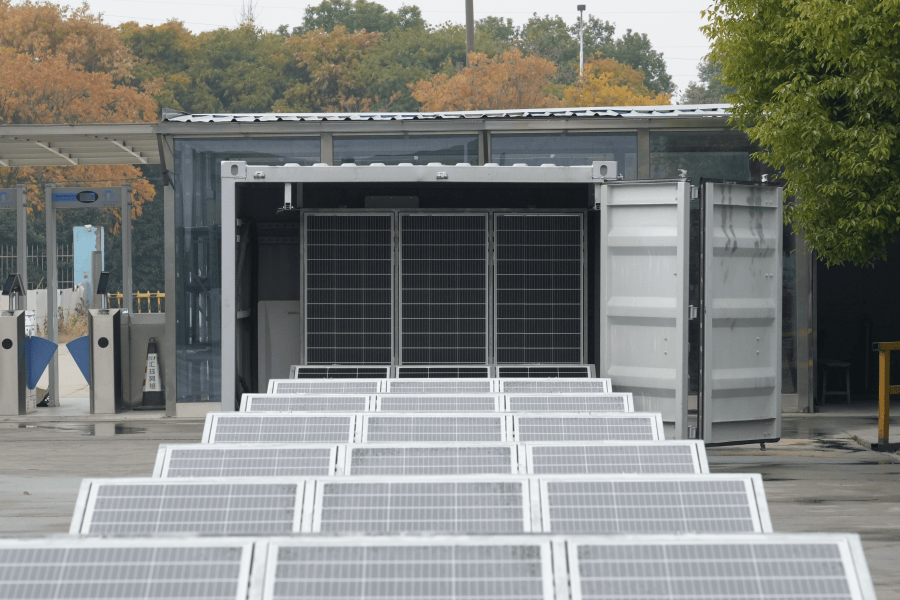
Table of Contents
- The Silent Cost Killer on Your Job Site
- Why Your Diesel Generator is a Headache (and a Liability)
- A Better Way: Power That's On When You Need It
- Real-World Case: A Texas Megasite Gets Smart Power
- The Tech That Makes It Work (Without the Engineering Jargon)
- Making the Move: What to Look For
The Silent Cost Killer on Your Job Site
Let's be honest. When you're managing a construction project, your main focus is on concrete, steel, and schedules. Power is supposed to be a given C you flip a switch, and the lights come on, the tools run. But on remote sites, brownfield developments, or even urban spots with strained grids, that's often a fantasy. I've been on sites from Nevada to North Rhine-Westphalia where the single biggest, most unpredictable variable wasn't the weather; it was electricity.
The traditional playbook? Rely on the local utility (if you're lucky and the connection is stable) or fire up a fleet of diesel generators. The first option leads to delays if the grid connection is delayed or unreliable. The second? It's like opening a vein of pure cash outflow. We're talking about fuel costs that are all over the map, constant maintenance, noise complaints that trigger community pushback, and emissions regulations that are getting tighter by the day. According to the National Renewable Energy Laboratory (NREL), construction site generators can operate at wildly inefficient low-load conditions, burning fuel but not doing much useful work, which skyrockets your effective cost per kilowatt-hour.
Why Your Diesel Generator is a Headache (and a Liability)
I've seen this firsthand on site. A generator goes down at 2 PM. Suddenly, the entire concrete pour is on hold. You've got idle crews, a truck driver on the clock, and a setting slab. The maintenance guy is an hour away. That's not an operational cost; that's a direct hit to your project's bottom line and timeline. Beyond the downtime, think about the total cost of ownership:
- Fuel Volatility: Your budget is at the mercy of diesel prices.
- Noise & Fumes: Increasingly a deal-breaker for permits in urban and suburban areas.
- Carbon Footprint: Clients are demanding green building practices, and that includes site operations.
It's a reactive, noisy, expensive, and frankly, old-fashioned way to power a modern construction project.
A Better Way: Power That's On When You Need It
This is where the game has changed. We're no longer talking about simple backup batteries. The solution is a grid-forming lithium battery storage container. Think of it as a silent, self-contained power plant that you drop on site. It can be charged from the grid (when power is cheap and available), from on-site solar panels (a perfect pairing for daytime tool use), or even from a smaller, efficiently-run generator used just for charging.
But here's the magic word: grid-forming. Most batteries are "grid-following." They need a stable grid signal to sync up and operate. A grid-forming battery creates its own stable grid. It can start cold, power up the site from black, and provide clean, stable voltage and frequency for sensitive equipment like cranes, welders, and precision tools. It's the difference between a follower and a leader.

Real-World Case: A Texas Megasite Gets Smart Power
Let me give you a real example. We worked with a major contractor on a large logistics warehouse project outside Austin. The utility connection was months out. The initial plan was 6 large diesel gensets running 24/7. The fuel cost projection was staggering, and the noise would have required expensive sound baffling.
We deployed two of our Highjoule GridFormTM 500 kWh containers, integrated with a 250 kW solar canopy over the temporary site offices. Here's what happened:
- Fuel Use Cut by 85%: A single, smaller diesel gen-set was used only for occasional top-up charging during long cloudy periods. It ran at its optimal, efficient load.
- Zero Power Interruptions: The grid-forming BESS handled all load steps C from idle to firing up the big compound saw C without a flicker.
- Permitting Smooth Sail: The silent, zero-emission-at-point-of-use operation made the environmental and community relations aspects a non-issue.
- The Bottom Line: The project manager later told me they saved over $12,000 a week in direct fuel and maintenance costs alone. The system paid for itself in under 5 months, and they shipped it to their next project.
The Tech That Makes It Work (Without the Engineering Jargon)
You don't need to be an electrical engineer to get this. Here's the simple breakdown of what to look for inside that container:
- The Brain (Grid-Forming Inverter): This is the key. It mimics the physics of a traditional power plant, creating a stable "sine wave" for perfect power quality. It's what allows you to start from scratch.
- The Muscle (Battery & C-rate): "C-rate" is just a fancy term for how fast a battery can charge or discharge. A high discharge C-rate means it can deliver a huge burst of power instantly to start a motor. For construction, you need this muscle. Our cells are rated for the tough, high-power demands.
- The Climate Control (Thermal Management): Texas heat, German winter C it doesn't matter. A proper system has a liquid-cooling system that keeps every battery cell at its perfect temperature. This is non-negotiable for safety, longevity, and performance. It's why our containers are built to UL 9540 and IEC 62933 standards from the cell up.
- The Economics (LCOE - Levelized Cost of Energy): This is your ultimate metric. When you factor in all costs C capex, fuel, maintenance, downtime C over the system's life, a well-designed BESS often beats diesel on pure cost, not to mention the reliability and ESG benefits. The math is getting better every year.

Making the Move: What to Look For
If you're considering this, your checklist should be simple but strict. Demand a solution that is:
- Certified for Your Market: UL in North America, IEC/EU standards in Europe. Don't compromise.
- Truly Grid-Forming: Ask for the spec sheet and a demo. Can it start a site from a black start?
- Built for the Rugged Life: It's a construction site, not a data center. Look for ISO container standards, proper ingress protection (IP rating), and robust thermal management.
- Supported Locally: You need a provider with local service crews and remote monitoring. At Highjoule, our platform lets you see your site's power status, fuel savings, and carbon offset in real-time from your phone C and we have technicians on call.
The shift from diesel to intelligent battery storage isn't just about being green. It's about being smart, predictable, and in control of your project's most fundamental resource. The question isn't really if you'll make the switch, but when. What's the true cost of your next power outage going to be?
Tags: Construction Site Power UL Standard BESS Lithium Battery Container Grid-forming Battery
Author
James Zhang
20+ years agricultural energy storage engineer / Highjoule CTO