
Grid-Forming BESS Solutions: Reducing Deployment Costs & Complexity in US & EU Markets
The Unspoken Truth About BESS Deployment: What a Remote Philippine Village Taught Us About Scaling in the US & EU
Honestly, after two decades on sites from Texas to Bavaria, I've seen a pattern. We talk a lot about Levelized Cost of Storage (LCOS), C-rates, and cycle life C and rightly so. But there's a massive, often overlooked cost sink hiding in plain sight: deployment complexity. The sheer "heavy lifting" of getting a battery energy storage system (BESS) from a spec sheet to a humming, revenue-generating asset. It's the silent killer of project budgets and timelines, especially for commercial and industrial (C&I) and microgrid applications. And a recent, gritty project in a remote part of the Philippines brought this lesson home in a way no boardroom presentation ever could.
Quick Navigation
- The Real Cost Isn't Just the Hardware
- A Case in Point: Powering an Island Community
- The Pre-Integrated Advantage: More Than a Container
- Grid-Forming: The Silent Game-Changer for Resilience
- Bringing the Lessons Home: Implications for US & EU Markets
The Real Cost Isn't Just the Hardware
When evaluating a BESS, the focus is naturally on the battery cells, the inverter efficiency, the warranty. But I've seen this firsthand on site: the logistical tail is long and expensive. You're not just buying a battery. You're managing a multi-vendor puzzle C sourcing the battery racks, the power conversion system (PCS), the thermal management unit, the fire suppression, the medium-voltage transformer, and the complex control software that makes them all talk. Then you need a small army of specialized engineers for system integration, commissioning, and interoperability testing. According to a National Renewable Energy Laboratory (NREL) analysis, "soft costs" C engineering, permitting, interconnection, installation C can constitute up to 30-40% of the total installed cost for mid-sized storage systems. That's a huge chunk of your budget not going into the actual energy storage asset.
Now, amplify this with the need for grid-forming capabilities. It's no longer a nice-to-have; grid operators from California to Germany are mandating it for new renewable connections. But integrating a grid-forming inverter into a custom-built BESS adds another layer of design and control complexity. The risk? Delays, cost overruns, and a system that might technically work but never hits its optimal performance sweet spot.
A Case in Point: Powering an Island Community
Let's talk about that project in the Philippines. The goal was straightforward: electrify a remote, off-grid village using solar and storage. The challenges were anything but: limited local technical expertise, a harsh tropical environment (high heat, humidity, salt spray), and absolutely no grid to fall back on. The system had to create its own stable grid from day one C a pure grid-forming application.
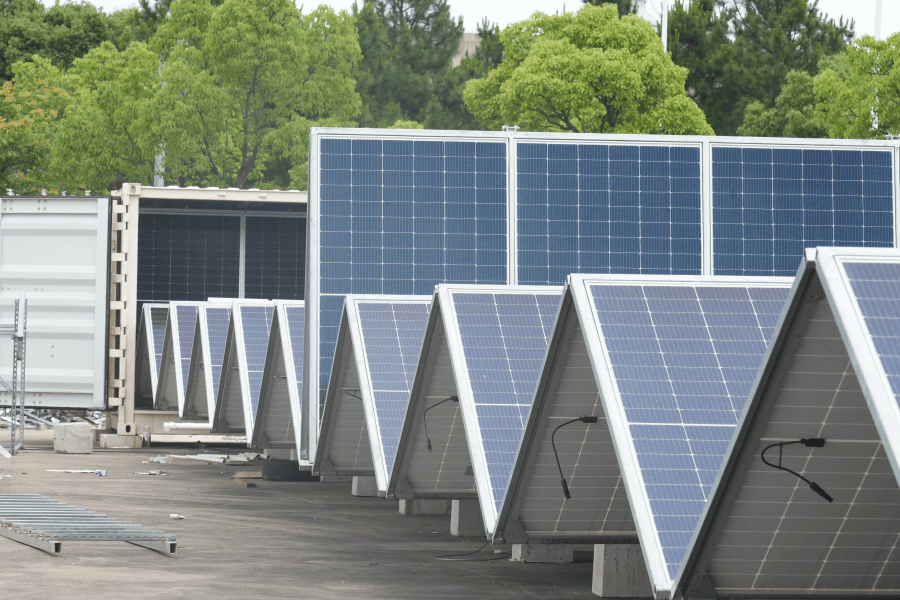
The traditional approach would have been a nightmare. Shipping multiple components from different continents, trying to build a system in a dusty field, and hoping the communications protocols would handshake. Instead, the solution was a pre-integrated PV container. Everything C high-density lithium-ion batteries, grid-forming inverters, HVAC, fire safety, and controls C was assembled, wired, and rigorously factory-tested in a controlled environment before being shipped. It arrived on-site essentially as a single, plug-and-play unit.

On-site work was drastically simplified: place the container on a simple foundation, connect the pre-laid PV arrays and the village distribution lines, and power up. Commissioning took days, not weeks. The thermal management system, pre-tuned for the expected ambient conditions, kept the batteries at their ideal C-rate operating temperature from the start, ensuring longevity. Honestly, seeing it hum to life so seamlessly was a powerful testament to the pre-integrated approach.
The Pre-Integrated Advantage: More Than a Container
This is where the real insight for you, a decision-maker in a regulated market, kicks in. That "container" is a philosophy. At Highjoule, we've applied these hard-won lessons from frontier markets to our products for the US and EU. Our pre-integrated BESS solutions are built with the same core principles:
- Risk Mitigation: Factory integration means we solve the interoperability headaches under our roof, not on your site. Every subsystem is validated against stringent standards like UL 9540 and IEC 62933 before it leaves the door.
- Predictable LCOE/LCOS: By slashing installation and commissioning time, we dramatically reduce the "balance of system" and soft costs. A faster commissioning means your asset starts earning revenue or providing savings sooner. It's the single biggest lever to improve the total lifecycle economics.
- Future-Proof Compliance: Building in grid-forming capability from the outset, as a core design feature, is cheaper and more reliable than retrofitting. It ensures your project meets current and upcoming grid codes, whether it's California's Rule 21 or the EU's Network Codes.
Grid-Forming: The Silent Game-Changer for Resilience
Let me demystify grid-forming for a second. Think of a traditional "grid-following" inverter like a surfer. It needs a wave (the grid) to ride. If the wave disappears, the surfer wipes out. A grid-forming inverter is the wave machine. It can create a stable voltage and frequency waveform from scratch, forming a "grid" for other assets to follow. In that Philippine village, it was the only option. In your C&I facility or microgrid, it's the key to true islanding resilience and seamless integration of renewables.
The technical magic is in the software controls, but the practical magic is in its pre-integration. When the grid-forming controls are baked into the BESS at the factory and tested with the specific battery chemistry and thermal system, you get a black-start capable system that works reliably, every time. No last-minute coding on a rainy job site.
Bringing the Lessons Home: Implications for US & EU Markets
So, what does a remote Asian village have to do with a manufacturing plant in Ohio or a commercial park in Spain? Everything. The core pain points are universal: complexity, cost, and the need for reliable, dispatchable power.
Consider a project we supported in Germany's industrial heartland. A mid-sized manufacturer wanted to add solar and storage for peak shaving and backup. The local utility had specific grid-support requirements. By opting for a pre-integrated, UL and IEC-compliant container solution with native grid-forming capabilities, the client avoided months of custom engineering. The system was permitted faster because the core certifications were already in hand, and it was operational within a month of delivery, providing immediate FFR (Frequency Containment Reserve) market revenue.

The takeaway? The future of scalable, cost-effective energy storage, especially for the vital C&I and microgrid segments, isn't just about better battery chemistry. It's about better delivery. It's about moving from a construction project to a delivered product. It's about taking the lessons from the world's most challenging deployments and baking that reliability and simplicity into systems for the world's most demanding markets.
The question isn't whether pre-integrated, grid-forming solutions are viable. The Philippine case, and dozens like it, have proven they are. The real question is: how much time and capital are you willing to spend on deployment complexity before you consider a productized approach? We've seen the numbers on both sides of the equation, and the difference isn't marginal C it's transformative.
Tags: UL Standard BESS LCOE Europe US Market Renewable Energy Grid-Forming Inverter Energy Storage Deployment
Author
James Zhang
20+ years agricultural energy storage engineer / Highjoule CTO