
Tier 1 Battery Mobile Power Containers for EV Charging: The On-Site Reality
Table of Contents
- The Grid Strain Reality: More Than Just a Power Outlet
- The "Tier 1" Dilemma: It's Not Just a Marketing Label
- Why a Mobile Power Container is Your Ace in the Hole
- Looking Beyond the Spec Sheet: What Really Matters On-Site
- Making the Right Choice for Your Site
The Grid Strain Reality: More Than Just a Power Outlet
Let's be honest. If you're planning an EV fast-charging hub in the US or Europe right now, your utility provider is probably giving you a timeline that feels... optimistic. I've sat in those meetings. The demand is skyrocketing, but grid infrastructure upgrades are slow and incredibly capital-intensive. The International Energy Agency (IEA) notes that global EV sales jumped over 35% in 2023 alone, and that pressure is felt directly at the transformer level. It's not just about getting a connection; it's about getting enough power, reliably, without paying punitive demand charges that obliterate your ROI.
This is the core problem: your charging station's success depends on available, stable, and affordable power. A grid connection alone often doesn't cut it. You need a buffer, a reservoir of energy that can deliver those high-power charges during peak hours without straining the local network. That's where battery energy storage (BESS) comes in. But not all BESS are created equal, especially when your business and public safety depend on it.
The "Tier 1" Dilemma: It's Not Just a Marketing Label
When we talk about a Comparison of Tier 1 Battery Cell Mobile Power Container for EV Charging Stations, the first thing to clarify is "Tier 1." In our industry, this isn't a vague buzzword. It refers to battery cells manufactured by companies with proven, large-scale, automated production, consistent quality control, and multi-year performance data from real-world deployments. Think of the giants like CATL, LG Energy Solution, Panasonic, or Samsung SDI.
Why does this matter for your charging station? Honestly, I've seen this firsthand on site. It boils down to three things:
- Predictable Performance: Tier 1 cells have tightly controlled specifications. Their C-rate (basically, how fast you can charge and discharge them safely) is reliable. When your spec sheet says a 2C discharge, you get a 2C discharge, consistently, across all modules in the container. This is non-negotiable for meeting the high-power demands of multiple DC fast chargers operating simultaneously.
- Longevity & LCOE: The Levelized Cost of Energy (LCOE) C the real total cost of the energy you'll use over the system's life C is dramatically lower with Tier 1 cells. They degrade slower, meaning your container holds more useful capacity for more years. A cheaper, no-name cell might save you upfront CapEx, but it'll cost you dearly in replacement cycles and lost revenue down the line.
- Safety & Insurance: This is the big one. Tier 1 suppliers invest millions in R&D for thermal runaway prevention. Their cells are designed and tested to fail safely. When you're deploying a system in a public or commercial area, having cells with a documented safety pedigree simplifies permitting, satisfies fire marshals, and often gets you better insurance rates. Compliance with UL 9540 (the standard for energy storage systems) and IEC 62619 starts right here, at the cell level.

Why a Mobile Power Container is Your Ace in the Hole
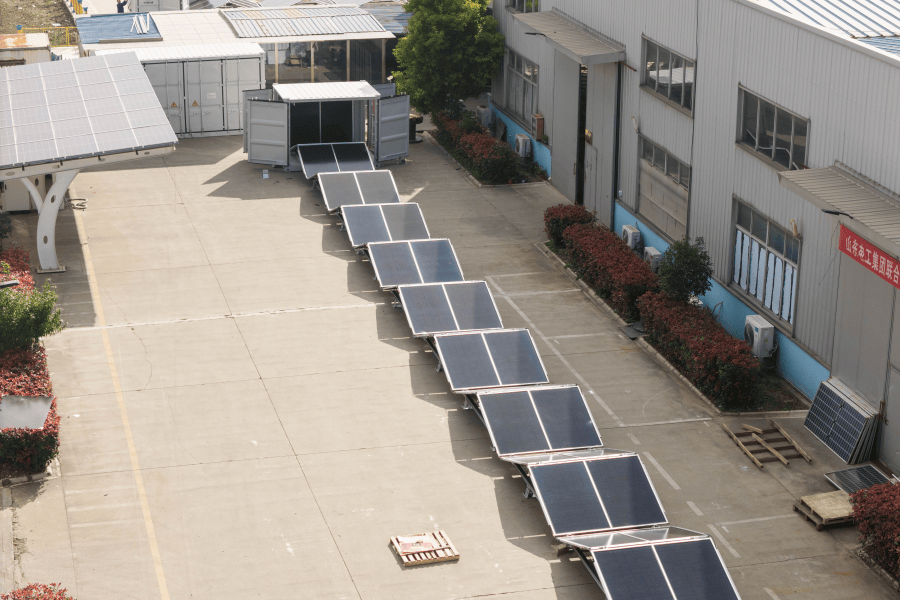
So, you've settled on Tier 1 cells. Great. Now, why put them in a mobile container? The agility factor is a game-changer. A traditional, fixed BESS is a construction project - permitting, concrete pads, complex electrical tie-ins. A mobile container, like the ones we engineer at Highjoule, is a deployment.
I remember a project for a retail chain in Texas. They wanted to launch EV charging at 10 locations before the holiday season. With our mobile container solution, we had the first site operational in under 8 weeks from order. The container arrived pre-assembled, pre-tested, and certified (UL 9540 and IEEE 1547 compliant). It was literally a "plug-and-play" addition to their site infrastructure. If their needs change in five years, they can unplug it and move it. That flexibility has immense value.
Looking Beyond the Spec Sheet: What Really Matters On-Site
When comparing containers, everyone looks at capacity (kWh) and power (kW). But let me give you the on-site engineer's perspective. Here's what you should be asking about:
- Thermal Management: This is the heart of reliability. Is it air-cooled or liquid-cooled? For high-cycling EV charging applications, especially in Arizona heat or Canadian cold, a liquid-cooled system is superior. It maintains optimal cell temperature, ensuring performance and longevity. I've seen air-cooled systems derate (reduce power) on a hot day just when you need them most - not a good look for customers waiting to charge.
- Grid Integration Intelligence: The container's brain (the Power Conversion System and Energy Management System) must seamlessly talk to the grid, the chargers, and possibly solar on-site. It should automatically navigate demand charge management, time-of-use arbitrage, and provide grid services. Look for a system with proven, UL-listed inverters and software that's intuitive for your operators.
- Serviceability: How are the modules accessed? Is there safe, clear service aisle space inside? At Highjoule, we design with maintenance in mind. Every module can be safely isolated and replaced if needed, minimizing downtime. Your local service partner shouldn't need a PhD in contortionism to do a routine check.
Making the Right Choice for Your Site
So, how do you make the right Comparison of Tier 1 Battery Cell Mobile Power Container for EV Charging Stations? Don't just collect PDF spec sheets. Ask for the narrative behind them.
Request the specific cell manufacturer's data sheet and the safety certifications for the complete container assembly. Ask for a reference project with a similar use case - maybe a fleet depot in the UK or a highway charging plaza in California. Talk to that operator about real-world performance and vendor support.
At Highjoule, our approach is built on this transparency. We'll walk you through the LCOE model for your specific location and tariff structure. We'll show you the UL certificates and the design of our multi-layer safety systems. And because we've been doing this for nearly two decades, we have the local partners to support you from permitting to long-term maintenance.
The goal isn't just to sell you a container. It's to provide a resilient, profitable power asset for your EV charging business. The right mobile BESS isn't an expense; it's what turns a grid-constrained site into a revenue-generating hub, reliably and safely. What's the one grid constraint at your next site that keeps you up at night?
Tags: UL Standard BESS LCOE Energy Storage Tier 1 Battery EV Charging Mobile Power Container
Author
James Zhang
20+ years agricultural energy storage engineer / Highjoule CTO