
Step-by-step Installation of Liquid-cooled BESS for Public Utility Grids: A Field Engineer's Guide
Table of Contents
- The Real Grid Problem Isn't Just Capacity, It's Control
- Why Your BESS Installation Process Directly Impacts LCOE and Safety
- The Liquid-Cooled Advantage: More Than Just Temperature
- A Field-Proven, Step-by-Step Installation Breakdown
- Case in Point: A 100MW Project in California's Desert
- Expert Corner: What They Don't Teach You in Manuals
- Making It Happen on Your Grid
The Real Grid Problem Isn't Just Capacity, It's Control
Let's be honest. If you're managing a public utility grid in North America or Europe right now, you're not just thinking about adding storage. You're thinking about adding predictable, safe, and bankable storage. The pressure is immense: integrate more renewables, provide grid services, ensure stability. I've seen utilities rush to deploy BESS, only to face months of delays during commissioning because the installation groundwork C especially for high-density, utility-scale systems C wasn't meticulously planned.
The core pain point? Treating a modern, liquid-cooled Battery Energy Storage System like a simple container drop. It's not. It's a complex, high-power electrochemical asset. A flawed installation doesn't just cause delays; it can lead to thermal hotspots, reduced cycle life, and in worst-case scenarios, compromise the very safety protocols we rely on. According to the National Renewable Energy Laboratory (NREL), proper system integration and commissioning are among the top three cost-reduction levers for BESS total lifecycle costs.
Why Your BESS Installation Process Directly Impacts LCOE and Safety
Here's the agitation part, straight from the site. I was on a project in Germany where the foundation tolerances were off by just a few centimeters. It seemed minor, but it misaligned the liquid cooling manifold connections, leading to a slight flow restriction. The result? An inconsistent cell temperature spread, which forced the system to derate its C-rate C its charge/discharge speed C to stay within safe limits. That "minor" foundation issue directly hit the project's revenue model by limiting its ability to participate in fast-frequency response markets. The Levelized Cost of Energy (LCOE) for that asset went up from day one.
This is why a rigorous, step-by-step approach for liquid-cooled BESS is non-negotiable. Air-cooled systems have more tolerance. Liquid-cooled systems, with their superior thermal management allowing for denser packs and higher C-rates, demand precision. They're the performance athletes of the storage world C and athletes need a perfect track to run on.
The Liquid-Cooled Advantage: More Than Just Temperature
So, why liquid cooling? It's not just about keeping batteries cool. It's about keeping them at a uniform temperature. In a utility-scale container, you might have thousands of cells. A variance of even 5C can cause a significant imbalance in performance and aging. Liquid cooling directly targets this, allowing for:
- Higher & Safer Power Density: You can pack more energy into a smaller footprint, crucial for space-constrained substation sites.
- Consistent High C-rate Performance: The system can sustain rapid charging from excess solar or discharge for grid support without thermal throttling.
- Longer Lifespan: Stable temperature = reduced stress = more cycles over 20 years.
At Highjoule, our design philosophy has always been that safety and performance are two sides of the same coin. Our liquid-cooled BESS platforms are built to UL 9540 and IEC 62933 standards from the cell up, but that certification only holds true if the installation respects the engineering.
A Field-Proven, Step-by-Step Installation Breakdown
Forget the generic 10-step list. Here's what matters on the ground for a public utility site, based on the hard lessons we've learned deploying with partners from Texas to Poland.
Phase 1: Pre-Site (The Paperwork & Planning)
This is where 30% of the battle is won. It's not glamorous, but it's everything.
- Geotechnical & Civil Sign-off: Verify the foundation design for the exact weight and dynamic loads. Liquid-cooled units have centralized coolant distribution units C their weight distribution differs from air-cooled.
- Utility Interconnection Agreement Deep Dive: Don't just have the agreement; have your team internalize the specific grid code requirements (like IEEE 1547 in the US). Your BESS controller settings will be configured against this during commissioning.
- Local AHJ (Authority Having Jurisdiction) Alignment: Schedule the inspection walkthroughs before the gear arrives. Honestly, building a relationship with the local inspector saves weeks.
Phase 2: Site Prep & Receiving
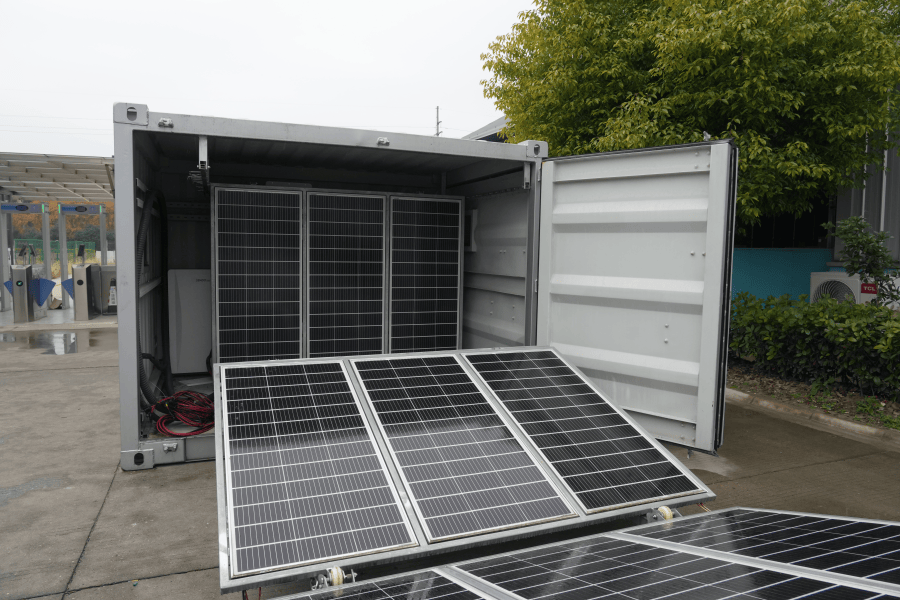
- Foundation & Conduit Verification: This is the moment of truth. Check for levelness, anchor bolt placement, and conduit entry points. I carry a laser level for this. A misaligned conduit can pinch cables, creating a future fault point.
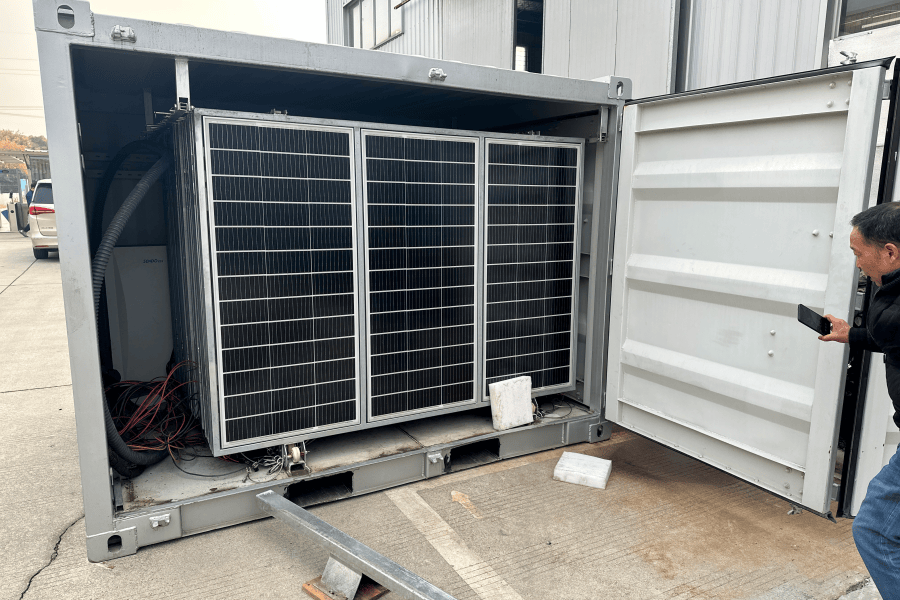
- Uncrating with Finesse: Use the designated lift points. The container is not just a box; it's a precision module. Damaging the external coolant ports during offloading is a costly, schedule-killing error I've seen firsthand.
Phase 3: The Critical Path C Mechanical & Fluid Systems
This is the heart of the liquid-cooled system install.
- Setting and Leveling: Use calibrated torque wrenches on all foundation bolts. This ensures structural integrity during high winds or seismic events.
- Coolant Loop Assembly: This is a clean-room mentality task. Before connecting hoses or pipes, flush the external lines to remove any debris. A single particle can clog a cooling plate channel. We use a specific procedure for filling and de-aerating the loop C trapped air is an insulator and a killer for thermal performance.
- Electrical Rough-In: Terminate DC and AC cables to the specified torque. Under-torquing leads to arcing and heat; over-torquing crushes conductors. Both are fire risks.
Phase 4: Commissioning & Grid Handshake
- Leak Testing & Dielectric Testing: Perform a 24-hour pressure hold test on the coolant loop. Then, perform dielectric testing on all electrical connections as per UL standards.
- Controller Configuration: This is where your team's knowledge of the interconnection agreement pays off. Set the voltage and frequency ride-through curves, ramp rates, and communication protocols (like DNP3 or Modbus) for the SCADA system.
- First Energization & Functional Tests: This is done in a strict sequence: auxiliary power, coolant pumps, battery management system, then main power. You then run through a full suite of tests, from islanding detection to verifying the C-rate capability across the entire state-of-charge range.
Case in Point: A 100MW Project in California's Desert
We partnered with a utility in California to deploy a 100MW / 400MWh liquid-cooled BESS for peak shaving and resource adequacy. The challenge? Extreme ambient temperatures (over 45C/113F) and a tight 12-month deadline to meet a regulatory mandate.
The Installation Win: By following the rigorous step-by-step process above, with a special focus on the coolant loop pre-filling and testing in a controlled environment before shipping, we cut the on-site commissioning time by 40%. The system achieved full operational capacity two weeks ahead of schedule. More importantly, during its first summer, the thermal management system maintained cell temperature uniformity within 2C, allowing the asset to consistently bid into the CAISO market at its full rated C-rate without derating C maximizing revenue from day one.
Expert Corner: What They Don't Teach You in Manuals
Let's get technical for a minute, in plain English.
On C-rate and Thermal Management: Think of C-rate as how hard you're breathing. A 1C rate means fully charging or discharging in one hour. A liquid-cooled system might be designed for sustained 1C or even higher. But if the installation introduces a thermal bottleneck (like a kinked hose or poor airflow to the heat exchanger), the Battery Management System (BMS) will reduce the C-rate to protect itself. You've paid for a sports car but installed a clogged fuel line.
On LCOE (Levelized Cost of Energy): LCOE is your total cost divided by total energy output over the system's life. A poor installation increases the numerator (with rework costs) and decreases the denominator (by reducing efficiency or lifespan). Getting the installation right is the single biggest lever you have to ensure the LCOE you modeled in the boardroom is the LCOE you get in the field.
Our approach at Highjoule is to embed these insights into our project delivery. We don't just ship containers; we provide a deployment protocol and can offer onsite technical oversight to ensure the design intent is realized in the concrete and steel.
Making It Happen on Your Grid
The transition to a resilient, renewable-powered grid is built on assets like liquid-cooled BESS. But their value is only unlocked through excellence in deployment. It requires a shift from seeing installation as a construction task to viewing it as a precision integration process.
What's the one step in your current project plan that keeps you up at night? Is it the civil works tolerance, the utility commissioning tests, or something else? Getting those details right from the start isn't just about avoiding headaches C it's about securing the financial and operational performance of your grid asset for the next two decades.
Tags: UL Standard Renewable Energy Integration BESS Liquid Cooling IEC 62933 IEEE 1547 Grid Storage Public Utility Grid
Author
James Zhang
20+ years agricultural energy storage engineer / Highjoule CTO