
The High-Voltage DC Mobile Power Container: A Game-Changer for Grid Resilience
Table of Contents
- The Grid Flexibility Gap Isn't Just Talk
- Why Fixed Assets Struggle with Modern Grid Demands
- A Mobile, High-Voltage Solution Enters the Chat
- Case Study Spotlight: Rapid Response in the Midwest
- The Tech Behind the Curtain: Safety & Economics in a Box
- Beyond the Emergency: The Multi-Use Asset
The Grid Flexibility Gap Isn't Just Talk
Honestly, if I had a dollar for every time a utility planner told me they need more flexibility, I'd have retired years ago. It's the universal chorus across North America and Europe. But here's the thing I've seen firsthand on site: this "flexibility gap" isn't some abstract future risk. It's happening now, and it manifests in two painfully concrete ways: unplanned outages from extreme weather and aging infrastructure, and planned congestion during grid upgrades or peak renewable generation.
The data backs up the field experience. According to the International Energy Agency (IEA), global grid investment needs to double to over $600 billion annually by 2030 to meet climate goals and ensure resilience. A huge chunk of that is for modernization and hardening. But you can't build a new substation overnight. When a critical transformer fails in a heatwave or a scheduled line upgrade cuts off a community, utilities are left scrambling with expensive, noisy, and polluting diesel generators. It's a 20th-century solution for a 21st-century problem, and frankly, it clashes with everyone's decarbonization targets.
Why Fixed Assets Struggle with Modern Grid Demands
Permanent, fixed Battery Energy Storage Systems (BESS) are fantastic for daily peak shaving and frequency regulation. We've deployed plenty. But their weakness is in their name: fixed. Siting, permitting, and interconnecting a large-scale BESS can take years - time you simply don't have during a crisis. Furthermore, grid needs shift. A congestion hotspot today might be solved by a transmission upgrade in 18 months, making a permanent 20-year asset there a potential stranded investment.
The financial and operational pain is real. You're either over-investing in permanent capacity "just in case," or you're under-prepared and face regulatory penalties and customer outrage during an outage. It's a lose-lose that keeps utility engineers and CFOs up at night.
A Mobile, High-Voltage Solution Enters the Chat
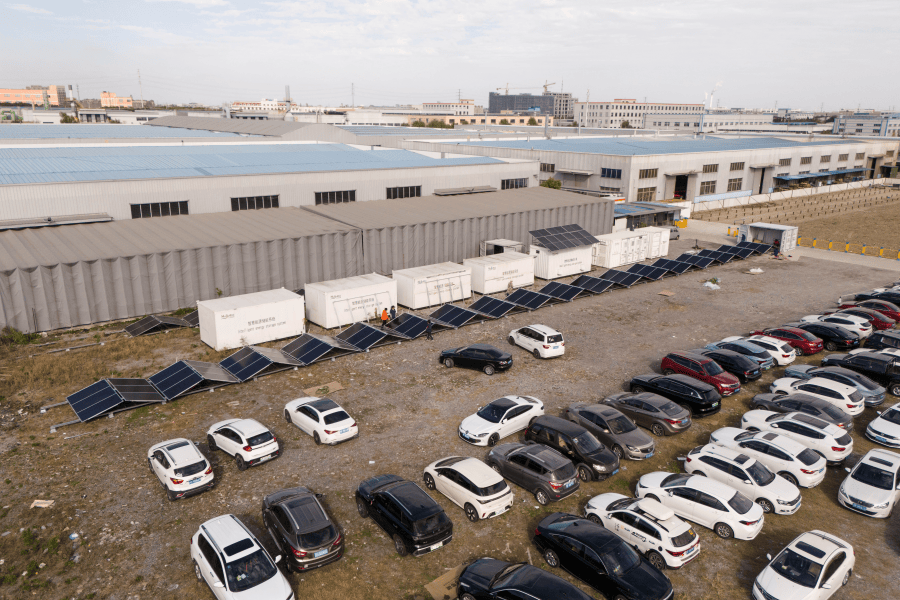
This is where the concept of the high-voltage DC mobile power container moves from a cool idea to a critical grid tool. Think of it not as a temporary generator, but as a "grid asset on wheels." At Highjoule, we've evolved this concept based on two decades of field lessons. The core idea is a fully integrated, plug-and-play3 housed in a standard ISO container, but with one major twist: it's designed to connect at distribution or even sub-transmission voltages via a DC coupling architecture.
Why DC? Honestly, it reduces complexity on the move. It allows for higher efficiency over the connection and simplifies the power conversion setup when you're docking at different points in the grid. You get more usable power out of the same footprint, which is everything when you're racing against the clock.

Case Study Spotlight: Rapid Response in the Midwest
Let me walk you through a real scenario we handled last year. A major utility in the U.S. Midwest had a critical 69kV substation transformer that needed a scheduled 8-week replacement. The traditional plan involved complex feeder re-routing and customer notifications for potential brownouts. The alternative was a bank of diesel generators - costly, loud, and a public relations headache for a company touting its green credentials.
They came to us for a mobile solution. We deployed two of our Highjoule HV-DC Mobile Power Containers. Here's how it worked on the ground:
- Deployment: Units were pre-commissioned at our facility. They arrived on-site via standard trucking. Within 48 hours of arrival, they were positioned, connected to a pre-installed AC/DC interface cabinet, and undergoing final checks.
- Operation: For 8 weeks, the containers provided seamless load support, effectively acting as a spinning reserve for the substation's load. They charged during low-demand periods and discharged during peak hours, smoothing the load curve.
- The Outcome: Zero customer interruptions. Diesel fuel savings estimated at over 150,000 gallons. The utility avoided potential regulatory reliability penalties and garnered positive local media coverage for using "clean backup power." After the transformer was online, the containers were disconnected, loaded out, and are now ready for their next mission elsewhere on the grid.
This wasn't magic. It was pre-planning, modular design, and a system built from the start to meet UL 9540 and IEEE 1547 standards for safety and interconnection, which was non-negotiable for the utility's engineering team.
The Tech Behind the Curtain: Safety & Economics in a Box
When I talk to non-engineers about this, they often ask, "What's really inside that makes it different?" Beyond the mobility, two things matter most: Thermal Management and LCOE (Levelized Cost of Energy) for temporary applications.
Thermal Management is Everything: A mobile unit can be deployed in a Texas summer or a Canadian winter. The battery's lifespan and safety hinge on keeping it in the perfect temperature zone. Our containers use an independent, robust liquid cooling system that's miles ahead of basic air conditioning. It maintains even cell temperature, which prevents hotspots and degradation. This isn't just about safety (though, let's be clear, it's mostly about safety); it's about preserving the asset's value through hundreds of charge/discharge cycles in varied climates. A poorly managed thermal system will kill your batteries - and your ROI - fast.
Rethinking LCOE for Mobility: For a permanent BESS, you calculate LCOE over 15-20 years. For a mobile asset, the calculus changes. It's about cost per avoided outage or cost per deferred grid upgrade. By being able to serve multiple grid needs over its life - outage relief, construction support, congestion management - the mobile container spreads its capital cost across multiple use cases and departments within the utility. This multi-application profile drastically improves its economic justification. You're not just buying a battery; you're buying grid insurance and construction equipment rolled into one.
Beyond the Emergency: The Multi-Use Asset
The real power of this approach isn't just in disaster response. It's in proactive grid management. Utilities can use these mobile units for:
- Peaking Support: Temporarily bolster a feeder during summer peaks before a permanent solution is built.
- Renewable Integration: Park a unit at a substation to soak up excess solar generation during the day, mitigating curtailment.
- Testing & Learning: It's a low-risk way for utilities to "try before they buy" permanent storage, understanding its impact on specific parts of their network.
At Highjoule, our focus has been building these units not as one-offs, but as a standardized, serviceable product line. Every container that leaves our facility has the same core safety architecture, the same familiar control interface for utility operators, and access to our remote monitoring platform. That way, whether it's in California or Germany, the local team knows what they're getting, and our global support crew can help troubleshoot if needed.
The grid's challenges are becoming more dynamic. Doesn't it make sense for the solutions to be dynamic too? What's the one grid constraint in your service territory that keeps getting pushed to next year's capital plan, that a mobile, high-power solution could address now?
Tags: UL Standard BESS Energy Storage Grid Resilience IEC Standard High-voltage DC Mobile Power Container Utility Grid
Author
James Zhang
20+ years agricultural energy storage engineer / Highjoule CTO