
IP54 Outdoor 5MWh BESS for Rural Electrification: Lessons for US & EU Grids
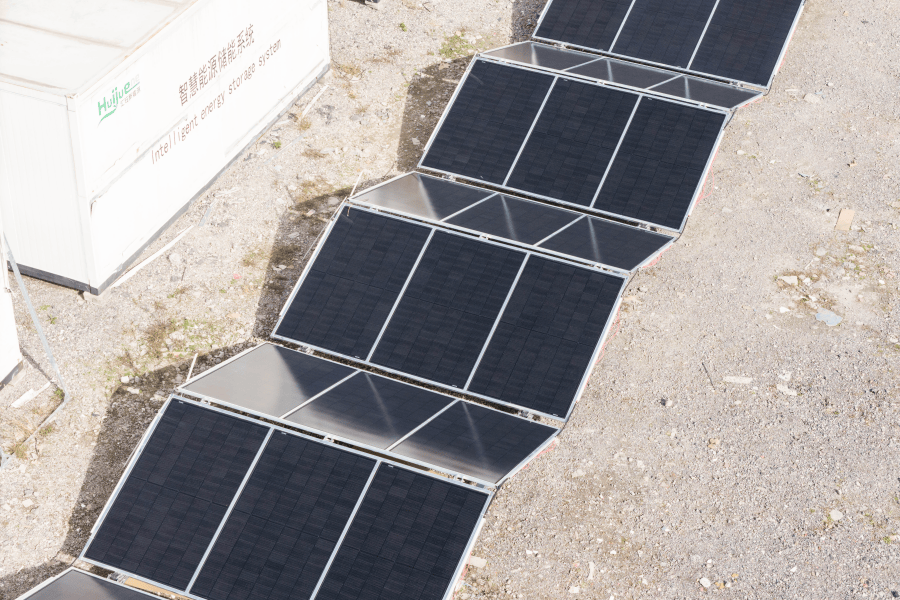
Table of Contents
- The Real Grid Challenge Isn't Always in Cities
- Why "Outside" Matters More Than You Think
- A Case in Point: Powering Islands in the Philippines
- The Thermal Management Game: C-Rate Isn't Just a Number
- LCOE: The Real Metric That Changes Decisions
- What This Means for Your Next Project in the US or EU
The Real Grid Challenge Isn't Always in Cities
Honestly, when we talk about grid resilience and renewable integration in the US and Europe, the conversation is dominated by big, interconnected transmission networks. But I've seen firsthand on site, some of the most instructive challenges - and solutions - come from the edges. Places where the grid is weak, non-existent, or impossibly expensive to extend. That's where the true test of a Battery Energy Storage System (BESS) happens. It's not just about peak shaving; it's about creating a reliable heartbeat for a community.
Think about remote industrial sites in West Texas, agricultural communities in Spain, or island grids off the coast of Scotland. The core problem is universal: how do you deliver stable, dispatchable power in harsh, isolated conditions without a multi-million dollar grid upgrade? The traditional answer involved diesel gensets - noisy, polluting, and with volatile fuel costs. The modern answer, as we're proving from Southeast Asia to the American Midwest, is ruggedized, outdoor utility-scale BESS.
Why "Outside" Matters More Than You Think
Here's a data point that always gets attention: according to the National Renewable Energy Laboratory (NREL), balance-of-system costs (everything except the battery cells) can account for 30-50% of a BESS project's capital expenditure. A huge chunk of that is the enclosure and climate control. The default for many has been a temperature-controlled warehouse or a custom-built container with massive HVAC.
But what if the system could just... live outside? I mean, properly outside. Not in a flimsy box, but in a truly hardened enclosure rated IP54 or higher. This isn't just a cost play - though slashing those auxiliary system costs is huge for Levelized Cost of Energy (LCOE). It's a deployment speed and flexibility game-changer. I remember a project in Northern Germany where the permitting and foundation work for a "building" to house batteries took longer than the actual system commissioning. A pre-certified outdoor solution would have cut months off the timeline.

A Case in Point: Powering Islands in the Philippines
Let's talk about a project that crystallizes all this. We deployed a 5MWh, IP54-rated outdoor BESS for a rural electrification microgrid in the Philippine archipelago. The setting: high humidity, salt spray from the ocean, intense tropical heat, and occasional typhoon-force winds. The challenge: replace and augment diesel generation to provide 24/7 power for a cluster of villages and a small fishery processing plant.
The "aha" moment for the client wasn't just the chemistry of the batteries. It was the system's environmental tolerance. The IP54 rating (ingress protection against dust and water jets from any direction) meant they could site it on a concrete pad near the solar array, minimizing DC cable runs and power conversion losses. The thermal management system was designed for high ambient heat, maintaining optimal cell temperature without consuming a significant portion of the stored energy for cooling - a critical factor for efficiency.
The result? Diesel fuel consumption dropped by over 70% in the first year. More importantly, power quality improved dramatically, enabling that processing plant to run more sensitive machinery. This is a direct parallel to, say, a remote mining operation in Arizona or an agro-industrial complex in rural Italy.
The Technical Nuts and Bolts (Made Simple)
For the non-engineers making the buying decisions, here's the breakdown of why this setup worked:
- IP54 Enclosure: Think of it as a rugged, sealed suit of armor. It keeps the damaging elements (dust, rain, hose-down water) out while allowing for passive ventilation where needed. It's a standard we trust because it's testable and verifiable.
- C-Rate Consideration: This project used a moderate C-rate (the speed of charge/discharge). In harsh environments, a slightly lower C-rate often means less internal heat generation, which makes the thermal management system's job easier and extends battery life. It's about designing for durability, not just peak power specs on a brochure.
- UL 9540 & IEC 62933 Compliance: Even though this was in Asia, we built the system to these core safety and performance standards. Why? Because global best practice is global for a reason. It gave the local utility and investors immense confidence. For any project in North America or Europe, this is non-negotiable, and having a system already proven to that pedigree is a massive head start.
The Thermal Management Game: C-Rate Isn't Just a Number
Let me get a bit personal here. In my 20+ years, I've seen more battery performance issues stem from poor thermal management than from cell chemistry itself. An outdoor system in Nevada's desert or Southern Spain faces a brutal truth: it's hot outside, and the batteries themselves make heat when working.
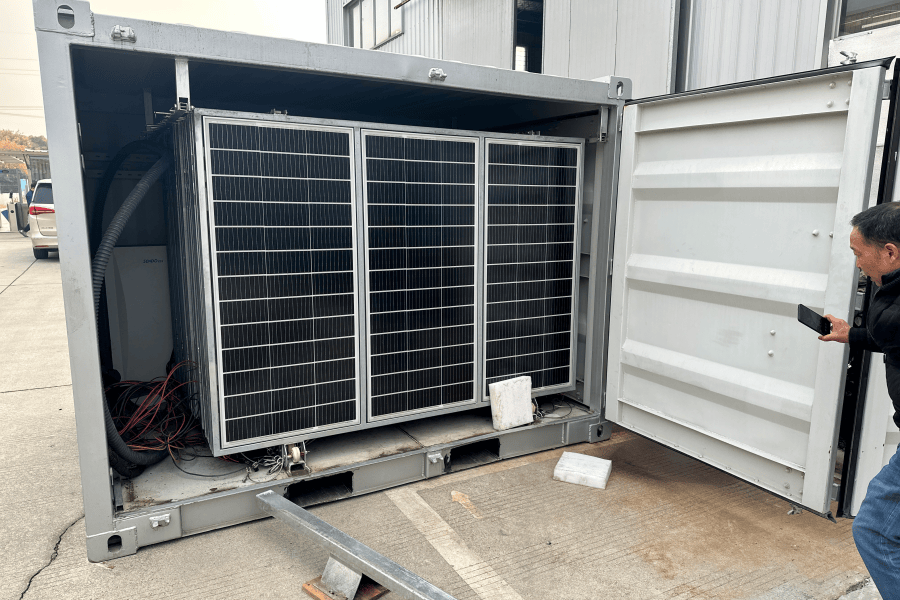
A well-designed system, like the one we used in the Philippines and what we at Highjoule Technologies insist on for our outdoor BESS line, doesn't just fight the ambient heat. It manages the internal heat. We use active liquid cooling with a closed-loop system that's incredibly efficient. It maintains a tight temperature band for the cells, whether it's 45C (113F) outside or -10C (14F). This stability is the single biggest contributor to hitting that 10,000-cycle-plus lifespan and keeping the LCOE low.
LCOE: The Real Metric That Changes Decisions
This brings us to the king of all metrics: Levelized Cost of Energy (LCOE). The International Renewable Energy Agency (IRENA) consistently shows that renewables-plus-storage is now outcompeting fossil fuels on new capacity LCOE in most of the world. But how do you drive that storage LCOE down further?
The Philippine case study shows the formula: Reduce CAPEX (no expensive building, simpler site prep), Reduce OPEX (high-efficiency thermal management cuts parasitic load, robust design minimizes maintenance), and Extend Lifespan (proper thermal and environmental control preserves the asset). When you run those numbers for a 20-year project life, the financial case for a purpose-built outdoor system in suitable climates becomes overwhelming. It turns a "nice-to-have" sustainability project into a "must-have" financial and operational upgrade.
What This Means for Your Next Project in the US or EU
So, you're looking at a grid support project in California, a wind farm smoothing application in Ireland, or an off-grid industrial site in Greece. The lesson from a tropical island half a world away is directly relevant.
Ask your vendor or your engineering team these questions, drawn straight from that real-world experience:
- Is the system truly designed for outdoor life (IP54/IP55) with relevant certifications (UL, IEC), or is it a indoor unit in a weatherproof box?
- How does the thermal system perform at the temperature extremes of my site? What's its parasitic load at 40C ambient?
- Is the system's C-rate and cycle life profile optimized for my duty cycle (daily arbitrage, frequency regulation, backup) and my local climate?
- Can you show me a similar deployment in a challenging environment?
At Highjoule, we've baked these lessons into our product development. Our outdoor BESS platforms are engineered from the ground up for this reality, because we've been the engineers sweating on those remote sites, trying to get reliable power to communities and industries. The goal isn't just to sell a battery container. It's to deliver a predictable, low-LCOE power asset that you can literally bolt to a slab and forget about - except when you see the positive impact on your grid stability and your balance sheet.
What's the most challenging environmental condition your next storage project will face? Maybe we've already tackled something similar.
Tags: BESS UL Standards IEC Standards Rural Electrification Utility-Scale Energy Storage Grid Stability IP54 Outdoor Deployment
Author
James Zhang
20+ years agricultural energy storage engineer / Highjoule CTO