
ROI Analysis of Black Start Capable BESS for Construction Site Power
Beyond Backup: The Real ROI of a Black Start BESS on Your Construction Site
Hey there. Let's grab a virtual coffee. Over my two decades on sites from Texas to Bavaria, I've had countless conversations with project managers just like you. The talk always starts with power - the lifeblood of any construction project - and it usually circles back to one gnawing question: "Is there a smarter, more resilient way to do this that actually makes financial sense?" Honestly, I get it. You're under pressure to keep costs down, timelines tight, and safety standards sky-high. Let's talk about why a Black Start capable Battery Energy Storage System (BESS) is moving from a'nice-to-have' to a core part of the answer, and more importantly, how to analyze its true Return on Investment.
Quick Navigation
- The Real Cost of "Temporary" Power
- Black Start BESS: More Than a Big Battery
- Building Your ROI Model: The Key Levers
- A Case in Point: From Theory to Muddy Boots
- The Expert Corner: What We Look For On Site
- Making the Decision: It's About Total Cost of Power
The Real Cost of "Temporary" Power
We all know the traditional setup: diesel generators, sometimes paired with a weak grid connection. It seems straightforward. But let's agitate that pain point a little. I've seen firsthand on site how a generator failure during concrete pouring or crane operation doesn't just mean idle workers. It means remobilization costs, potential material spoilage, and cascading delays that hit your critical path. According to data from the National Renewable Energy Lab (NREL), unplanned outages can increase construction project costs by 5-10% on average. That's not just fuel and rental fees; that's hard risk.
Then there's the noise, the emissions (increasingly a problem with local regulations), and the sheer logistical headache of refueling. You're not just paying for kilowatt-hours; you're paying for fragility.
Black Start BESS: More Than a Big Battery
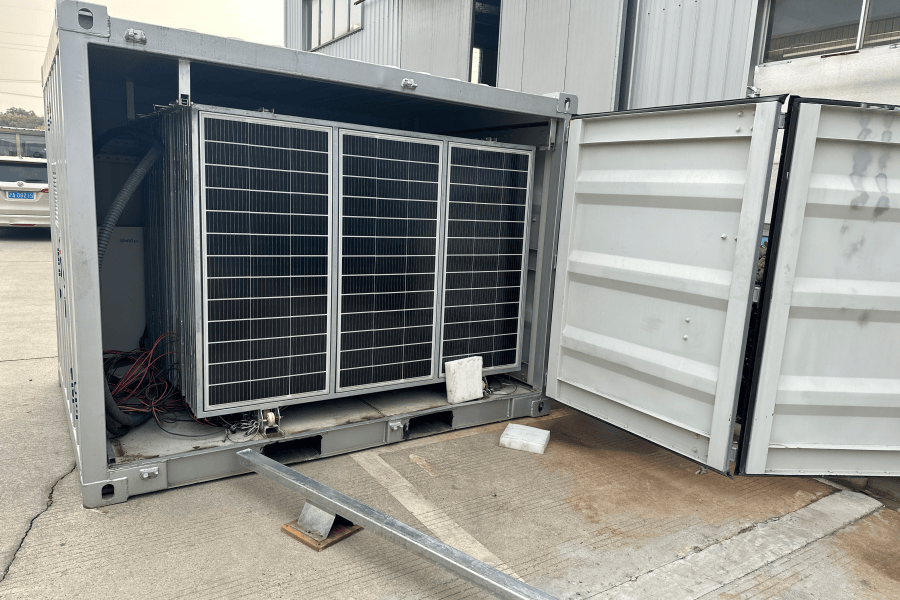
So, what's the solution? Enter the Black Start capable BESS. Think of it as the heart of a microgrid for your site. "Black Start" is the crucial ability to boot itself up from a completely dead state and then restart other loads - like your generators or critical site equipment - without needing an external grid. It's not just storage; it's an intelligent power platform.
This system typically integrates solar PV (a no-brainer on most sites), your existing generators, and the grid connection. The BESS becomes the maestro, orchestrating power flow. It smooths out demand spikes to avoid grid peak charges, runs silent on solar/battery alone for periods, and uses the generator only as a high-efficiency charger or for peak shaving. The result? You slash generator runtime by 60-80% in many cases.
Building Your ROI Model: The Key Levers
Analyzing the ROI isn't just about the sticker price of the container. You need to model the total cost of power over your project lifecycle. Here are the main levers to pull in your analysis:
Offsetting these are the capital expenditure (CapEx) of the BESS and its ongoing operational costs. This is where the technical pedigree of the system dictates its long-term value. A system built with robust, UL 9540 and IEC 62933 certified cells, superior thermal management, and a lower degradation rate will have a significantly better Levelized Cost of Storage (LCOS) - essentially the "cost per kWh" over its life - than a cheaper, less capable unit.
A Case in Point: From Theory to Muddy Boots
Let's make it real. We deployed a 500kW/1MWh system for a large logistics warehouse construction in North Rhine-Westphalia, Germany. The challenge: a weak grid connection, strict local noise/noxious emissions ordinances after 6 PM, and a tight schedule.
The solution integrated a rooftop solar array on the completed portions with a Highjoule BESS. The system was programmed for "silent operation" overnight, powering security and essential charging. During the day, it shaved peak loads from welding and heavy machinery. The generator only kicked in as a controlled battery charger during low-activity periods.
The result? A 76% reduction in generator hours, complete compliance with noise rules (allowing for longer work windows), and the project manager estimated they avoided two potential two-day delays from what would have been grid-related issues. The ROI payback was calculated at under 4 years, but the non-monetary benefits in community relations and schedule certainty were immediate.
The Expert Corner: What We Look For On Site
When I'm evaluating a BESS for a tough environment like a construction site, I'm looking past the spec sheet. Here's my insider take:
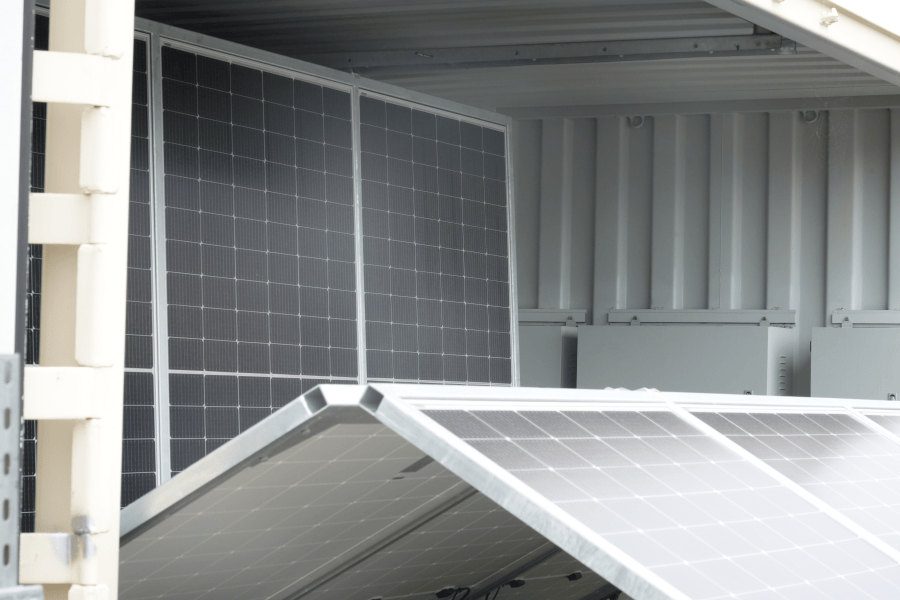
- Thermal Management is Everything: Batteries hate heat. A system with liquid cooling, like in our Highjoule units, maintains optimal temperature. This isn't just about safety (though it's paramount); it's about longevity. Consistent temperatures mean slower degradation, which directly protects your ROI by ensuring the system delivers its promised cycle life.
- C-Rate Isn't Just a Number: It's the speed of charge/discharge. A higher C-rate (say, 1C vs. 0.5C) means the battery can deliver more power faster - crucial for starting large motors or handling sharp load spikes. But it must be balanced with thermal performance. You need the right tool for the job, not just the biggest hammer.
- The "Black Start" Brain: The real magic is in the power conversion system (PCS) and controls. It needs to be rock-solid, able to detect a grid or generator failure in milliseconds, island the site, and stabilize voltage/frequency from a black state. This isn't DIY territory; it requires proven, UL/IEEE-compliant technology.
Making the Decision: It's About Total Cost of Power
So, how do you move forward? Start by treating your site's power as a holistic system, not a series of rentals. Partner with a provider that understands both the financial models and the on-the-ground realities of construction. At Highjoule, our process starts with a detailed analysis of your load profiles, fuel costs, and local tariffs. We'll model the ROI with you, transparently.
Then, we focus on deployment. Our systems are designed for rapid, containerized deployment - you're not building a data center. And because we've been in the field for nearly 20 years, our remote monitoring and local service networks are built to ensure the system performs, day in and day out, so your ROI model becomes reality.
The question isn't really "Can we afford a Black Start BESS?" It's becoming "Can we afford the old way of doing things?" When you run the numbers on total cost of power, including risk, the answer is getting clearer every day. What's the one power-related cost on your current project that keeps you up at night?
Tags: Construction Site Power UL Standard BESS Black Start Renewable Energy Microgrid ROI Analysis
Author
James Zhang
20+ years agricultural energy storage engineer / Highjoule CTO