
Real-world Case Study of Novec 1230 Fire Suppression Photovoltaic Storage System for Construction Site Power
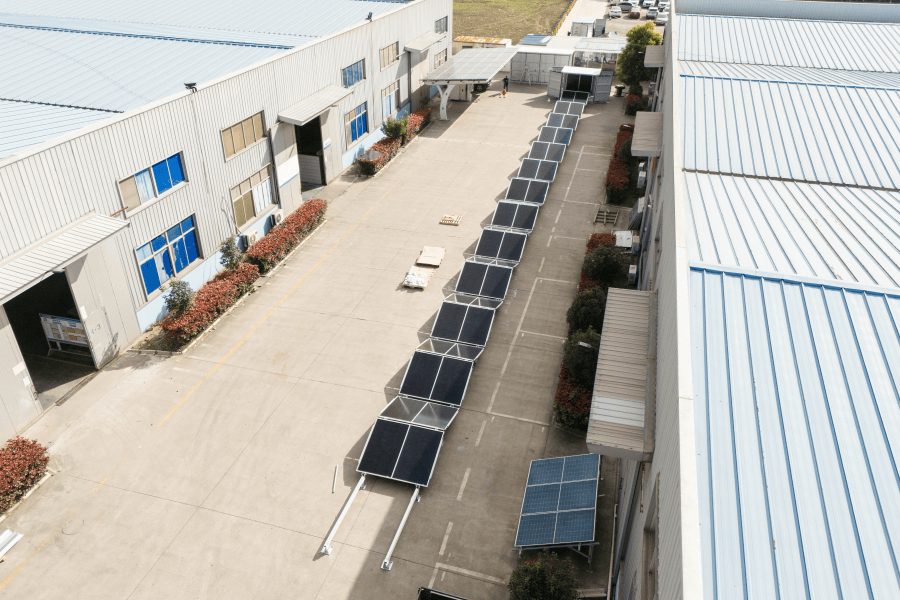
Table of Contents
- The Silent Hurdle on Every Modern Site
- Beyond the Smoke: The Real Cost of a "Simple" Solution
- A Case in Point: Powering Progress in the Pacific Northwest
- Why Novec 1230? It's About Chemistry and Common Sense
- The Expert Take: Safety That Doesn't Slow You Down
- Your Next Step: Asking the Right Questions
The Silent Hurdle on Every Modern Site
Let's be honest. When you're managing a construction project, your primary headaches are usually schedule, budget, and labor. Power is supposed to be a solved problem C you roll in a diesel generator, fuel it up, and forget about it. But that's changing fast. Across the US and Europe, I'm seeing a quiet revolution on job sites. More projects are turning to Battery Energy Storage Systems (BESS) paired with solar (PV) to cut fuel costs, reduce emissions, and meet stringent noise ordinances, especially in urban areas. It's a smart move, honestly. But it introduces a new, critical question that keeps project managers and safety officers up at night: What happens if this thing catches fire?
It's not a theoretical fear. The National Renewable Energy Laboratory (NREL) has done extensive research into battery failure modes, and thermal runaway C that uncontrolled chain reaction inside a battery cell C is a recognized risk that needs engineered mitigation. On a remote site, a fire isn't just an equipment loss; it's a potential project-stopping, liability-laden disaster.
Beyond the Smoke: The Real Cost of a "Simple" Solution
So, the logical first step is to specify a fire suppression system. But here's where I've seen firsthand, on site, how the "standard" approach can backfire. Many think, "We'll just use a water mist or a traditional clean agent." Sounds good on paper, right?
Let me paint a picture from a project I consulted on last year. A large commercial development in Texas had a containerized BESS for site power. They used a conventional suppression system. During a minor electrical fault that triggered a high-temperature alarm (not even a fire yet), the system discharged. The cleanup was a nightmare. Water residue mixed with dust created a conductive mess on electrical components, leading to weeks of downtime for inspection and drying. The project's critical path was impacted, and the "simple" safety measure turned into a major cost center.
This is the agitation point: Your fire suppression system shouldn't be as damaging as the fire it's meant to prevent. For lithium-ion batteries, you need an agent that cools the reaction, doesn't conduct electricity, leaves zero residue, and is safe for workers in the unlikely event of accidental discharge. That's a tall order that water or many common agents simply can't fill, especially under the tight spatial and logistical constraints of a temporary construction site setup.
A Case in Point: Powering Progress in the Pacific Northwest
This brings me to a real-world case study that perfectly illustrates the solution. We were approached by the team behind a multi-phase residential tower project in Seattle. Their challenge was threefold: 1) Strict city noise and emissions codes limited diesel generator hours. 2) The site had limited space for fuel storage and generator placement. 3) Their risk-averse insurer demanded a best-in-class fire mitigation plan for any on-site energy storage.
Our proposal was a Real-world Case Study of Novec 1230 Fire Suppression Photovoltaic Storage System for Construction Site Power. We deployed a 500kWh containerized BESS, coupled with a temporary solar canopy, to provide peak shaving and overnight power. The cornerstone of the entire system's acceptance was the integrated Novec 1230 fire suppression system, designed to meet UL 9540A and NFPA standards.

The deployment was seamless. The pre-engineered container arrived on-site with the suppression system already installed and pre-commissioned. The local fire marshal was impressed with the system's clear design and the agent's safety profile. During the 18-month project, the system performed flawlessly. The BESS cut diesel fuel costs by an estimated 70%, and the project managers slept easier knowing the asset was protected by a system that would effectively suppress a thermal event without creating a secondary cleanup catastrophe.
Why Novec 1230? It's About Chemistry and Common Sense
You might wonder, what makes Novec 1230 the right fit for this specific, tough application? From an engineer's perspective, it checks every box for mobile or temporary BESS installations:
- Zero Residue: It evaporates completely. No sticky mess, no corrosive deposits on your valuable battery racks or electrical busbars. Post-discharge, you're looking at ventilation, not a multi-day cleanup.
- Non-Conductive: This is huge. It can be safely discharged directly onto live electrical equipment, drastically reducing the risk of short circuits that can exacerbate a situation.
- Effective Cooling: It's not just about smothering flames. Novec 1230 has a high heat capacity, meaning it absorbs thermal energy, helping to break the chain reaction of thermal runaway.
- People-Safe: Its low toxicity and high visibility during discharge (it creates a visible mist) are critical for construction sites where worker safety is paramount.
At Highjoule, we don't just bolt on a suppression tank. We design the system integration from the ground up. Our BESS containers have optimized airflow and sensor placement (thermal, smoke, gas detection) to ensure the earliest possible warning and the most targeted agent deployment, which is a key part of meeting the stringent safety assessments like UL 9540A that more and more AHJs (Authorities Having Jurisdiction) are requiring.
The Expert Take: Safety That Doesn't Slow You Down
Here's my insight after two decades: thinking about fire suppression as an "add-on" is where projects get into trouble. It must be a core design parameter, as fundamental as the battery's C-rate or the inverter's efficiency. When you spec a system like this, you're not just buying a battery box; you're buying risk mitigation and operational continuity.
Let's talk about LCOE (Levelized Cost of Energy) for a second. In the commercial world, it's all about the total cost over the asset's life. A cheaper BESS with an inadequate safety system has a hidden, massive LCOE spike waiting in the wings C the cost of a potential total loss, environmental remediation, and project delays. Investing in a proven, integrated safety solution from the start, like a Novec 1230 system, actually lowers your real-world, risk-adjusted LCOE. It protects your capital investment and keeps your project on schedule.
Our approach at Highjoule Technologies is built on this principle. We provide the full ecosystem: the UL/IEC-compliant BESS, the correctly engineered suppression system, and the local service support for commissioning and maintenance. Because what good is a safety system if no one locally knows how to service it?
Your Next Step: Asking the Right Questions
The transition to cleaner, quieter site power is inevitable. The question is how to do it smartly and safely. When you're evaluating a PV storage system for your next project, move "fire suppression" to the top of your checklist. Don't just ask, "Do you have it?" Ask:
- "What specific agent do you use, and what is its clean-up profile?"
- "How is the system integrated with the battery management system for early detection?"
- "Can you show me the UL 9540A test report for this specific configuration?"
- "What is the local service and inspection protocol?"
Getting clear answers to these questions is the difference between a checkbox on a spec sheet and a genuinely resilient power solution. The right system isn't a cost; it's your insurance policy for a smooth, successful, and safe project. What's the biggest safety concern holding your team back from adopting cleaner site power today?
Tags: Construction Site Power UL Standard BESS Photovoltaic Storage Renewable Energy US Market Europe Market Energy Storage Systems Novec 1230 Fire Safety
Author
James Zhang
20+ years agricultural energy storage engineer / Highjoule CTO