
Real-world Case Study: Novec 1230 Fire Suppression for Eco-resort PV Containers
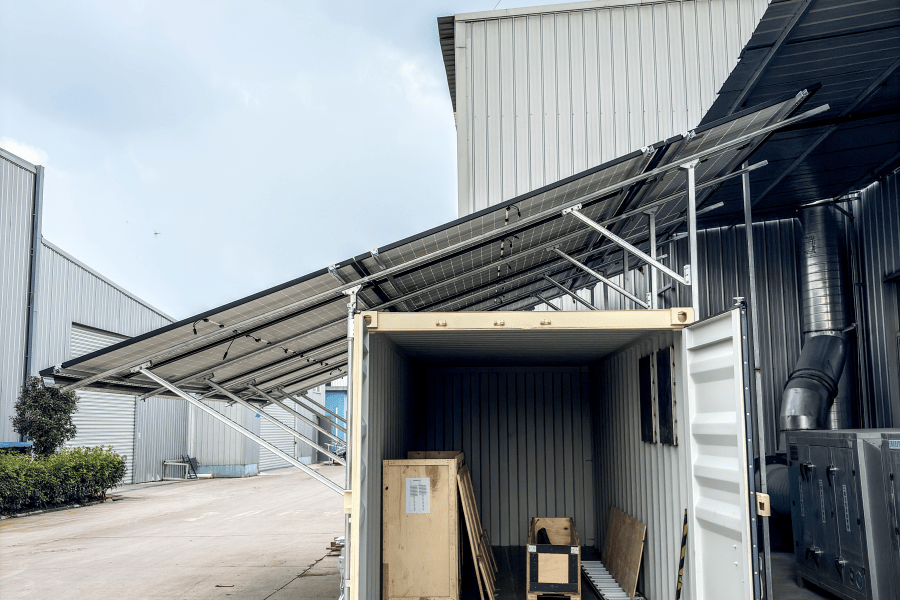
Table of Contents
- The Quiet Problem at Your Perfect Getaway
- The Safety Math That Keeps Executives Up at Night
- The Pre-Integrated Solution: More Than Just a Box
- A Real-World Snapshot: Powering Paradise Responsibly
- From the Engineer's Notebook: Why the Details Matter
- Your Next Step Towards a Safer, Smarter Asset
The Quiet Problem at Your Perfect Getaway
Picture this: you're finally unwinding at that high-end eco-resort, the one built with reclaimed wood and promises of 100% renewable energy. The sun powers your villa, and it feels good. But have you ever wondered where that solar energy goes when the sun sets or during a cloudy spell? Behind the scenes, often tucked away near the lush landscaping, is a battery energy storage system (BESS) C the silent, hard-working heart keeping the lights on and the experience seamless.
Honestly, this is where the real challenge begins for developers and operators. We're not talking about a simple rooftop home system. These are commercial-scale, containerized PV-plus-storage solutions powering entire facilities in often remote, environmentally sensitive, and aesthetically demanding locations. The core dilemma? How do you ensure absolute fire safety and reliability without turning the energy system into an eyesore or a logistical nightmare? I've been on sites where the fire suppression plan was an afterthought, leading to costly redesigns and delays that no project timeline can afford.
The Safety Math That Keeps Executives Up at Night
Let's agitate that problem a bit with some hard numbers. The International Energy Agency (IEA) notes the crucial role of storage in enabling renewable integration, but with deployment soaring, safety isn't just a regulatory box to tick C it's the foundation of your business case. A single thermal event in a standard container can lead to catastrophic loss, not just of the asset, but of reputation, and in these pristine locations, potentially an environmental incident. The cost isn't just in equipment; it's in business interruption, insurance premiums skyrocketing, and the sheer complexity of managing a fire incident miles from the nearest full-service fire department.
On top of that, local fire codes (like NFPA in the US) and international standards (IEC, UL 9540) are rapidly evolving, becoming stricter. The old approach of sticking a generic suppression system into a container post-factory often creates compliance gaps. I've seen this firsthand: a system that was "certified" but failed its final inspection because the integration wasn't holistic, leading to frantic, expensive rework with the local authority having jurisdiction (AHJ) looking over your shoulder.
Why Traditional Water-Based Systems Fall Short
- Space & Weight: Large water tanks and piping add significant footprint and weight, conflicting with the "minimal impact" ethos of an eco-resort.
- Secondary Damage: Water can cause extensive collateral damage to sensitive electrical equipment, often making the "cure" as costly as the problem.
- Freeze Risk: In many temperate eco-destinations, protecting water lines from freezing adds another layer of complexity and cost.
The Pre-Integrated Solution: More Than Just a Box
This is where the concept of a Real-world Case Study of Novec 1230 Fire Suppression Pre-integrated PV Container moves from a technical spec to a game-changing solution. It's about shifting the safety paradigm from reactive to inherently safe by design. At Highjoule, we don't view the container as just an enclosure; it's a pre-engineered, pre-tested ecosystem. The Novec 1230 clean agent system is built-in, not bolted-on.
This agent is a star for this application. It extinguishes fire primarily by heat absorption, leaving no residue, which is perfect for protecting sensitive battery racks and inverters. It's electrically non-conductive and has a low toxicity profile, making it safer for occupied spaces nearby and the surrounding environment C a non-negotiable for any true eco-resort. Crucially, systems using agents like Novec 1230 are widely recognized and accepted under UL and IEC standards, which smoothes the path with local inspectors.

A Real-World Snapshot: Powering Paradise Responsibly
Let me share a scenario that's becoming more common, based on several projects we've supported. A luxury eco-resort development in a coastal Mediterranean region needed to achieve full energy independence. Their challenge was triple: extreme aesthetic requirements (no visible industrial equipment), a sensitive coastal ecosystem, and a remote location with limited fire response.
The solution was a turnkey, pre-integrated containerized BESS with PV inverters and the Novec 1230 system already installed, tested, and certified at our facility. Here's what that meant on the ground:
- Deployment Speed: The unit arrived on site as a "power plant in a box." It was positioned, connected, and commissioned in weeks, not months. The fire suppression system required no additional field engineering.
- AHJ Approval: Presenting the UL certifications for the pre-engineered suppression system significantly streamlined the permitting process with the local fire marshal. We spoke their language of compliance from day one.
- Peace of Mind: The resort operators have a 24/7 monitoring dashboard, but they sleep easier knowing the system has an autonomous, immediate-response safety net that won't ruin the equipment it's designed to protect.
From the Engineer's Notebook: Why the Details Matter
When we talk about pre-integration, it's not just about the fire system. It's about the harmony of all components. Let's break down two key concepts we optimize in these containers:
Thermal Management: This is the unsung hero of BESS safety and longevity. A battery's worst enemy is heat. In our containers, the cooling system (whether air or liquid-based) is designed in tandem with the fire suppression. The goal is to prevent thermal runaway long before the Novec 1230 would ever need to activate. Efficient thermal management directly boosts battery life and reduces the Levelized Cost of Energy Storage (LCOS) C a key metric for any project's ROI.
C-rate Considerations: For an eco-resort, demand can spike C think everyone returning from excursions and turning on AC simultaneously. The system's C-rate (charge/discharge rate) must handle these peaks. A pre-integrated design allows us to right-size the battery chemistry, power conversion systems, and thermal management as a single, optimized unit. This avoids the common pitfall of over-sizing (which is costly) or under-sizing (which stresses the batteries and increases risk).

Your Next Step Towards a Safer, Smarter Asset
So, if you're planning a remote microgrid, an eco-lodge, or any critical off-grid facility, the question isn't just "what storage do I need?" It's "how is the entire system engineered for unwavering safety and reliability from the inside out?" The Real-world Case Study of Novec 1230 Fire Suppression Pre-integrated PV Container approach represents a maturity in our industry where safety is the default, not an option.
At Highjoule Technologies, with nearly two decades in the field, we've learned that the best solutions are the ones you don't have to worry about. They just work, safely and efficiently, letting you focus on your core business C creating unforgettable experiences. What's the one safety or compliance hurdle you're currently facing in your next sustainable project?
Tags: UL Standard BESS Energy Storage Solar Container Novec 1230 Eco-Resort Fire Safety Off-Grid
Author
James Zhang
20+ years agricultural energy storage engineer / Highjoule CTO