
Rapid BESS Deployment: Lessons from Philippine Rural Electrification for US & EU Grids
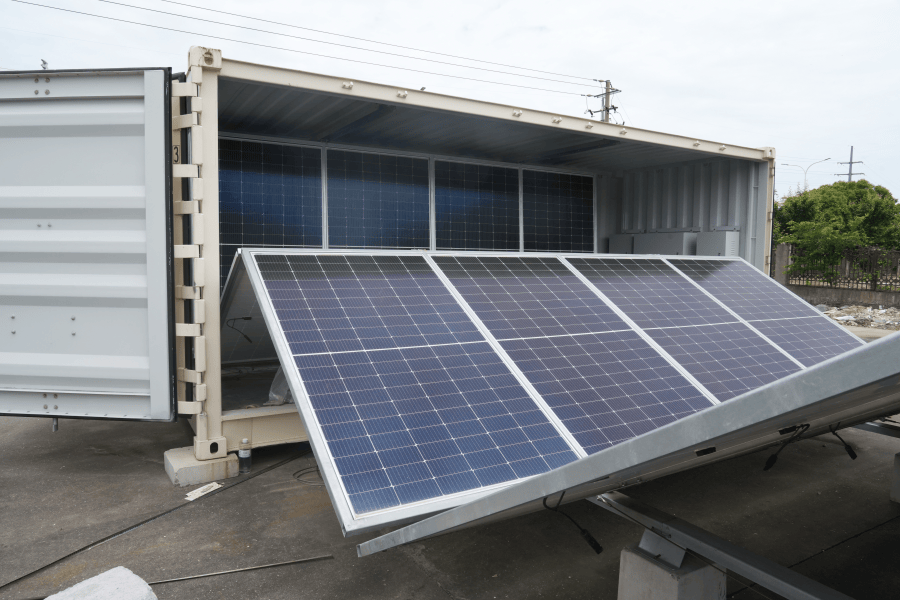
Table of Contents
- The Speed vs. Stability Paradox in Modern Grids
- The Real Cost of Waiting: More Than Just Dollars
- A Blueprint from the Islands: The Philippine Case in Focus
- Engineering the Fast Track: C-Rate, Thermal Mgmt. & LCOE Explained
- Bringing It Home: Application in US & EU Contexts
- The Human Element: Why On-Site Experience Can't Be Automated
The Speed vs. Stability Paradox in Modern Grids
If you're managing a commercial or industrial portfolio in the US or Europe right now, you're likely facing a tough equation. On one hand, the pressure to integrate renewables and build resilience is immense - blackout risks, demand charges, and ESG goals are very real boardroom topics. On the other, the traditional path to deploying a Battery Energy Storage System (BESS) can feel... slow. Permitting, interconnection studies, sourcing components, on-site assembly - it's a marathon, not a sprint. Honestly, I've been on sites in Texas and Germany where the project timeline stretched so long that the original financial assumptions started to drift. The grid's needs are urgent, but our deployment methods haven't always kept pace.
The Real Cost of Waiting: More Than Just Dollars
Let's agitate that pain point a bit. It's not just about timeline slippage. Every month of delay represents lost revenue from avoided demand charges or missed grid service opportunities. More critically, it's a period of continued exposure to volatile energy prices and grid instability. According to the National Renewable Energy Laboratory (NREL), interconnection queues across the US are packed, with wait times often exceeding two years for new generation and storage. In the EU, ambitious REPowerEU goals are straining supply chains and local approval processes. This "deployment drag" directly impacts your project's Levelized Cost of Storage (LCOS) - a metric my team lives by. The longer the build, the higher the upfront capital sits idle, and the longer the return on investment is deferred.
And let's not forget safety. A rushed, on-site assembly under pressure can sometimes lead to compromises. A rapid, but controlled and pre-engineered deployment is what we actually need. That's the holy grail.
A Blueprint from the Islands: The Philippine Case in Focus
This is where looking at a Real-world Case Study of Rapid Deployment BESS for Rural Electrification in Philippines becomes incredibly instructive. You might think, "What do remote islands have to do with my industrial park in Ohio or my commercial facility in Bavaria?" The core challenges are surprisingly similar: the need for a robust, self-contained power solution, fast, in a logistically challenging environment, and one that must work reliably from day one with minimal local expertise.
In that Philippine project, the goal was to bring stable, 24/7 power to a community reliant on expensive and polluting diesel gensets. The challenge wasn't just technology; it was speed of impact. The solution deployed was a containerized, all-in-one BESS, pre-integrated with PV inverters, climate control, and fire suppression. It was factory-tested as a complete unit, shipped, and required only basic site prep and connection. From arrival on a cargo ship to commissioning, it was a matter of weeks, not years.

The lesson? Maximizing factory integration and minimizing on-site complexity is the key to speed and reliability. This approach directly tackles the "deployment drag" we see in the West. At Highjoule, we've taken this philosophy to heart. Our platform-based designs, like the HJ-Stack series, are built around this principle. They arrive on-site with 95% of the work done - pre-assembled, pre-wired, and pre-tested to stringent UL 9540 and IEC 62619 standards. This isn't just about selling a battery; it's about delivering a guaranteed outcome of energy security, on a predictable schedule.
Engineering the Fast Track: C-Rate, Thermal Mgmt. & LCOE Explained
Okay, let's get a bit technical - coffee shop style. How do you engineer for both speed of deployment and long-term performance? Three concepts are crucial:
- C-Rate: Think of this as the "athleticism" of the battery. A higher C-rate means it can charge or discharge its energy faster. For rapid grid response (like frequency regulation), you need a high C-rate. But it's a trade-off with longevity. In the Philippine case and for many C&I applications, a moderate, optimized C-rate provides the best balance of performance, cost, and lifespan. We select cells and design our system architecture based on the specific duty cycle, not just a spec sheet number.
- Thermal Management: This is the unsung hero. Batteries perform poorly and degrade quickly if they're too hot or too cold. A poorly managed system fails fast. Our containerized solutions use a proprietary liquid-cooling system that maintains an ideal temperature range uniformly across all cells. I've seen firsthand on site how this prevents "hot spots" and extends life by years, which dramatically improves the real-world LCOE. It's all baked in at the factory.
- LCOE/LCOS (Levelized Cost of Energy/Storage): This is your ultimate financial scorecard. It factors in all costs over the system's life: capital, installation, maintenance, degradation, and energy throughput. Rapid deployment slashes the installation and "soft" costs. Superior thermal management and cell selection slow degradation. Together, they produce a lower, more attractive LCOS, making the business case solid.
Bringing It Home: Application in US & EU Contexts
So, how does this translate to a warehouse in California or a manufacturing plant in Poland's special economic zone? The principles are directly applicable.
Take a recent project we supported in Northern Germany. A mid-sized manufacturer wanted to cap their peak demand, integrate a new rooftop solar array, and provide backup power for critical processes. The local grid connection upgrade quote was prohibitive and would take 18 months. The alternative? A pre-certified, containerized BESS from Highjoule, sited behind the meter. It was delivered and interconnected in under 14 weeks. It now manages their load, stores solar excess, and provides seamless backup - all without a single grid upgrade request. The rapid deployment was the only way the project's economics worked.
The model is versatile:
| Scenario | Traditional Approach Pain | Rapid-Deployment BESS Solution |
| Microgrid for a Data Campus | Long lead times for custom engineering | Deploy scalable, pre-engineered BESS blocks in phases |
| Wind Farm Grid Support (Ireland) | Uncertainty in on-site construction in harsh weather | Ship fully tested, weather-proof containers ready for connection |
| Urban C&I Peak Shaving | Space constraints and complex urban permits | Compact, turnkey system with predictable footprint and pre-approved safety designs |
The Human Element: Why On-Site Experience Can't Be Automated
Finally, let's talk about the last mile. The best pre-fabricated system still needs to be placed, connected, and commissioned by people. This is where two decades of field experience becomes non-negotiable. We design our systems not just to UL and IEC standards, but for the reality of a rainy Tuesday afternoon on a job site. Clear access panels, color-coded wiring harnesses, and intuitive digital interfaces for the local technician. Our remote monitoring and proactive O&M support mean that once it's on, it's our job to keep it performing optimally - wherever in the world it is, Manila or Munich.
The story from the Philippines isn't just a case study; it's a validation of a methodology. It proves that when you prioritize speed, safety, and simplicity in design, you can overcome some of the most stubborn barriers to energy resilience. The question for you isn't whether you need storage, but how quickly and reliably you can get its benefits working for your bottom line. What's the cost of your next grid outage or demand spike, and how fast do you want a solution in place?
Tags: UL Standard Rapid Deployment Europe US Market Renewable Energy Grid Stability Battery Energy Storage System (BESS)
Author
James Zhang
20+ years agricultural energy storage engineer / Highjoule CTO