
Real-world Case Study: Tier 1 Battery Cell Off-grid Solar Generator for Telecom Base Stations
Table of Contents
- The Silent Problem: Powering the Unreachable
- Why It Hurts: More Than Just Downtime
- A Real-World Fix: The Tier 1 Cell Difference
- Case Study: The Alpine Site That Changed My Mind
- The Tech Behind The Trust (Made Simple)
- Beyond the Battery Box
The Silent Problem: Powering the Unreachable
Let's be honest. When we talk about the energy transition, the headlines are all about massive grid-scale batteries and sleek home powerwalls. But there's a whole other world out there, one I've spent a good chunk of my 20+ years in: the remote, off-grid telecom base station. These unsung heroes of connectivity are often perched on mountaintops, tucked in forests, or sitting in deserts. Their job is critical C keeping communities and services online. Their biggest headache? Reliable, resilient, and safe power, 24/7, with no grid to lean on.
For decades, the default has been diesel gensets. They're loud, dirty, need constant refueling (which is a logistical nightmare and cost monster in remote areas), and let's not forget the carbon footprint. Solar hybrid systems seemed like the obvious savior. But early deployments? Honestly, I've seen the aftermath on site. Failures weren't usually from the solar panels. They almost always traced back to the heart of the system: the battery.
Why It Hurts: More Than Just Downtime
The pain here is multi-layered. It's not just a "oops, we're offline" moment. The International Energy Agency (IEA) highlights that improving energy access in remote areas is a key pillar of sustainable development, and unreliable power directly undermines that. Let me break down the real aggravation:
- Total Cost of Ownership (TCO) Spiral: A cheap battery that fails in 2-3 years means you're not just buying batteries twice as often. You're paying for multiple helicopter lifts or specialized truck access to a remote site for replacement. The installation cost alone can dwarf the hardware.
- Safety as a Non-Negotiable: An off-grid site is often unattended. A thermal runaway event in a poorly managed battery pack isn't just a equipment loss; it's a potential wildfire starter and a massive liability. Standards like UL 9540 and IEC 62619 aren't just checkboxes for us; they're the blueprint for sleeping soundly at night.
- Reputational Damage: For a telecom operator, a dropped zone isn't just lost revenue. It's eroded trust. Communities and businesses rely on that signal.
A Real-World Fix: The Tier 1 Cell Difference
This is where our real-world case study gets practical. The solution isn't a magical new chemistry (though those are exciting). It's about applying proven, high-quality components with rigorous engineering specifically for this brutal application. The core of it? Insisting on Tier 1 battery cells for off-grid solar generators.
What does "Tier 1" mean in the trenches? It doesn't just mean a famous brand name. It means cells from manufacturers with a decade-plus of proven, large-scale manufacturing consistency, published third-party test data, and transparent supply chains. These cells have predictable performance curves, lower degradation rates, and most importantly, come with a history of safety data that our engineering teams can actually design with, not around.

Case Study: The Alpine Site That Changed My Mind
Let me tell you about a project in the Rocky Mountains. A telecom client needed to upgrade a site serving a critical ski resort and emergency services corridor. The old lead-acid system was failing every winter, crushed by the cold and depth of discharge. Diesel delivery in winter was hazardous and prohibitively expensive.
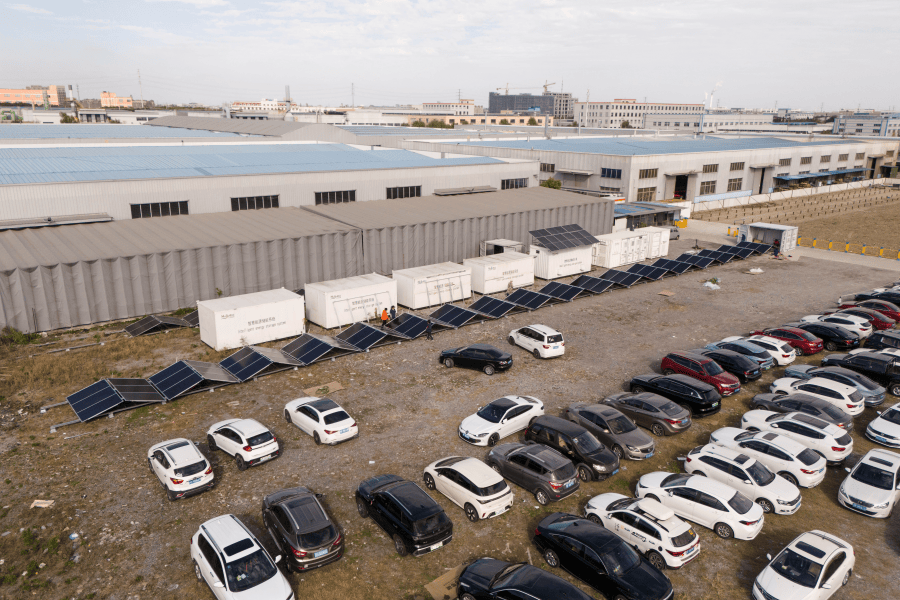
The challenge was the environment: temperatures from +25C to -30C, heavy snow load, and only summer access for maintenance. We designed a containerized BESS solution paired with a ground-mount solar array. The heart was a battery system built with Tier 1 NMC cells.
Here's what made it work:
- Cell-Level Confidence: Using cells with a known, stable degradation profile allowed us to right-size the battery. We didn't need to massively overbuild to hedge against unknown fade. This directly optimized the Levelized Cost of Energy (LCOE) for the site.
- Thermal Management as Priority #1: We didn't just slap a heater in a box. The system used a liquid cooling plate system that actively managed cell temperature within a 3C window of the optimum point, whether it was a blazing summer day or a deep freeze. This is non-negotiable for cycle life and safety with lithium-ion.
- Compliance by Design: The entire system, from cell to container, was designed to meet UL 9540 and the latest IEEE standards for stationary storage. This wasn't an afterthought; it was the foundation, which sped up local permitting and gave the client's risk managers huge peace of mind.
Three years in, the system's performance data is within 98% of our initial modeling. The diesel genset now runs less than 50 hours a year, only for the absolute worst-case weather scenarios. The client's O&M team checks it via remote monitoring; they haven't had to send a physical crew for a battery issue.
The Tech Behind The Trust (Made Simple)
I know terms get thrown around. Let me demystify two critical ones in plain English:
C-rate (Charge/Discharge Rate): Think of this as the "speed limit" for the battery. A 1C rate means you can fully charge or discharge the battery in one hour. For telecom, we often don't need super high C-rates. We need a consistent and efficient rate, usually around 0.5C or lower. Tier 1 cells give us very efficient performance at these real-world rates, meaning less energy is wasted as heat during daily cycles.
Thermal Management: This is the battery's climate control system. Batteries hate being too hot or too cold. Poor thermal management leads to rapid aging and, in extreme cases, can create dangerous conditions. Our approach at Highjoule is to treat the thermal system as a core performance component, not an accessory. It's why we invest in designs that maintain even temperature across every single cell, because a chain is only as strong as its weakest link.
Beyond the Battery Box
The real-world case study shows that success isn't just about the cells. It's about the system built around them. This is where our experience at Highjoule truly comes into play. It's the integration C the battery management system (BMS) that speaks the same language as the solar inverter and the legacy site controllers. It's designing for localized deployment; a system for Northern Europe will have different condensation control needs than one for the Arizona desert.
It's also about thinking ahead on service. We design for modularity. If a module needs replacement years down the line, it can be swapped without dismantling the entire site, keeping those brutal field service costs in check.
So, if you're evaluating an off-grid or microgrid power solution, especially for a critical load like telecom, my on-the-ground advice is this: dig past the headline specs. Ask about the cell provenance. Ask to see the third-party safety certification reports. Ask how the thermal system handles the extreme temps your site will actually face. The right foundation of Tier 1 cells, wrapped in robust, standards-compliant engineering, doesn't just power a site. It secures an investment and guarantees a service for the long haul.
What's the most extreme environment you're trying to power? I've probably seen one like it.
Tags: UL Standard BESS LCOE Energy Storage Renewable Energy Tier 1 Battery Cells Off-grid Solar Telecom Power
Author
James Zhang
20+ years agricultural energy storage engineer / Highjoule CTO