
ROI Analysis of 20ft High Cube BESS for Telecom Base Stations | Highjoule Tech
Beyond the Price Tag: The Real ROI of a 20ft BESS for Your Telecom Site
Honestly, when we sit down with telecom operators in Texas or Germany, the first question about deploying a Battery Energy Storage System (BESS) is rarely about the latest cell chemistry. It's a much more direct, and frankly, more important one: "What's my return on investment, and when do I get it?" I've been on-site for dozens of these deployments, and I can tell you, the spreadsheet numbers only tell half the story. The real ROI of a 20-foot High Cube containerized BESS for a telecom base station isn't just about shaving dollars off your utility bill - it's about resilience, operational control, and future-proofing your most critical assets. Let's talk about what that really looks like.
Quick Navigation
- The Real Problem: More Than Just a Power Bill
- The Agitating Cost of Downtime and Spikes
- The 20ft High Cube Solution: Your Swiss Army Knife for Power
- Breaking Down the ROI: A Pragmatic Model
- A Case in Point: Site Alpha in California
- Expert Insights: The Devil's in the Thermal & Control Details
- Making the Move: What to Look For
The Real Problem: More Than Just a Power Bill
You know the pain points. Grid power is getting less predictable and more expensive. According to the U.S. Energy Information Administration (EIA), commercial electricity prices have seen significant volatility. But for telecom, the issue is deeper. A base station isn't just another load; it's a mission-critical facility. A power outage doesn't just mean a dark building - it means thousands of dropped calls, lost data packets, and a direct hit to your service level agreements (SLAs) and brand reputation. On top of that, many utilities impose severe demand charges - fees based on your highest 15-minute power draw in a month. One short spike from your backup generators kicking in, or even your normal cooling system cycling, can inflate your bill for the entire period.
The Agitating Cost of Downtime and Spikes
Let's amplify that for a second. I was on a site in the Midwest where a brief grid disturbance triggered the legacy backup systems. The resulting power quality issue didn't cause an outage, but it created a demand spike that added over $8,000 to that month's single-site electricity bill. That's pure, avoidable cost. Furthermore, aging diesel generators aren't just noisy and polluting; they're expensive to maintain and test, and they have a worrying habit of failing to start when you've relied on them for years. The traditional approach - oversized generators and basic UPS systems - is becoming a financial and operational liability, not an asset.
The 20ft High Cube Solution: Your Swiss Army Knife for Power
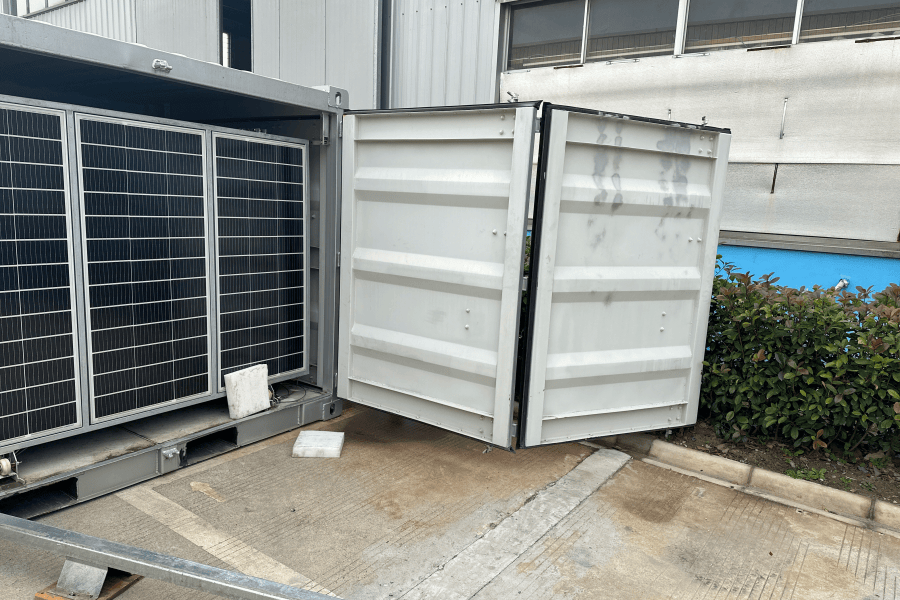
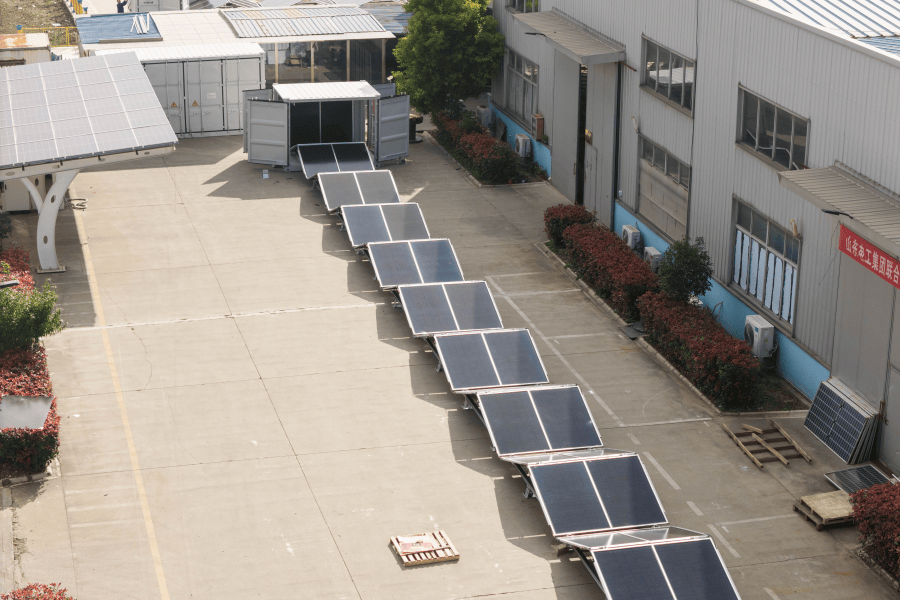
This is where a properly sized and integrated 20ft High Cube BESS changes the game. Think of it not as a simple battery, but as a dynamic power asset. Its standardized container format is a key advantage - it's easily transportable, permits are more straightforward, and it can be deployed rapidly on a simple concrete pad. But the magic is inside. A modern system like the ones we engineer at Highjoule Technologies is designed to perform multiple revenue-protecting and generating functions simultaneously:
- Peak Shaving: Actively discharges to cap your power draw from the grid, slashing those punitive demand charges.
- Backup Power: Provides seamless, instantaneous transition during grid outages, keeping your site online for hours without starting a generator.
- Energy Arbitrage: Charges when grid electricity is cheap (often at night) and discharges during expensive peak periods.
- Generator Integration: Can work in tandem with existing generators, allowing them to start under optimal load and run at efficient, steady states, drastically reducing fuel use and maintenance.

Breaking Down the ROI: A Pragmatic Model
So, what does the ROI analysis actually involve? Forget complex financial jargon. We typically model it around three core savings streams over a 10-15 year system life:
| Savings Stream | How It Works | Impact |
|---|---|---|
| Demand Charge Reduction | BESS discharges during short, high-load periods to flatten the peak draw from the grid. | Often the largest and fastest payback component, especially in regions with high demand rates. |
| Energy Cost Arbitrage | Buy low (off-peak), use/discharge high (on-peak). Simple. | Steady, recurring savings that grow as utility rate differentials widen. |
| Generator Fuel & Maintenance | Reduces generator runtime by 80%+. Fewer starts, less wear, less fuel. | Lowers opex, extends generator life, reduces carbon footprint and noise complaints. |
The initial CapEx for the BESS is offset against these cumulative opex savings. With today's advanced lithium-iron-phosphate (LFP) cells offering longer cycle life and safer chemistry, the payback period for a well-utilized telecom site in markets like CAISO (California) or Germany can be surprisingly attractive - often in the 4-7 year range. After that, it's essentially printing savings for the life of the system.
A Case in Point: Site Alpha in California
Let me give you a real example, though I've changed the name. We deployed a 20ft Highjoule BESS at a critical cell tower site in California for a major operator. The challenge was threefold: skyrocketing demand charges, unreliable grid power during wildfire prevention shutoffs, and strict local emissions limits on generator testing. Our system was integrated behind the meter with the existing power plant.
In the first year, the BESS's peak shaving capability alone reduced their demand charges by 34%. During a planned public safety power shutoff (PSPS) event, the site ran on battery power for over 9 hours before the grid was restored, never once firing up the diesel gen. The operator saved thousands in fuel and avoided potential fines for non-essential runtime. The operational confidence it gave their network team? Priceless. The ROI timeline accelerated by nearly 18 months thanks to these avoided cost events.
Expert Insights: The Devil's in the Thermal & Control Details
Here's the insider perspective you need for a true ROI analysis: not all BESS containers are equal. The financial model depends entirely on the system's reliability and longevity. Two things are non-negotiable:
1. Thermal Management: This is the heartbeat of system life. High ambient temperatures around a base station degrade batteries fast. Our designs use an independent, redundant cooling system that maintains an optimal, consistent temperature for the battery racks, regardless of the desert heat or seasonal swings outside. This directly protects your investment and ensures the system delivers the cycle life promised on the datasheet.
2. The "Brain" C The Energy Management System (EMS): The hardware stores energy, but the software extracts the value. A sophisticated, site-tuned EMS is what maximizes your ROI. It needs to predict load, understand complex utility rate tariffs, and decide in milliseconds the most economically optimal action: charge, discharge, or hold. It's this intelligence that turns a capital expense into a strategic asset.
Making the Move: What to Look For
If you're considering this path, focus on partners with proven, standardized technology that adheres to UL 9540 and IEC 62619 standards - this isn't just a checkbox, it's your safety and insurance bedrock. Look for a provider with direct, hands-on deployment experience in your region, who understands local utility interconnection rules and can offer long-term performance guarantees. At Highjoule, we build that local support and proactive remote monitoring right into our service model, because a system that isn't running optimally isn't delivering ROI.
The conversation is shifting from "Can we afford a BESS?" to "Can we afford not to have one?" Given the trends in grid instability, energy costs, and your own need for network resilience, what's the hidden cost of waiting another year?
Tags: UL Standard BESS Grid Resilience Telecom Energy Storage ROI Analysis Battery Container
Author
James Zhang
20+ years agricultural energy storage engineer / Highjoule CTO