
ROI Analysis of 20ft High Cube Hybrid Solar-Diesel Systems for Construction Sites
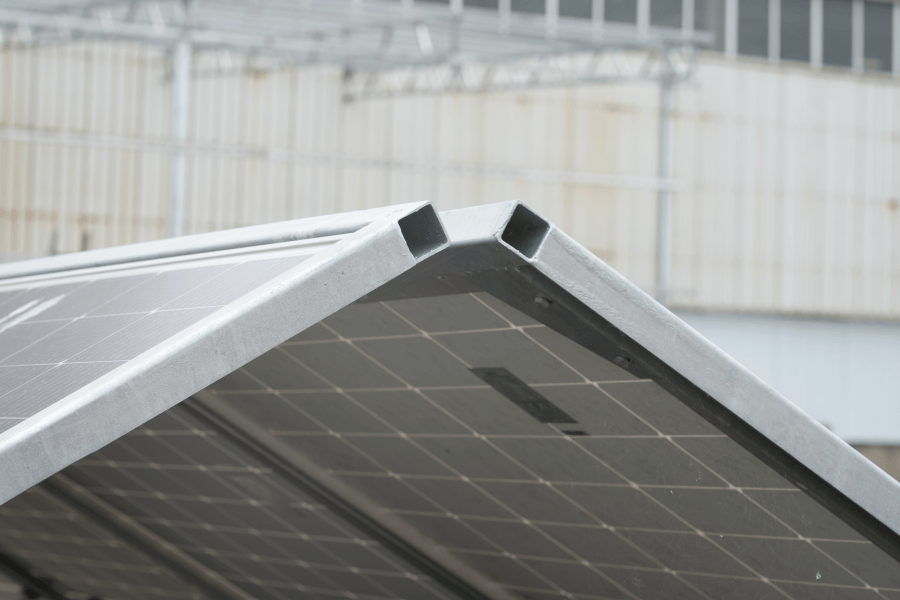
Table of Contents
- The Hidden Power Problem on Your Job Site
- Why Diesel Alone is Killing Your Project Budget
- The Hybrid Solution: More Than Just Panels on a Container
- Breaking Down the ROI: A Real-World Analysis
- Beyond the Numbers: Safety, Reliability, and Peace of Mind
- Is This For Your Next Site? Key Questions to Ask
The Hidden Power Problem on Your Job Site
Let's be honest. When you're managing a construction project, temporary power is often an afterthought - a line item for diesel gensets, fuel deliveries, and maybe some noise complaints from the neighbors. You plug in the generators, and that's that. But over my 20+ years deploying energy systems from Texas to Bavaria, I've seen this "simple" line item become a major budget killer and project risk. The real cost isn't just the fuel bill; it's the unpredictable spikes, the downtime during refueling, the emissions compliance headaches, and the sheer operational hassle. You're running a 21st-century construction operation on a 20th-century power model. That disconnect is where the pain - and the opportunity - lies.
Why Diesel Alone is Killing Your Project Budget
We need to agitate this problem a bit, because the status quo is expensive. A standard diesel generator might seem cheap to rent, but its total cost of ownership is brutal. I was on a site in California last year where the project manager showed me his fuel logs. For a mid-sized site running two 250kVA gensets 24/7 for peak shifts, they were burning through nearly 3,000 gallons of diesel per week. At volatile diesel prices, that's a financial rollercoaster. According to the National Renewable Energy Laboratory (NREL), fuel can account for 60-75% of the lifetime cost of a diesel generator. Let that sink in.
But it's worse than just fuel. There's the constant maintenance, the carbon footprint that's increasingly scrutinized by clients and regulators, and the noise that limits work hours. The biggest issue I've seen firsthand? Load mismatch. Gensets are inefficient at partial load. Your site might need 80kW on average but 200kW for heavy equipment surges. That genset is guzzling fuel at a terrible efficiency just to be ready for that peak. It's like driving a semi-truck to the grocery store - it works, but the cost per mile is insane.
The Hybrid Solution: More Than Just Panels on a Container
This is where the ROI analysis of a 20ft High Cube hybrid solar-diesel system becomes more than an academic exercise; it's a practical blueprint for site managers. The solution isn't about replacing diesel entirely overnight - that's not realistic for most heavy construction. It's about intelligently integrating solar generation and battery storage with your existing diesel setup to create a optimized, resilient microgrid.
Picture a standard 20ft shipping container. Now, imagine it transformed: the roof packed with high-efficiency solar panels, the interior housing a UL 9540-certified battery rack (that's the gold standard for safety), a sophisticated power conversion system, and a control brain that manages everything. This container becomes your site's power plant. It uses solar as the primary source when the sun is shining, stores excess energy in the batteries, and uses that stored energy to cover base loads or peak shaving. The diesel generator? It becomes a backup, only kicking in when absolutely necessary - during prolonged bad weather or extreme demand. This slashes its runtime from 24/7 to maybe a few hours a day.

From Theory to Dirt: A Glimpse at a German Case
We deployed a system like this for a large infrastructure project in North Rhine-Westphalia, Germany. The challenge was powering a remote site office, lighting, and small tools while minimizing noise and emissions in a semi-residential area. The old setup was a single, noisy 100kVA genset. We installed one of our 20ft hybrid units. The result? Diesel runtime dropped by over 70%. The solar + battery system handled all daytime loads and charged the batteries to cover quiet night-time loads. The generator only ran for a brief period in the early morning. The site manager wasn't an energy expert, but he understood the numbers: his weekly fuel deliveries stopped, his noise complaints vanished, and he met the project's strict sustainability benchmarks. That's the hybrid advantage in action.
Breaking Down the ROI: A Real-World Analysis
Okay, let's talk numbers. What does the ROI actually look like? Honestly, it's compelling. The analysis hinges on a few key factors: your local solar irradiance (sunshine), diesel price, project duration, and your load profile.
Here's a simplified model based on a 12-month project with a consistent 50kW average load:
| Cost Factor | Diesel-Only Genset | 20ft Hybrid Solar-Diesel System | Notes |
|---|---|---|---|
| Fuel Cost (Annual) | $95,000 - $140,000 | $38,000 - $60,000 | Assumes 40-60% fuel savings. Diesel price volatility is a major risk for column 2. |
| Generator Maintenance | High | Reduced by ~60% | Less runtime = less wear and tear, fewer oil changes. |
| Capital/Rental Cost | Lower upfront | Higher upfront | The hybrid unit costs more initially. This is the key investment. |
| Carbon Tax / Compliance | Potentially high | Significantly lower | Increasingly relevant in Europe and parts of the US. |
| Payback Period | N/A | 2 - 4 years | For a long-term site or multi-site reuse, ROI is rapid. For a 1-year site, the math shifts to total cost of ownership savings. |
The magic is in the Levelized Cost of Energy (LCOE) - the total lifetime cost per kWh. Solar and battery power, once installed, have near-zero marginal cost. By maximizing their use, you dramatically lower your site's overall LCOE compared to 100% diesel-generated power. The battery's C-rate - basically, how fast it can charge and discharge - is crucial here. A system designed with the right C-rate can handle those big equipment surges instantly, preventing the need to fire up the genset. It's like having a super-capacitor for your site.
Beyond the Numbers: Safety, Reliability, and Peace of Mind
ROI isn't just dollars. It's risk reduction. When we at Highjoule design these 20ft containers, we build them to the toughest standards - UL 9540 for the energy storage system, IEC 62443 for cyber security in the controls, and IEEE 1547 for grid interconnection (if you ever want to tie in). This isn't just paperwork. On site, it means integrated thermal management systems that keep the batteries at optimal temperature in desert heat or winter cold, ensuring longevity and preventing thermal runaway. It means the system can be remotely monitored, so we can often diagnose an issue before it causes downtime.
I've seen sites where a generator failure meant a full day of lost labor. With a hybrid system, if the genset has a hiccup, the battery takes over seamlessly while the issue is addressed. That reliability, that continuity, has immense value that doesn't always fit neatly into a spreadsheet but is felt deeply by every project manager who's faced a delay.

Is This For Your Next Site? Key Questions to Ask
So, is a hybrid system right for you? Start with these questions:
- Project Duration: Is your site active for 9 months or more? The longer, the better the ROI.
- Fuel Access & Cost: Is delivering diesel to your site difficult or expensive?
- Load Profile: Do you have a steady base load (site offices, lighting) with intermittent peaks? That's the ideal hybrid candidate.
- Sustainability Goals: Does your company or client have carbon reduction targets?
- Reusability: Can you envision using this same container on your next 3-4 projects? That changes the economics entirely.
The energy landscape for temporary power is shifting. The smart move isn't to just buy or rent the same old equipment. It's to analyze your true cost of power and invest in a system that pays you back in fuel savings, reliability, and compliance. What's the one power-related cost on your current site that keeps you up at night? Maybe it's time we looked at that number together.
Tags: Construction Site Power UL Standard BESS LCOE Microgrid ROI Analysis Hybrid Power System Solar-Diesel
Author
James Zhang
20+ years agricultural energy storage engineer / Highjoule CTO