
ROI Analysis of 20ft Pre-integrated PV Container for EV Charging
Contents
- The Grid Strain and the EV Surge
- The Hidden Costs That Eat Your Margins
- The All-in-One Answer: A Containerized Power Plant
- Crunching the Real Numbers: A California Case Study
- Beyond the Basics: The Tech That Secures Your ROI
- Is It Right for Your Next Project?
The Grid Strain and the EV Surge
Let's be honest. If you're planning or operating EV charging stations in Europe or North America right now, you're facing a perfect storm. Demand is skyrocketing C BloombergNEF estimates there will be over 40 million public charging points globally by 2030. But grid connection queues are getting longer, and upgrade costs are, frankly, eye-watering. I've been on sites where the utility quote for a necessary transformer upgrade was more than the entire charging hardware deployment. It's a major bottleneck.
And it's not just about getting power. It's about the quality and cost of that power. Fast and ultra-fast chargers are like thirsty giants taking huge, sudden gulps from the grid. This causes demand charges to spike C a line item on your utility bill that can make or destroy your station's profitability. You're essentially being penalized for the very service you provide. There has to be a better way.
The Hidden Costs That Eat Your Margins
When we talk about ROI for EV charging hubs, most folks focus on the price per charger and the revenue per kWh. That's the surface layer. The real challenges C the ROI killers C are often buried deeper:
- Demand Charges: This is the big one. In many commercial tariffs, you pay not just for total energy used (kWh), but for your peak power draw (kW) in any 15 or 30-minute window. A cluster of 350kW chargers firing simultaneously can create a peak that slaughters your margins for the entire month.
- Grid Upgrade Delays & Costs: I've seen projects delayed 18 months waiting for utility infrastructure. The capital cost for these upgrades often falls on the site host, destroying project economics before a single EV plugs in.
- Intermittent Renewables: Pairing onsite solar with EV charging is a no-brainer for sustainability and cost. But the sun doesn't always shine during peak charging hours (evenings, for instance). Without storage, you're wasting cheap solar generation and buying expensive grid power later.
- Deployment Complexity: Sourcing PV panels, inverters, a separate battery system, medium-voltage switchgear, and getting them all to talk to each other safely and efficiently? It's a multi-vendor, multi-contractor nightmare that drags out timelines and inflates soft costs.
This is the problem we need to solve. And honestly, a piecemeal approach just adds more pieces to the puzzle.
The All-in-One Answer: A Containerized Power Plant
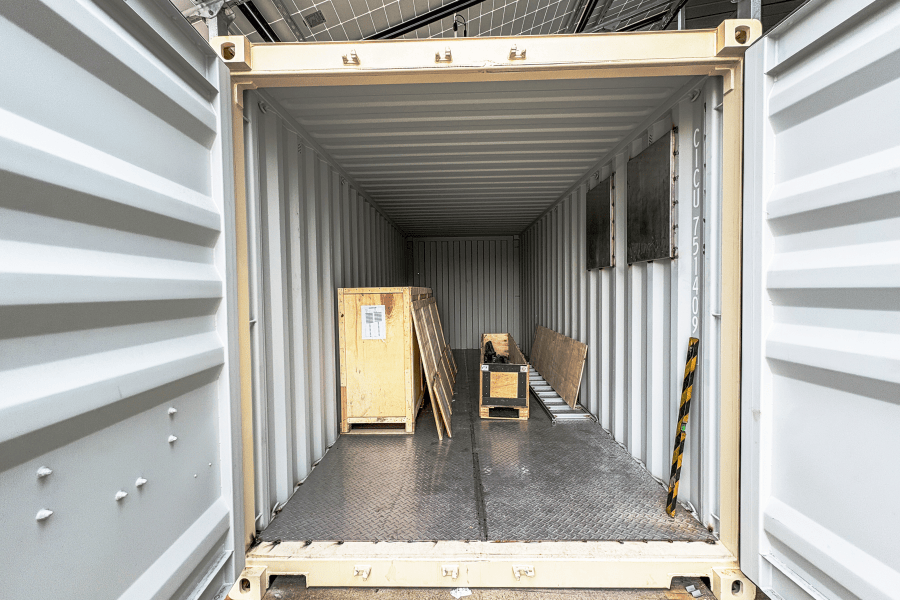
This is where the concept of the 20ft High Cube Pre-integrated PV Container shifts from being an interesting idea to a compelling financial tool. Think of it not as a "battery box," but as a pre-fabricated, plug-and-play power plant for your charging station.
At Highjoule, we build these units by integrating high-density lithium-iron-phosphate (LFP) battery racks, a bi-directional inverter/charger, a thermal management system, and fire suppression C all UL 9540/9540A and IEC 62619 certified from the factory C into a standard 20ft shipping container. The game-changer? We also mount a high-efficiency PV array directly onto the container's roof and sides, or design it to be the base for a adjacent canopy solar structure. It arrives on your site with 90% of the electrical work done. You're not buying components; you're buying a function: "Managed, resilient power for my EV hub."
The ROI logic becomes clear: you avoid or delay massive grid upgrade costs, you slash demand charges by using the battery to shave your peak grid draw, and you maximize consumption of your own cheap, clean solar energy. The container itself, with its built-in safety and grid compliance, dramatically reduces engineering, permitting, and construction time. Time-to-revenue is faster. It's that simple.
Crunching the Real Numbers: A California Case Study
Let me give you a real example from a project we supported in Southern California. A logistics park wanted to install a 6-bay fast-charging depot for its electric truck fleet. The utility's initial study showed a need for a $350,000 substation upgrade.
Instead, the developer opted for a Highjoule 20ft pre-integrated container with a 500 kWh battery and 120 kW of integrated PV. The container handled the peak charging loads, limiting the site's grid draw to a pre-set threshold. The result?
- Grid Upgrade Cost Avoided: $350,000 saved upfront.
- Demand Charge Reduction: By flattening the peak load, the system cut monthly demand charges by an average of 65%.
- Energy Arbitrage: The system charges the battery with low-cost overnight grid power and excess midday solar, then discharges during expensive peak evening hours.
- Deployment Time: The site was operational in 5 months vs. a projected 24+ months waiting for the utility upgrade.
The payback period, factoring in all incentives (like the US ITC which applies to the integrated system), dropped to under 4 years. After that, it's pure margin enhancement and resilience for the life of the asset. That's a tangible, bankable ROI.

Beyond the Basics: The Tech That Secures Your ROI
As an engineer who's stood in front of these systems in 115F Arizona heat and -20C Finnish winters, the "devil in the details" is what protects your investment. When we analyze ROI, we must talk about longevity and safety.
- Thermal Management is Everything: A battery's lifespan and performance are dictated by its temperature. Our systems use a liquid cooling loop that maintains an optimal, uniform temperature for every cell. This isn't just about preventing failure; it's about ensuring the battery delivers its full cycle life (10,000+ cycles with LFP chemistry) over 15+ years. A cheap, poorly cooled battery will degrade faster, destroying your long-term ROI.
- Understanding C-Rate (Simply): Think of C-rate as the "speed" of the battery. A 1C rate means a 500 kWh battery can discharge 500 kW for one hour. For fast charging, you need a high, sustained C-rate. Our systems are engineered for the high-power, rapid-cycling duty of EV charging without stressing the cells, which again, protects that long-term asset value.
- Lowering the Real LCOE: The Levelized Cost of Energy (LCOE) for this system combines the solar LCOE (very low) with the storage LCOE. The key is that by integrating them at the factory, we optimize the power conversion and controls, minimizing energy losses. Every percentage point of efficiency gained is more revenue in your pocket over decades.
This isn't just spec-sheet jargon. I've seen firsthand on site how this engineering rigor translates to systems that just?- run. Year after year. That's the foundation of a positive ROI.
Is It Right for Your Next Project?
So, who is this solution for? If your EV charging project is facing long grid queues, six-figure upgrade costs, punishing demand charges, or you simply want to future-proof your site with true energy independence, then a pre-integrated container deserves a place in your financial model.
The analysis moves from "Can we afford this?" to "What is the cost of not having it?" When you factor in avoided infrastructure, accelerated deployment, operational savings, and resilience against grid outages or price volatility, the picture often becomes clear.
At Highjoule, we've built our reputation on delivering these containerized solutions that meet the strictest UL, IEC, and IEEE 1547 standards for the North American and European markets. Our local teams handle interconnection studies and support, because we know that's part of the challenge too.
What's the single biggest hurdle you're facing in making your next EV charging project financially viable? Is it the upfront grid cost, or the ongoing operational expense? The answer might just fit in a 20-foot box.
Tags: UL Standard BESS LCOE Europe US Market EV Charging Infrastructure Renewable Energy
Author
James Zhang
20+ years agricultural energy storage engineer / Highjoule CTO