
ROI Analysis of Air-cooled Mobile Power Container for Data Center Backup Power
Contents
- The Hidden Cost of Waiting
- Beyond the Price Tag: What Really Eats into Your Backup Power Budget
- A Mobile, Air-Cooled Answer to the Grid's Unpredictability
- Breaking Down the ROI: A Real-World Perspective
- The Thermal Management Factor: Keeping Your ROI Cool
- A Case in Point: The California Colocation Project
- Thinking About Your Next Step?
The Hidden Cost of Waiting
Honestly, if I had a dollar for every time a data center manager told me their backup power strategy was "the diesel generators in the yard," I'd probably have retired by now. It's the classic playbook. But over my twenty-plus years of being on-site, from Texas to Bavaria, I've seen that playbook start to fray at the edges. The conversation isn't just about having backup anymore; it's about the cost of readiness. How much capital is sitting idle? How long does it take to get new capacity online when you're expanding? And with grid reliability becoming, let's say, a more lively topic of discussion (looking at you, NERC's 2023 Long-Term Reliability Assessment), the old ways are looking more expensive by the minute.
Beyond the Price Tag: What Really Eats into Your Backup Power Budget
When we talk about the ROI of backup power, the first number everyone looks at is the capital expenditure. But that's just the ticket to the game. The real expenses - the ones that quietly drain your budget - come after. I'm talking about the acres of real estate needed for fixed infrastructure. The 12 to 18-month lead times for permitting and construction of a new substation or permanent BESS facility. The complex, liquid-cooled thermal management systems that require specialized maintenance. And the sheer inflexibility of it all. What happens when your load profile changes, or you need to temporarily support another site? You can't exactly pick up a substation and move it.
This rigidity creates a massive financial drag. According to the International Energy Agency (IEA), global data center electricity consumption could double by 2026. That's a lot of new capacity needing backup, and the traditional approach simply doesn't scale fast or flexibly enough from a pure business standpoint.

A Mobile, Air-Cooled Answer to the Grid's Unpredictability
This is where the conversation around ROI Analysis of Air-cooled Mobile Power Container for Data Center Backup Power gets really practical. We're not just swapping one battery for another. We're fundamentally changing the deployment model. Think of it as "backup power as a service" in a physical, plug-and-play form. A containerized, air-cooled BESS that arrives on a truck, is connected via standardized interfaces, and is providing value within weeks, not years.
At Highjoule, when we design these systems for the US and EU markets, compliance isn't an afterthought - it's the foundation. Everything is built to UL 9540 and IEC 62933 standards from the ground up. This isn't just about safety (which is non-negotiable); it's about speeding up local authority approval. We've found that using pre-certified, containerized solutions can cut permitting timelines by more than half because inspectors are familiar with the packaged unit.
Breaking Down the ROI: A Real-World Perspective
So, let's get into the nuts and bolts of the ROI. It goes far beyond backup. A modern mobile BESS is a multi-tool. Yes, its primary function is to bridge a grid outage. But on day 1 through day 364, when the grid is fine, it's working to save you money.
- Peak Shaving (Demand Charge Reduction): This is often the biggest dollar saver. By discharging the battery during your facility's short periods of highest grid demand, you can dramatically slash the demand charges on your utility bill. I've seen this alone justify the investment for some of our industrial clients.
- Energy Arbitrage: Buy power from the grid when it's cheap (at night), store it, and use it when prices are high. The spread in these prices is only growing in markets like CAISO or Germany.
- Construction & Grid Upgrade Deferral: This is the hidden gem. Need to support a new server hall but the grid connection upgrade is 2 years out? A mobile BESS can provide the needed power stability and peak support now, allowing revenue-generating equipment to come online while you wait for the permanent fix.
The financial metric we use to tie this all together is the Levelized Cost of Storage (LCOS). It accounts for the total lifecycle cost divided by the total useful energy output. A well-utilized mobile BESS - doing backup, peak shaving, and arbitrage - achieves a vastly better LCOS than a dedicated, single-use system.
The Thermal Management Factor: Keeping Your ROI Cool
Now, why air-cooled? I've been in containerized BESS units in the Arizona desert and in humid Georgia summers. Thermal management is the heartbeat of system longevity and safety. Liquid cooling is fantastic for ultra-high-density, stationary mega-systems. But for mobility and simplicity, advanced air-cooling with intelligent, redundant fans and ducting wins.
It's more straightforward, with fewer points of failure (no pipes, no pumps, no coolant leaks). Maintenance can be done by more generalist technicians. And honestly, the energy efficiency of modern air-cooled systems, using smart algorithms to manage fan speed based on cell temperature, is often within a couple percentage points of liquid systems for the power densities we're talking about in mobile containers. This reliability directly protects your ROI by maximizing uptime and minimizing specialized OpEx.
A Case in Point: The California Colocation Project
Let me give you a real example. We worked with a colocation provider in Silicon Valley. Their challenge was classic: they needed to guarantee uptime for a new high-value client, but their site's grid connection was at its limit. A traditional upgrade was quoted at $2 million and an 18-month timeline.
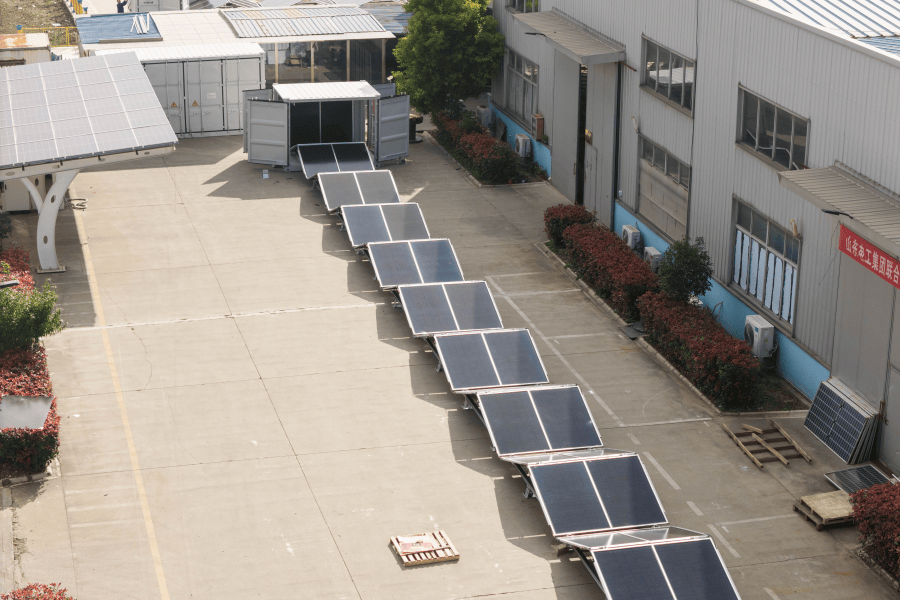
Instead, we deployed two of our UL 9540-certified, air-cooled mobile power containers. They were on-site and fully operational in under 90 days. The ROI analysis wasn't just about avoiding outage penalties. It quantified:
- Deferred grid upgrade cost: $2M capital pushed out.
- Monthly demand charge savings: ~$15,000.
- Revenue from the new client's lease, which could start immediately.
The system paid for itself in under 4 years through a combination of hard savings and new revenue enablement - and it's still there today, providing value. That's the power of a flexible asset.
Thinking About Your Next Step?
The math is becoming undeniable. The question for data center operators and managers isn't really if battery storage makes sense, but what kind and how to deploy it for the fastest, most robust return. The mobile, air-cooled model addresses the core business pains of speed, flexibility, and hidden costs head-on.
What's the one constraint in your expansion or reliability plan that keeps you up at night? Is it a looming grid upgrade, volatile demand charges, or just the fear of a multi-hour outage? That's usually the best place to start modeling your own ROI.
Tags: UL Standard BESS LCOE Data Center Backup Power ROI Analysis Mobile Power Container Air-Cooled BESS
Author
James Zhang
20+ years agricultural energy storage engineer / Highjoule CTO