
ROI Analysis of Black Start Capable Off-grid Solar Generators for Eco-Resorts
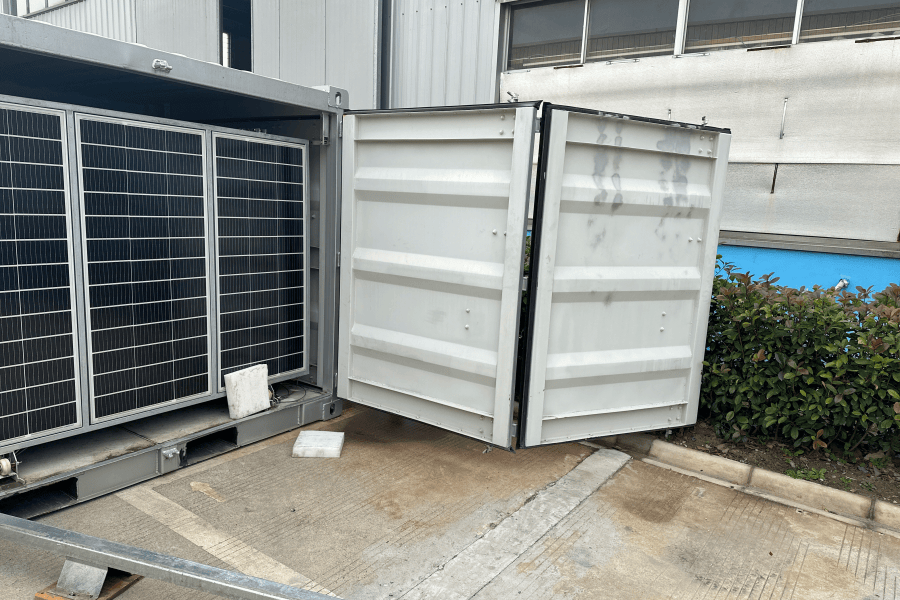
Table of Contents
- The Real Cost of Silence: When the Grid (and Generator) Fails
- Beyond the kWh: What "Black Start" Really Means for Your Business
- Crunching the Numbers: An Honest ROI Framework
- A Story from the Field: Northern California Eco-Lodge
- Making It Work: The Tech That Makes the ROI Positive
The Real Cost of Silence: When the Grid (and Generator) Fails
Let's be honest. If you're managing or developing an eco-resort in a beautiful, remote location, you've already had the conversation about power. The grid is weak or non-existent. The standard playbook says: install a diesel generator. Maybe you've even paired it with some solar panels to cut down on fuel runs and feel a bit greener. It works... until it doesn't.
I've been on-site for these "until it doesn't" moments. Picture this: a storm knocks out the local infrastructure. Your diesel genset is your lifeline. It sputters to life, but then a voltage spike or a simple maintenance oversight causes it to trip offline. Now you're in a blackout. A real blackout. The kind where not only are the lights off, but your entire system is dead. No control circuits, no pumps to restart the generator, nothing. This is the moment you realize the hidden cost of your backup plan: downtime. In our industry, we call this a "black start" scenario - the ability to boot up a power system from a state of complete collapse.
For an eco-resort, this isn't just an inconvenience. It's a direct hit to your revenue and reputation. According to data from the National Renewable Energy Laboratory (NREL), commercial facilities in areas with unreliable power can lose tens of thousands of dollars per hour during an outage. Now add your unique value proposition: guests pay a premium for a seamless, sustainable experience. A cold, dark, silent resort isn't just a refund waiting to happen; it's a 1-star review that permanently tarnishes your brand. The old diesel-only model introduces massive operational risk that simply doesn't show up on a simple cost-per-kWh spreadsheet.
Beyond the kWh: What "Black Start" Really Means for Your Business
So, we move to a solar-battery system. Good! But here's the critical insight from two decades of deployments: not all battery energy storage systems (BESS) are created equal. Many off-grid solar setups are designed to reduce generator runtime, not to replace its core emergency function. They assume the generator is always there as a fallback to "black start" the system if the batteries are drained.
A true Black Start Capable Off-grid Solar Generator flips this script. It means your solar and battery system is the foundational power source, and it has the inherent capability to restart itself - and critical loads - from zero. The diesel generator becomes a secondary, rarely-used backup, not the primary safety net. This shifts the entire ROI calculation. We're no longer just comparing diesel fuel costs to solar panel costs. We're comparing:
- Risk Mitigation: Eliminating the single point of failure (the diesel genset).
- Operational Continuity: Ensuring 24/7 power for critical loads (refrigeration, security, water pumps, reservation systems) without interruption.
- Sustainability Premium: Marketing a genuinely 100% renewable-powered experience, which commands higher rates and attracts a dedicated clientele.
- Regulatory Foresight: Getting ahead of increasingly strict local emissions and noise regulations (especially here in the EU and California) that are starting to phase out or heavily restrict diesel use.
Crunching the Numbers: An Honest ROI Framework
Okay, let's talk money. The ROI analysis for a black-start system has more variables, but they're all quantifiable. Here's how we break it down at Highjoule when consulting with clients:
| Cost Category | Traditional Solar + Diesel | Black Start Capable Solar + BESS (with backup genset) |
|---|---|---|
| Capital Expenditure (CapEx) | Moderate (Solar + Large Genset) | Higher (Solar + Robust BESS + Smaller Genset) |
| Operational Expenditure (OpEx) | High (Fuel, frequent maintenance, transport) | Very Low (Minimal fuel, BESS maintenance is low) |
| Risk Cost (Downtime) | Very High (Genset failure = total blackout) | Very Low (BESS can restart system, seamless switch) |
| Environmental Cost | High (CO2, NOx, noise, spill risk) | Negligible |
| System Lifespan | ~10-15 years (Genset degrades with use) | 20+ years (BESS with proper management) |
The magic metric here is the Levelized Cost of Energy (LCOE). Sounds complex, but it's just the total lifetime cost of your power system divided by the energy it produces. A high-quality, UL 9540-certified BESS, like the ones we engineer, is designed for longevity. We focus on advanced thermal management systems to keep the battery cells at their ideal temperature - this one factor is huge for extending cycle life and lowering that LCOE. Honestly, I've seen poorly managed systems lose 30% of their capacity in a few years, while a properly managed one is still going strong past its warranty. That's the difference between a cost and an investment.

A Story from the Field: Northern California Eco-Lodge
Let me give you a real example. We worked with a high-end lodge in the Sierra Nevada mountains. Their challenge: winter storms, grid outages, and a desire to go fully green. Their old system was a solar array with a massive diesel generator that ran constantly at night - noisy, smelly, expensive to refuel.
We deployed a containerized, all-in-one BESS solution with true black-start capability and integrated solar control. The key specs that mattered for ROI:
- C-rate: We used a system with a sufficiently high C-rate (that's the speed at which the battery can discharge power). This is crucial for black start - you need a big, quick burst of power to slam motors and pumps into motion, not just a trickle. Many cheaper systems can't do this.
- Grid-Forming Inverters: The brains of the operation. They create a stable, clean "grid" from the batteries, allowing sensitive hotel equipment to run without issues.
- UL 9540 & IEC 62619 Certification: Non-negotiable for insurance, permitting, and our own peace of mind. It's proof of safety design.
The result? Diesel generator runtime dropped from over 5,000 hours a year to under 50 - basically just for mandatory monthly testing. The payback period, factoring in saved fuel, maintenance, and the "reliability premium" they now market, came in under 7 years. The general manager told me the silence at night, punctuated only by nature, was the best ROI of all.
Making It Work: The Tech That Makes the ROI Positive
So, how do you ensure your project gets this positive outcome? It comes down to design philosophy and partner choice. At Highjoule, we don't just sell boxes; we design systems with resilience baked in from day one. This means:
Safety as a Foundation: Every component, from the cell to the container, is selected and integrated with UL/IEC standards as a baseline. This isn't just about compliance; it's about avoiding the catastrophic loss that destroys any ROI. I've seen the aftermath of thermal runaway in a poorly designed pack - it turns a multi-million dollar asset into a liability overnight.
Designing for the Local Reality: A system for a Caribbean eco-resort needs different cooling strategies (corrosion-resistant, active cooling) than one in the Canadian Rockies (heating systems, snow load). Our local deployment teams handle this, ensuring the system's LCOE isn't sabotaged by a poor environmental fit.
Thinking in Total Cost of Ownership: We include remote monitoring and predictive maintenance in our service packages. A small annual fee to prevent a $20,000 service call or downtime event is the ultimate ROI booster. It's the difference between being proactive and being reactive.
Honestly, the market for eco-travel is only getting more competitive. Guests can see through greenwashing. A genuine, resilient, off-grid renewable power system is no longer a niche luxury; it's becoming a core business requirement. The question isn't really "Can we afford it?" but "What's the cost of not having it?" When you run the numbers with all the variables on the table, the path forward becomes clear.
What's the single biggest power reliability fear keeping you up at night for your property?
Tags: UL Standard BESS LCOE Black Start Off-grid Solar Energy Storage ROI Eco-Resort
Author
James Zhang
20+ years agricultural energy storage engineer / Highjoule CTO