
ROI Analysis of Grid-forming Energy Storage Containers for High-altitude Deployments
Contents
- The Altitude Problem Everyone Sees (But Few Talk About)
- ROI Beyond Simple Math: The Hidden Costs at 10,000 Feet
- Why Grid-forming Isn't Just a Feature - It's an ROI Multiplier
- A Real-World Snapshot: Lessons from a Colorado Microgrid
- The Heart of High-Altitude ROI: Thermal Management Explained
- Making the Numbers Work for Your Project
The Altitude Problem Everyone Sees (But Few Talk About)
Hey there. If you're looking at deploying battery storage in places like the Rockies, the Alps, or even some of those high-elevation industrial sites, you've probably run the standard ROI models. And honestly, the numbers on paper can look... okay. But let me tell you, after two decades on sites from the Swiss Alps to mining operations in the Andes, the spreadsheet often misses the real story. The core problem isn't just that it's cold and the air is thin. It's that standard, grid-following battery containers are fundamentally mismatched with the physics and economics of high-altitude operation. Their performance degrades in ways that quietly eat into your projected returns, turning a 7-year payback into a 10-year headache.
ROI Beyond Simple Math: The Hidden Costs at 10,000 Feet
Let's agitate that pain point a bit. We all use Levelized Cost of Storage (LCOS) as a north star metric. But at altitude, the variables driving LCOS get skewed. First, efficiency drops. The thermal management system has to work 30-40% harder just to maintain optimal cell temperature because of lower ambient air density and wider daily temperature swings. I've seen this firsthand on site: a system rated for 95% round-trip efficiency at sea level consistently delivering 88-90% at 2,500 meters. That 5-7% loss is pure energy, and revenue, vanishing into thin air - literally.
Then there's longevity. Batteries degrade faster when they're constantly stressed by temperature control systems fighting a losing battle. A recent NREL study on battery performance in extreme environments noted that improper thermal cycling can accelerate capacity fade by up to 20% over the project's life. That means your asset might hit its end-of-life cycle count years before the financial model said it would. Suddenly, the capex per delivered MWh looks very different.

Why Grid-forming Isn't Just a Feature - It's an ROI Multiplier
This is where a proper ROI Analysis of a Grid-forming Energy Storage Container for High-altitude Regions changes the conversation. A grid-forming BESS doesn't just store energy; it creates a stable voltage and frequency waveform, acting like a traditional generator. In remote, high-altitude locations with weak or non-existent grids, this capability is pure gold.
Think about it: Instead of needing a natural gas generator as a backbone for a microgrid (with all its fuel logistics and emissions at altitude), the BESS itself provides the grid stability. This eliminates a major capital expense and ongoing OpEx. It also allows you to integrate a higher penetration of local solar or wind, which are abundant in these regions, because the grid-forming BESS can handle the intermittency. You're not just buying a battery; you're buying a mini-grid engine that unlocks more renewable revenue and defers other infrastructure costs. That's how you move the ROI needle.
A Real-World Snapshot: Lessons from a Colorado Microgrid
Let me give you a concrete example from a project we did at Highjoule. A ski resort and surrounding community in Colorado, sitting at about 2,800 meters. Their challenge: unreliable grid connection, high demand charges, and a desire to power critical operations with their existing solar during winter storms. The standard proposal was a large grid-following battery plus a standby generator.
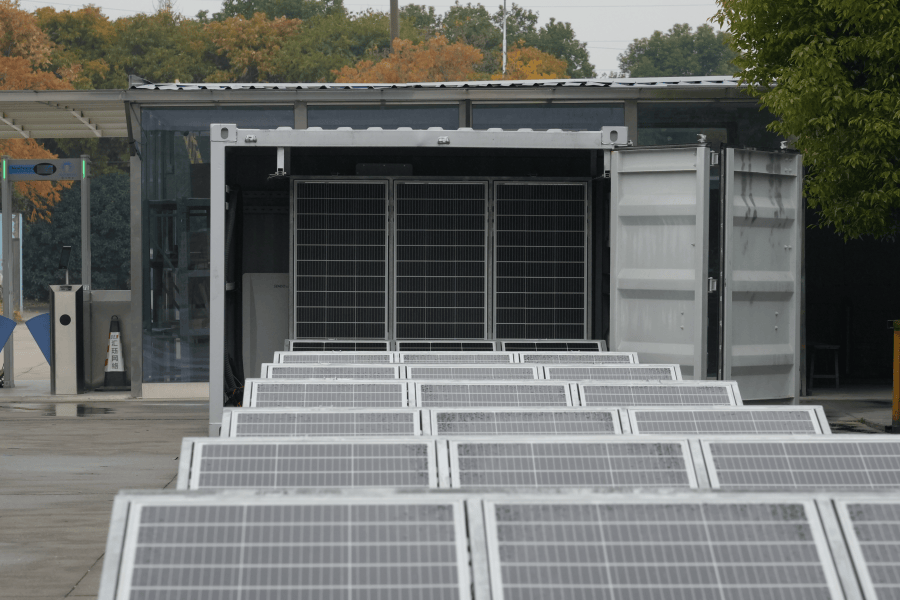
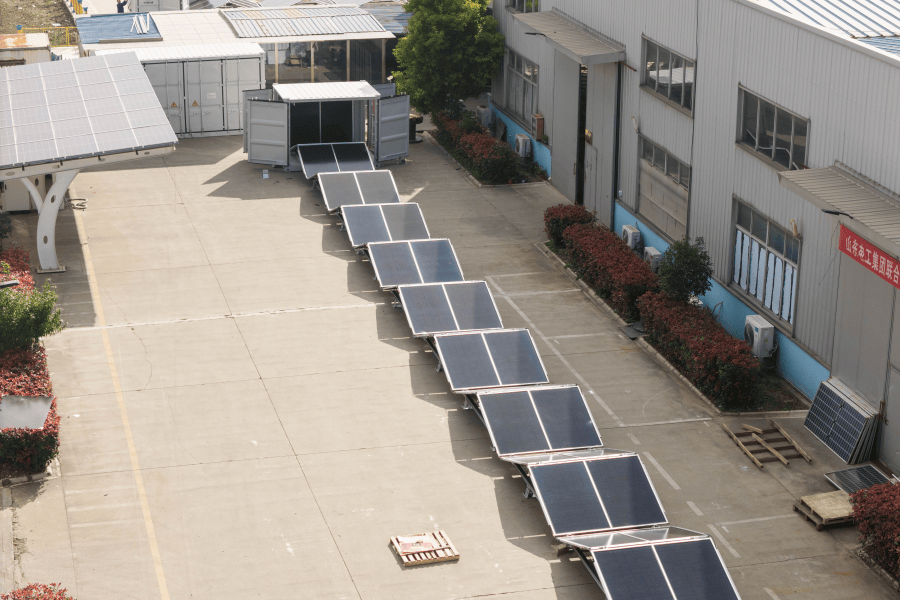
Our solution was a 4 MWh grid-forming BESS container, specifically engineered for the altitude. The key was a liquid-cooled thermal system with a pressurized design to compensate for lower air density, ensuring consistent cooling performance. The grid-forming controls allowed the entire system to "black start" the community's critical loads if the grid went down, eliminating the need for a larger generator.
The ROI impact? By avoiding the generator capex and its fuel costs, and by enabling more solar self-consumption through superior stability, the project's simple payback period was reduced by nearly 3 years. The client wasn't just buying kWh; they were buying resilience and lower total cost of ownership, which our financial model clearly quantified.
The Heart of High-Altitude ROI: Thermal Management Explained
I want to demystify one technical make-or-break point: thermal management. You'll hear about C-rates (charge/discharge speed). At altitude, a high C-rate without perfect temperature control is a battery killer. Why? When you push energy in or out quickly, cells generate heat. At sea level, air-cooling might suffice to whisk that heat away. But thinner air is a less effective coolant. The heat stays, creating hot spots. Cells degrade unevenly, and the system's brain (the BMS) has to throttle performance to compensate - killing your power capacity when you might need it most.
Our approach at Highjoule, informed by these site lessons, is always a liquid-based, proactive thermal system for high-altitude projects. It maintains a uniform cell temperature within a tight band (typically 2C), regardless of the outside air. This preserves the battery's nameplate performance and lifespan, protecting the core of your investment. It's a higher initial cost that pays back multiples over the asset's life by ensuring you get every cycle and every kilowatt-hour you paid for.
Making the Numbers Work for Your Project
So, how do you build a realistic ROI model for these conditions? You have to adjust the inputs. Don't use the manufacturer's sea-level efficiency and degradation curves. Factor in:
- Derated Performance: Model for a 3-8% round-trip efficiency loss depending on exact altitude and climate.
- Enhanced Ancillary Services Revenue: In many markets (think CAISO, ERCOT, or European TSOs), a grid-forming BESS can qualify for higher-value stability services. Your model must capture this premium.
- Opex for Specialized Maintenance: While a well-designed system is robust, factor in potential costs for technicians with high-altitude experience and any specialized parts logistics.
The bottom line? A high-altitude ROI Analysis can't be a copy-paste from a lowland project. It requires an understanding of physics, real-world engineering, and the unique value of grid-forming technology. At Highjoule, we've built our containerized solutions around these harsh realities - with designs certified to UL 9540 and IEC 62933, but more importantly, proven in the field where the financial models meet the mountain air.
What's the single biggest altitude-related cost surprise you've encountered in your energy projects?
Tags: UL Standard BESS LCOE ROI Analysis Grid-forming High-altitude Energy Storage Energy Economics
Author
James Zhang
20+ years agricultural energy storage engineer / Highjoule CTO