
ROI Analysis of IP54 Outdoor Photovoltaic Storage for Telecom Base Stations
Contents
- The Silent Budget Killer at Remote Telecom Sites
- Why IP54 is Not Just a Number, It's Your ROI Shield
- Crunching the Real Numbers: A Pragmatic ROI Framework
- A Case from the Field: Northern Germany's Wind-Swept Solution
- The Thermal Management Factor: Where Battery Lifespan Meets Profit
- Your Next Move: Beyond the Spreadsheet
The Silent Budget Killer at Remote Telecom Sites
Let's be honest. When we talk about powering telecom base stations, especially those off-grid or in weak-grid areas, the conversation has been stuck for years. It's always about the diesel generator. The hum, the fumes, the weekly fuel truck visits, the maintenance logs piling up. I've been on site, smelling the diesel, hearing the complaints about fuel theft and skyrocketing prices. The operational expenditure (OpEx) is a leaky bucket.
But here's the real, often unspoken, problem: reliability has a direct price tag. A site outage isn't just a technical fault; it's a revenue hit and a brand reputation hit. According to the International Energy Agency (IEA), enhancing grid resilience and integrating distributed energy is now a top global priority. For telecom operators, this isn't a future trend - it's a present-day balance sheet issue. You're paying for energy, yes, but you're also paying a massive premium for the certainty of that energy. That's the core financial pain point.
Why IP54 is Not Just a Number, It's Your ROI Shield
So, the industry pivots to solar-plus-storage. Smart move. But then, we see the first-generation mistake: taking an indoor battery system, putting it in a flimsy shed or a oversized container, and calling it an "outdoor solution." Honestly, I've seen this firsthand. Moisture ingress, dust clogging up cooling fans, extreme temperature swings degrading battery cells twice as fast as projected. The promised savings evaporate with every unscheduled service call and premature battery replacement.
This is where the ROI Analysis of IP54 Outdoor Photovoltaic Storage System for Telecom Base Stations becomes critical. IP54 isn't a marketing buzzword. It's a defined, testable standard (IEC 60529) that means "protected against dust limited ingress" and "protected against water splashes from any direction." For a system that must sit in a field, on a rooftop, or by a coastal area for 10-15 years, this is the baseline for survival. It directly impacts your total cost of ownership. A non-rated system faces higher failure rates, more maintenance, and a shorter operational life - all of which destroy your return on investment before you even get started.

Crunching the Real Numbers: A Pragmatic ROI Framework
Let's move beyond theory. A proper ROI model for these systems looks beyond the simple "solar generation vs. diesel cost" comparison. You must account for:
- Capital Avoidance: Can you defer or avoid a costly grid connection upgrade? For many sites, this is the single largest capex item.
- Diesel Displacement: This is the obvious one. Calculate not just fuel cost, but also the logistics, security, and environmental compliance costs of running gensets. With fuel price volatility, a solar+storage system acts as a long-term hedge.
- OpEx Reduction: Fewer site visits for refueling and generator maintenance. An IP54 system, properly designed, should require minimal "hands-on" intervention.
- Revenue Assurance: Quantify the value of increased uptime. How much is 99.99% vs. 99.9% availability worth to your network?
- Asset Longevity: This is the hidden gem. A battery's lifespan is measured in cycles and years, but its degradation rate is controlled by its environment. Proper outdoor protection (IP54) and thermal management directly extend the usable life, improving your Levelized Cost of Energy (LCOE).
At Highjoule, when we run these analyses for clients, we often find the payback period for a robust IP54 outdoor system is 20-30% shorter than for a makeshift solution, simply because the operational headaches and replacement costs are factored in from day one.
A Case from the Field: Northern Germany's Wind-Swept Solution
Let me share a project from Schleswig-Holstein. A telecom operator had a cluster of sites in windy, coastal, and rural areas. Grid power was unstable, and diesel was politically and economically unsustainable. The challenge was space (small footprint), durability (high humidity, salt spray), and total autonomy.
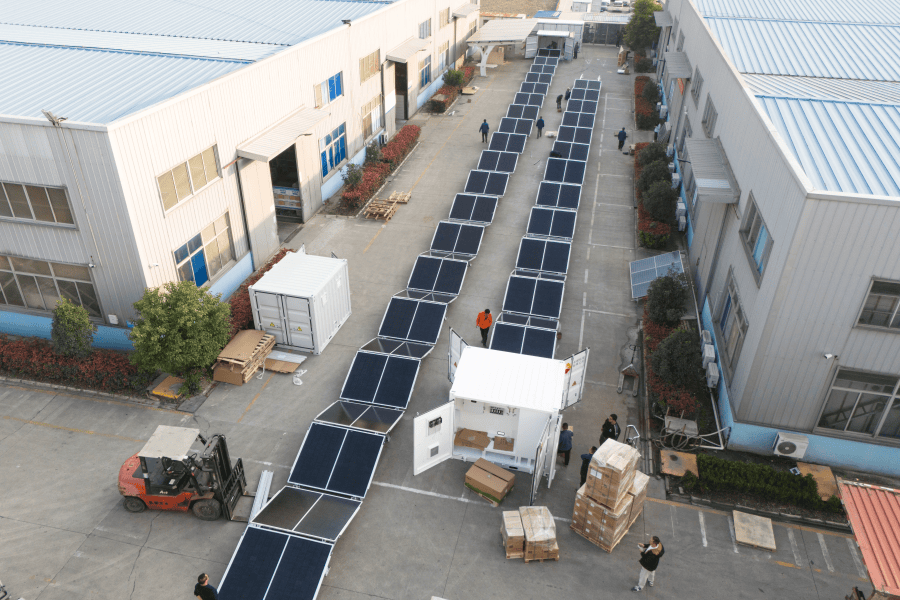
We deployed an integrated, IP54-rated outdoor BESS paired with a dedicated solar canopy. The system was designed to UL 9540 and IEC 62619 standards from the get-go, which smoothed the local permitting process - a crucial time-to-market factor in Europe. The battery's C-rate (its charge/discharge speed capability) was carefully matched to the load profile of the base station equipment, ensuring it could handle the peak power demands when needed without being oversized.
The result? Diesel usage eliminated at those sites. Grid power is now only a backup to the backup. The ROI wasn't just in Euros saved on fuel; it was in the guaranteed performance through a North Sea winter, with zero weather-related downtime. The operator now has a predictable, fixed cost for energy at those sites for the next decade-plus.
The Thermal Management Factor: Where Battery Lifespan Meets Profit
This is the part most spreadsheets miss. Batteries are like people - they perform best in a comfortable temperature range. Every degree outside that optimal window accelerates aging. An outdoor system in Arizona or Spain faces brutal heat; one in Minnesota or Sweden faces deep cold.
A true outdoor-rated IP54 system has an integrated thermal management system that's also built for the elements. It's not just an air conditioner slapped on the side. It's a sealed, efficient climate control system that maintains the battery at its happy place with minimal energy use (parasitic load). This directly translates to more usable cycles over the system's life, which means a lower effective cost per kilowatt-hour stored and discharged.
When you see our specs at Highjoule, the thermal management details aren't just technical fluff. They are a direct input into your financial model. A battery that lasts 6,000 cycles instead of 4,000 cycles changes the entire economics of the project. That's the expert insight from two decades of watching systems succeed and fail in the field: protect the battery from the environment, and it will protect your investment.

Your Next Move: Beyond the Spreadsheet
So, where does this leave you? The ROI Analysis of IP54 Outdoor Photovoltaic Storage System for Telecom Base Stations is more than a calculation. It's a shift in mindset from viewing energy as a consumable expense to viewing the power system as a long-term, revenue-enabling asset.
The question isn't really "Can we afford this system?" The sharper question is, "What is the cost of not modernizing our site power with a system built to last?" Given the pressures of network reliability, sustainability goals, and volatile fuel markets, the business case has never been clearer.
What's the one site in your network where the power costs keep you up at night? Let's start the model there.
Tags: UL Standard BESS LCOE Telecom Energy Storage ROI Analysis IP54 Standard
Author
James Zhang
20+ years agricultural energy storage engineer / Highjoule CTO