
Liquid-Cooled PV Storage ROI: The Real Numbers for Construction Sites
Contents
- The Hidden Cost on Every Site
- Why Traditional ROI Numbers Fail You
- The Liquid-Cooling Difference: It's Not Just Tech, It's ROI
- Doing the Real-World Math: A Case from Texas
- Beyond the Spreadsheet: What Your ROI Analysis Must Include
- Getting Your Project Started Right
The Hidden Cost on Every Site
Alright, let's talk real. You're managing a large-scale construction project in California or maybe North Rhine-Westphalia. You've got your temporary power sorted - a couple of diesel gensets humming away, maybe a grid connection if you're lucky. The monthly fuel bill arrives, and it stings. But you budgeted for it, right? That's just the cost of doing business. Here's what you might not be fully accounting for: the sheer inefficiency of that power. I've been on sites where gensets run at 30% load for 14 hours a day, gulping diesel just to keep essential systems alive. The noise complaints from the new neighborhood next door? That's a cost. The carbon footprint you're reporting? That's a growing cost, both in fees and reputation. This isn't just an energy problem; it's a profit leak disguised as a line item.
Why Traditional ROI Numbers Fail You
So you look at solar plus storage. Smart move. You run a standard ROI analysis, plugging in panel costs, inverter costs, and a standard battery rack. The payback period looks... decent. Maybe 5-7 years. But honestly, this is where most models fall flat. They treat the battery like a simple bank account: energy in, energy out. They completely miss the brutal reality of the construction environment.
Think about it. These batteries are sitting in a container or on a skid, in an open field. In Arizona, that container interior can hit 50C (122F). In Germany, you might have huge temperature swings from day to night. Standard air-cooled batteries freak out in these conditions. To protect themselves, they throttle performance - a process called derating. Your 500kW system might only discharge at 300kW when you need it most. Or, the system's brain spends so much energy running massive AC units to cool itself that your "stored" energy vanishes into thin, hot air. The Levelized Cost of Energy (LCOE) - the true lifetime cost per kWh - skyrockets. According to a NREL study, poor thermal management can increase battery degradation by up to 200% in demanding cycles. Your 10-year asset might be useless in 5. Suddenly, that spreadsheet ROI is pure fiction.

The Liquid-Cooling Difference: It's Not Just Tech, It's ROI
This is where the conversation shifts from "if" to "how." And the "how" is thermal management. This is the single biggest lever for a positive, predictable ROI on a construction site. Liquid-cooling isn't a fancy add-on; it's the foundational technology that makes the economics work.
Let me explain it simply. Instead of blowing air around battery cells (which is inefficient and draws huge power), a liquid-cooled system uses a closed-loop fluid that directly contacts the cell surfaces. It's like comparing a box fan to a precision car radiator. The result?
- Zero Derating, Full Power: The system delivers its rated power, whether it's 45C or -10C outside. When you need to power that tower crane or concrete pour, the energy is there.
- Dramatically Lower Auxiliary Load: The cooling system itself uses up to 40% less energy than air-conditioning. More of your stored solar power goes to your tools, not to cooling itself.
- Longevity You Can Bank On: Stable temperature means slower degradation. We design our systems at Highjoule to maintain cell temperature within a 3-5C window. This can effectively double the cycle life compared to a stressed air-cooled unit. That's the difference between replacing your core asset in 2029 or 2034.
When you re-run your ROI Analysis of Liquid-cooled Photovoltaic Storage System for Construction Site Power with these factors - consistent output, lower operational waste, and a longer asset life - the numbers transform. Payback periods often compress by 18-24 months. The net present value (NPV) of the project turns decisively positive.
Doing the Real-World Math: A Case from Texas
Let me give you a real example, not a hypothetical. We worked with a major civil engineering firm on a 24-month highway infrastructure project outside Houston. Their challenge: grid connection was miles away, diesel costs were volatile, and they had strict noise ordinances.
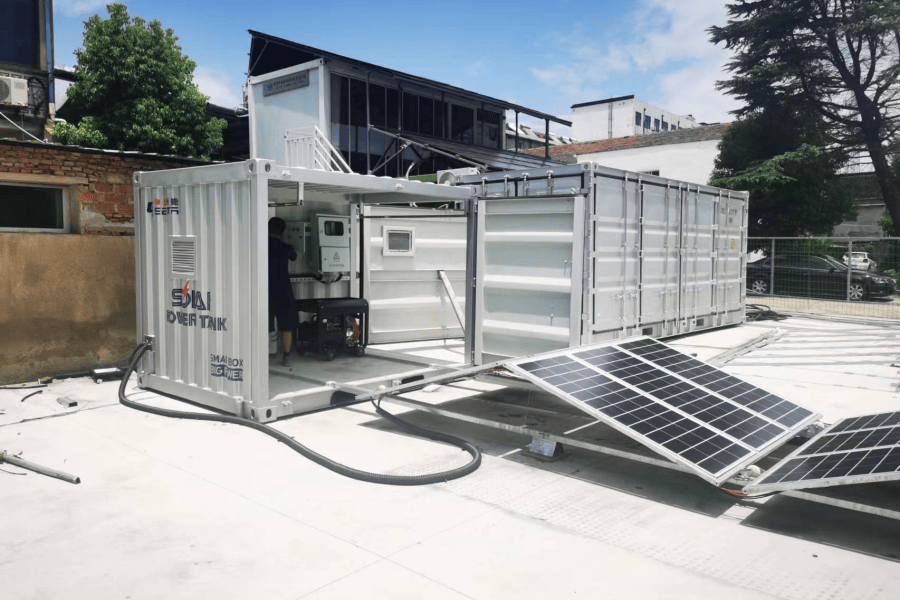
We deployed a 1.2MWh liquid-cooled BESS, coupled with a 800kWp solar canopy over the material storage area. The system was designed to UL 9540 and IEC 62619 standards - non-negotiable for site safety and insurance. Here's the impact after the first year:
| Metric | Before (Diesel Only) | After (PV + Liquid-Cooled BESS) |
|---|---|---|
| Fuel Cost | $18,500/month | $3,200/month (for backup gen) |
| Peak Power Availability | Capped at gen capacity | Full 500kW on demand, anytime |
| Maintenance Visits | Weekly for gensets | Quarterly system check |
| Estimated Battery Degradation | N/A | Less than 5% (on track for 10+ year life) |
The project manager told me the biggest win wasn't even on the spreadsheet: "We can run night shifts off silent, stored solar power. No complaints, no permits, just work." Their revised ROI showed a full payback in under 4 years, with the system slated for redeployment on their next project.
Beyond the Spreadsheet: What Your ROI Analysis Must Include
So, when you're evaluating providers and building your own model, push beyond the capital cost per kWh. Ask these questions:
- What's the guaranteed C-rate at my site's peak ambient temperature? (C-rate is basically the speed of charge/discharge). If they can't promise 1C at 45C, walk away.
- What's the auxiliary load of the thermal management system? Get the spec sheet and see the power draw. It should be in the low single-digit percentage of system rating.
- Is the system certified as a whole, or just the cells? A UL 9540 system certification for the entire assembly is critical for permitting and safety. It's something we've built into every Highjoule container from day one.
- What's the redeployment plan? The best ROI comes from using the asset across multiple projects. The system must be designed for that - rugged, containerized, and with a service plan that follows it.

Getting Your Project Started Right
The shift to solar-storage on construction sites isn't coming; it's here. But the difference between a cost-center experiment and a profit-generating asset boils down to one thing: a realistic, hard-nosed analysis that puts thermal management front and center. A liquid-cooled system isn't an expense; it's the enabler that makes the entire investment viable and robust.
What's the one operational headache on your current site that a reliable, silent power source would solve tomorrow? Let's start the conversation there - the numbers will follow.
Tags: Construction Site Power UL Standard BESS Thermal Management Liquid Cooling US Market ROI Analysis EU Market
Author
James Zhang
20+ years agricultural energy storage engineer / Highjoule CTO