
ROI Analysis of Liquid-cooled Solar Container for Public Utility Grids
Contents
- The Real Grid Problem Isn't Just Capacity, It's Predictable ROI
- The Hidden Cost of "Good Enough" Air Cooling
- The Liquid-Cooled Container: More Than Just a Box, It's an ROI Engine
- A Case in Point: When a German Utility Needed More Than Just MWh
- Thinking Beyond the Spec Sheet: What Really Drives Your Storage ROI
The Real Grid Problem Isn't Just Capacity, It's Predictable ROI
Let's be honest. If you're managing a public utility grid in North America or Europe right now, you're not just buying megawatt-hours. You're buying a financial instrument. Every storage project approval hinges on one brutal question: "What's the real return, and can we bank on it for the next 15 years?" I've sat in those boardrooms. The conversation has shifted from "Do we need storage?" to "Which storage solution gives us the most reliable, bankable ROI?"
The core pain point I see, from California to North Rhine-Westphalia, is uncertainty. Traditional air-cooled battery energy storage systems (BESS) promise a lot on paper. But on site? I've seen firsthand how temperature swings in a standard container can shave points off your system's efficiency and, worse, accelerate degradation in ways the initial financial model never accounted for. That projected 10-year payback can easily stretch to 12 or 13 when real-world thermal stress hits. That's the gap between a good project and a great one.
The Hidden Cost of "Good Enough" Air Cooling
Here's where we need to agitate that pain point a bit. Think about the physics. To get more power (a higher C-rate) out of a battery, you push more current through it. That generates heat. In an air-cooled system, especially in a packed 40-foot container, managing that heat is a constant battle. You get hot spots. Cells age faster next to the HVAC intake. The system derates itself on a hot day just when you need it most for peak shaving or frequency regulation.
The National Renewable Energy Lab (NREL) has shown that operating temperature is a primary driver of battery lifespan. Even a 10C increase above the optimal range can double the degradation rate. Now, factor in the Levelized Cost of Storage (LCOS) C the all-in lifetime cost per MWh delivered. When degradation is unpredictable, your LCOS becomes a moving target. That's a huge risk for a public utility with a fiduciary duty to ratepayers. You're not just managing energy; you're managing financial risk.
The Liquid-Cooled Container: More Than Just a Box, It's an ROI Engine
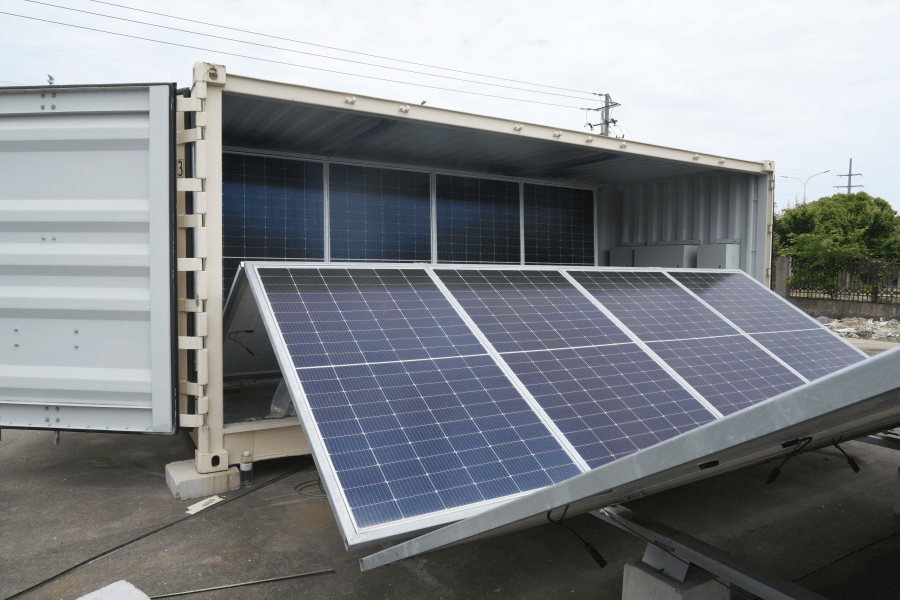
This is where the solution comes into sharp focus: the purpose-built, liquid-cooled solar container. Honestly, calling it just a "cooling upgrade" is a massive understatement. It's a fundamental redesign for ROI predictability.
Think of it like a precision engine versus a simple fan. Liquid cooling directly contacts the battery cells or modules, pulling heat away more efficiently and uniformly than air ever could. The result? No hot spots. Consistent performance. You can reliably operate at higher C-rates for those lucrative grid services without worrying about thermal runaway or accelerated wear. The entire system's lifespan becomes more predictable, which makes the financial model rock-solid.
At Highjoule, this isn't theoretical. Our liquid-cooled BESS containers are engineered from the ground up with this ROI-stability in mind. We build them to the most stringent safety standards like UL 9540 and IEC 62933, because a safety incident is the ultimate ROI killer. But beyond the certifications, it's the day-in, day-out performance that counts. By maintaining optimal temperature, we're directly optimizing your project's LCOE (Levelized Cost of Energy). You get more usable cycles, more revenue-generating dispatch events, and a longer asset life. That's the tangible value.

A Case in Point: When a German Utility Needed More Than Just MWh
Let me give you a real example from a project I was closely involved with. A municipal utility in Germany was deploying storage for primary frequency response (PRS) and to defer a costly grid upgrade. They ran the numbers on standard containers, but the financials were tight. The volatility in degradation models made their CFO nervous.
We proposed a liquid-cooled container solution. The upfront cost was marginally higher, sure. But the ROI analysis told a different story. By guaranteeing a more stable degradation curve (we actually offered a performance warranty based on it), the project's net present value (NPV) improved by over 15% across its lifetime. The ability to consistently hit high-power outputs for PRS, even during a heatwave, meant more guaranteed revenue. The local deployment team, which included Highjoule's own engineers, integrated the container seamlessly into their substation. The CFO approved it because the numbers were finally bankable.
Thinking Beyond the Spec Sheet: What Really Drives Your Storage ROI
So, when you're evaluating an ROI Analysis of Liquid-cooled Solar Container for Public Utility Grids, don't just look at the price per kWh. Dig deeper. Ask about the thermal management system's design. Ask for real-world degradation data under different cycling regimes. Challenge your vendor on how they model lifetime performance in their financial tools.
The right partner should be able to walk you through it, not with marketing fluff, but with engineering clarity. They should talk about cell-level thermal uniformity, the impact on cycle life, and how their design complies with the local grid codes (like IEEE 1547 in the US or VDE-AR-N 4110 in Germany). At Highjoule, that's the conversation we have over coffee with every client. It's about co-building a financial model you can take to the board with absolute confidence.
The grid's challenges are only getting more complex. The storage assets you deploy today need to be resilient, predictable profit centers for decades. What's one assumption in your current storage ROI model that a 5-degree Celsius temperature variation could completely change?
Tags: UL Standard BESS LCOE Energy Storage Europe US Market Renewable Energy ROI Utility Grid
Author
James Zhang
20+ years agricultural energy storage engineer / Highjoule CTO