
ROI Analysis of Rapid Deployment 5MWh Utility-scale BESS for Industrial Parks

Table of Contents
- The Real Problem: More Than Just a Battery Quote
- Where Your ROI Gets Eaten Alive: The Hidden Cost Pitfalls
- The Solution: A 5MWh Rapid-Deployment Unit as Your Financial Engine
- Breaking Down the ROI: It's Not Magic, It's Math
- Why "Rapid Deployment" is a Game-Changer for ROI
- The Safety Dividend: How UL 9540A Isn't a Cost, It's an ROI Protector
- A Real-World Perspective from the Field
- Making It Real: What You Should Ask Your Vendor
The Real Problem: More Than Just a Battery Quote
Let's be honest. If you're managing an industrial park or a large manufacturing facility in the US or Europe, you've probably been pitched on battery storage. The sales decks are slick: promising massive savings, grid independence, and a green halo. But when you dig into that ROI Analysis of a Rapid Deployment 5MWh Utility-scale BESS for Industrial Parks, the numbers often start to feel... fuzzy. The initial capex looks okay, but the timeline stretches out, the interconnection queue is a nightmare, and suddenly, the promised 4-year payback drifts into 7 years. I've sat in those meetings. The problem isn't the technology - it's the deployment model and the total system cost that most vendors shy away from talking about over coffee.
Where Your ROI Gets Eaten Alive: The Hidden Cost Pitfalls
Here's what I've seen firsthand on site. You approve a BESS project, and then the real costs creep in. It's not just the battery containers. It's the custom engineering for the foundation, the months-long wait for a specific transformer, the endless civil works, and the labyrinth of local permitting that varies from county to county. According to a National Renewable Energy Laboratory (NREL) report, "soft costs" C engineering, permitting, interconnection C can account for up to 30% of a utility-scale BESS project's total cost. That's a huge chunk of your potential ROI vanishing before the system even charges once.
Then there's performance. A battery's true value is tied to its C-rate (basically, how fast it can charge and discharge) and its thermal management. A poorly designed system that throttles power on a hot day because it can't shed heat is leaving money on the table. You're paying for 5MW of capacity but only reliably getting 4MW when you need it most. That directly hits your revenue from frequency regulation or demand charge avoidance.
The Agitation: Time is Literally Money
Every month of delay in your project isn't just an inconvenience. It's a month of lost revenue streams you could have been tapping into. In markets like CAISO (California) or PJM, market rules and incentive programs shift. That lucrative grid service contract available today might be gone next year. A traditional 18-24 month deployment cycle for a custom BESS means you're betting on future market conditions remaining stable. That's a risky bet.
The Solution: A 5MWh Rapid-Deployment Unit as Your Financial Engine
This is where the concept of a standardized, pre-engineered, rapidly deployable 5MWh system changes the game. Think of it not as a construction project, but as a pre-packaged financial asset you can "plug and play" into your revenue strategy. The core of a solid ROI Analysis for this approach hinges on three things: accelerating revenue generation, locking in predictable costs, and ensuring relentless, reliable performance.

Breaking Down the ROI: It's Not Magic, It's Math
Let's talk numbers in a way that makes sense for your boardroom. The Levelized Cost of Storage (LCOS) C the real "cost per kWh" over the system's life C is the metric that matters. A rapid-deployment unit from a seasoned provider crushes LCOS. How?
- Predictable Capex: You get a single, turnkey price. No more surprise change orders for site work.
- Revenue Acceleration: Deploy in 6-9 months, not 24. Start earning from day one with energy arbitrage (buying cheap power, selling expensive), demand charge reduction (I've seen facilities slash peak demand charges by 40%), and grid services.
- Operational Efficiency: High, consistent C-rate (like 1C) and advanced liquid cooling thermal management mean you get the full power you paid for, 365 days a year. No derating. This reliability is what we bake into every Highjoule system C it's non-negotiable for ROI.
Why "Rapid Deployment" is a Game-Changer for ROI
Rapid deployment isn't just about speed. It's about standardization. Our 5MWH utility-scale block is pre-certified to UL 9540 and IEC 62933 standards. This means the local authority having jurisdiction (AHJ) isn't reviewing a one-off design; they're reviewing a known, tested, and approved product. It dramatically de-risks permitting. The foundation is a simple concrete pad. The system arrives on a truck, pre-wired and pre-tested. This model slashes those NREL-cited "soft costs" from 30% down to a fraction. That saving goes straight to your bottom line.
The Safety Dividend: How UL 9540A Isn't a Cost, It's an ROI Protector
I need to get real about safety for a second. In the US and EU, insurance and financing for a BESS are contingent on safety certifications like UL 9540A (the stringent fire safety test). Some vendors offer "cheaper" systems without this full certification. Honestly, that's a massive liability. A single safety incident can bankrupt a project. Choosing a system like ours, designed from the cell up with UL/IEC compliance as a core principle, isn't an extra cost. It's what protects your entire capital investment and ensures your asset can operate without restriction. It's the ultimate ROI insurance policy.
A Real-World Perspective from the Field
Let me give you a non-proprietary example from a project in Northern Germany. An industrial chemical park needed to stabilize their grid connection and shave peak loads. The challenge was a tight space and a requirement to be operational before the next winter peak season. A traditional design-bid-build approach would have missed the window. We deployed two of our pre-engineered 2.5MWh units (totaling 5MWh) within 8 months from contract signing. Because they were standardized, the local T1V inspector was familiar with the certification package. The system now manages their peak loads automatically and participates in the German primary control reserve market. The rapid deployment was the only way they could capture that specific, time-sensitive revenue stream.
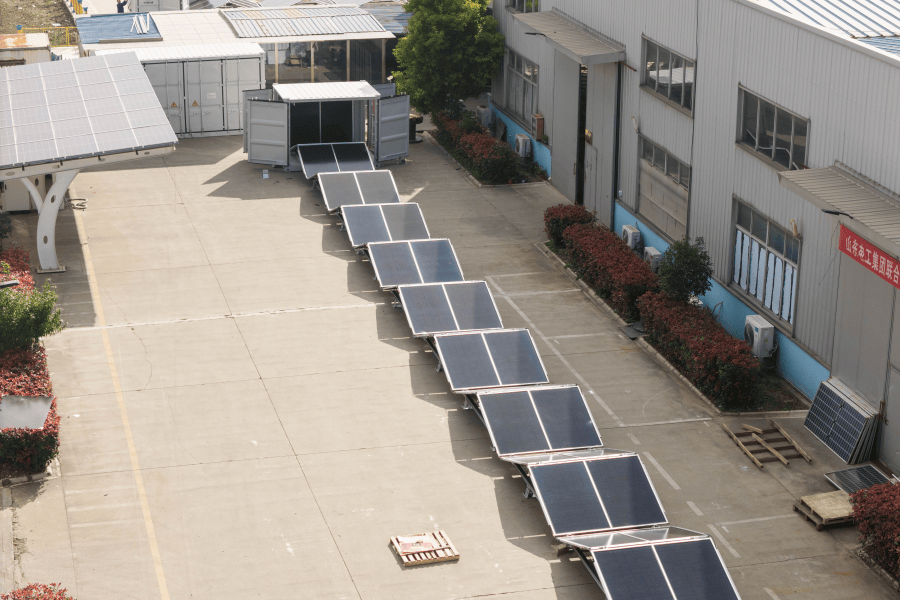
Expert Insight: Thermal Management is Your Secret Weapon
When we talk tech, don't glaze over. Think of thermal management like the cooling in a high-performance car. A cheap system uses air cooling (like a basic fan). It's okay, but on a hot day during a 2-hour grid discharge, the battery heats up, its resistance increases, and it has to slow down (derate) to protect itself. Our approach uses direct liquid cooling to each cell. It's like having a dedicated radiator for every part of the engine. The battery stays at its ideal temperature, delivering full power consistently. This means over 15 years, it cycles more efficiently and degrades slower. That directly translates to a lower LCOS and higher total lifetime ROI. It's a technical choice with a direct financial impact.
Making It Real: What You Should Ask Your Vendor
So, when you're evaluating that ROI Analysis for a Rapid Deployment 5MWh BESS, move beyond the glossy brochure. Get into the gritty details. Ask them:
- "Can you show me a detailed, line-item total installed cost model, including ALL soft costs?"
- "What is the guaranteed timeline from site approval to commercial operation, and what are the contractual penalties for delay?"
- "Show me the full UL 9540 and UL 9540A certification reports for this exact system configuration."
- "What is the guaranteed maximum degradation and performance derating curve at my site's peak ambient temperature?"
At Highjoule, we build these conversations into our first meeting. Because after 20 years in this field, I know that the best ROI comes from transparency, proven technology, and a deployment model that treats your time as your most valuable asset. The right 5MWh system isn't an expense; it's a revenue-generating machine waiting to be switched on. The question is, how soon do you want to start the clock?
Tags: UL Standard BESS LCOE Europe US Market Industrial Energy Storage Renewable Energy Utility-scale Battery
Author
James Zhang
20+ years agricultural energy storage engineer / Highjoule CTO