
UL & IEC Compliant 20ft 1MWh BESS Safety for Data Center Backup Power
Table of Contents
- The Silent Risk in Your Backup Power Plan
- When Safety Isn't Just a Checkbox
- Building Confidence in a 20ft Container
- What "Compliant" Really Means on Site
- A Real-World Test: When the Grid Flickers
- Your Next Step: Asking the Right Questions
The Silent Risk in Your Backup Power Plan
Honestly, if you're looking at a 20-foot container packed with a megawatt-hour of energy to keep your data center online, you're not just buying a battery. You're installing a significant energy asset right on your property. The conversation often starts with uptime, capacity, and capex C and it should. But over two decades of deploying these systems from California to Bavaria, I've seen a critical piece get rushed: the granular, sometimes boring, details of safety regulations. It's the difference between a resilient asset and a liability waiting for a trigger.
The Compliance Maze Isn't Just Red Tape
Here's the thing. A 1MWh system in a compact 20ft High Cube container is an engineering marvel, but it concentrates immense energy density. The core challenge in the US and EU markets isn't a lack of standards - it's navigating the patchwork of them. You've got UL 9540 for the overall energy storage system in the US, UL 1973 for the batteries themselves, IEC 62619 for the international cell standard, and then local fire codes (like NFPA 855) and building regulations piling on top. I've been on site where a project was delayed six months because the container's internal fire suppression layout, while innovative, wasn't pre-approved by the local Authority Having Jurisdiction (AHJ). The financial bleed from that delay was... substantial.
According to the National Renewable Energy Laboratory (NREL), integrating safety and regulatory considerations from day one can reduce total project soft costs by up to 30%. That's not just paperwork savings; that's risk mitigation with a direct ROI.

When Safety Isn't Just a Checkbox
Let's agitate that pain point a bit. Think about thermal management. It's a technical term, but just imagine a hot summer day, your data center is at peak load, the grid fails, and your BESS kicks in at a high discharge rate (what we call a high C-rate). The heat generated needs to go somewhere. A design that merely "meets" a standard on paper might struggle in that real-world, stressful transient. I've seen systems where thermal hotspots triggered premature derating C the system protects itself by reducing power output, exactly when you need it most. Your backup runtime just shrunk.
And it's not just about a single event. Inefficient thermal and battery management directly attacks your Levelized Cost of Energy Storage (LCOE). It accelerates cell degradation, meaning your 1MWh system might only effectively deliver 0.9MWh in a few years, forcing a earlier-than-expected capex refresh. The safety regs, when properly engineered for, are your best defense for long-term asset value.
Building Confidence in a 20ft Container: The Regulation-First Approach
So, what's the solution? It's a mindset shift. Instead of viewing safety regulations for a 20ft High Cube 1MWh solar storage system as a final hurdle, we at Highjoule Technologies treat them as the foundational design parameters. It starts with cell selection for IEC 62619 compliance, but the real magic - and where I spend most of my time - is in the system integration.
Our containerized solutions are architected from the ground up to not just pass, but excel under UL 9540 and UL 9540A (the infamous fire test standard). This means:
- Compartmentalization: Battery racks are in isolated, fire-rated compartments with dedicated smoke and heat detection.
- Thermal Runaway Mitigation: We design venting and suppression pathways to manage a single cell failure, preventing cascade. This isn't theoretical; it's validated in third-party test reports that AHJs want to see.
- Grid-Interactive Safety: The power conversion system (PCS) and controls have built-in grid code compliance (like IEEE 1547 in the US) for safe islanding and reconnection, protecting both your load and utility workers.
This integrated approach is what turns a box of batteries into a resilient, insurable, and bankable asset.
Beyond the Label: An Engineer's Insight on Key Regs
Let me break down two things I always explain to clients over coffee. First, UL 9540A Test Summary. This isn't a pass/fail certificate. It's a detailed report on how a specific system configuration behaves during a thermal runaway event. When we provide this to a fire marshal in, say, Texas or Germany, it gives them empirical data to approve the installation. It builds trust.
Second, Fault Current Contribution. This is a nerdy but crucial one. When your BESS connects to your data center's electrical switchgear, it changes the available fault current in the system. Your existing breakers might not be rated for it. A truly compliant design includes this study and specifies the right protective devices. I've prevented major retrofit costs mid-project by flagging this early. A proper safety-first design thinks about the entire electrical ecosystem, not just the container's boundaries.
A Real-World Test: When the Grid Flickers
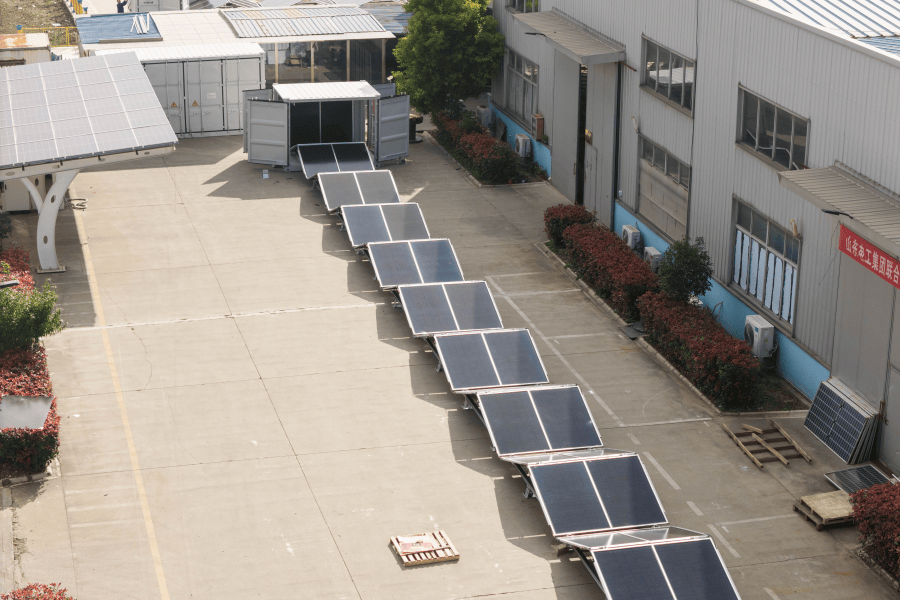
Let me share a case from a colocation data center in Northern Virginia. Their challenge was space - they had a concrete pad next to a loading dock, period. They needed a 1MWh+ backup solution that the local utility and fire department would approve without lengthy variances. The safety regulations for their 20ft High Cube solar storage unit were the primary driver.
We deployed a pre-certified UL 9540/UL 9540A system. The key was our submittal package: detailed floor plans, emergency response guides, and the 9540A report specific to that container model. Because we had this documentation engineered from the start, the AHJ review was smooth. Last winter, during a grid voltage sag event, the system seamlessly took over. More importantly, the facility manager told me the peace of mind knowing the system's safety was validated to the highest US standards was "priceless." That's the real product: confidence.
Your Next Step: Asking the Right Questions
The landscape is complex, but your approach can be simple. When evaluating a 20ft High Cube 1MWh solar storage for data center backup power, move beyond spec sheets. Ask your provider: "Can you show me the UL 9540A test summary for this exact configuration?" or "How does your thermal management design maintain performance during a 2C discharge on a 40C day?" or "Will you provide the full AHJ documentation package as part of delivery?"
At Highjoule, we bake the answers into our design process because we've lived the consequences of getting it wrong. Our focus is on delivering not just a container, but a compliant, high-performance energy asset that your risk manager, CFO, and operations team can all feel good about. Because in the end, the safest system is the one that operates reliably for years, without incident, becoming a boringly predictable part of your critical infrastructure. And that's the goal, isn't it?
What's the single biggest safety or compliance hurdle you're facing in your next backup power project?
Tags: UL Standard BESS Europe US Market Data Center Backup Power Renewable Energy IEC Standard Safety Regulations
Author
James Zhang
20+ years agricultural energy storage engineer / Highjoule CTO