
Safeguarding Coastal BESS: Essential Safety Regulations for Solar-Diesel Hybrid Systems
Table of Contents
- The Silent Challenge: Salt, Sun, and Stored Energy
- Why Off-the-Shelf Just Doesn't Cut It for Coastal Sites
- Building a Fortress: The Core Safety Framework for Coastal Hybrid Systems
- A Lesson from the Gulf Coast: Putting Regulations into Practice
- Beyond the Spec Sheet: An Engineer's Take on Durability and LCOE
The Silent Challenge: Salt, Sun, and Stored Energy
Honestly, when most folks think about deploying a 20ft High Cube containerized hybrid solar-diesel system, they're laser-focused on the specs: battery chemistry, inverter efficiency, solar yield. And that's fair. But over two decades on sites from the North Sea to the California coast, I've learned one thing the hard way: the environment is the most demanding, and often overlooked, co-engineer on your project. Especially when that environment is a coastal salt-spray zone.
The dream is clear C a resilient, off-grid or grid-supportive power hub that slashes diesel costs and provides clean solar energy. The reality? A perfect storm of conductive salt mist, high humidity, and relentless UV exposure. It's not just about rust on the container door. That salty air is an insidious conductor. It creeps into every connector, settles on busbars, and accelerates corrosion on battery terminals and electrical components in ways that inland deployments never face. A study by the National Renewable Energy Laboratory (NREL) on renewable assets in marine environments highlighted that improper protection can lead to a 40% increase in O&M incidents related to electrical faults. That's not an operational hiccup; that's a direct threat to system uptime and, fundamentally, safety.

Why Off-the-Shelf Just Doesn't Cut It for Coastal Sites
Here's where the aggravation starts. Many project developers, eager to move fast, assume a standard UL 9540 or IEC 62933 listed system is "good enough." It's a checkbox mentality. But those standards, while brilliant for general safety, don't prescribe the additional fortress-like measures needed for salt-spray conditions (classified as C5-M per ISO 12944). I've seen this firsthand: a system that passed factory acceptance tests with flying colors started showing erratic voltage readings and thermal runaway alarms within 18 months on a Florida keys site. The root cause? Salt-induced tracking on DC isolators, leading to insulation degradation and ground faults.
The financial hit is twofold. First, the emergency repair costs are astronomical C specialized crews, expedited parts, potential downtime fines. Second, and more brutal, is the impact on your Levelized Cost of Energy (LCOE). The whole promise of BESS is long-term, stable cost savings. When your system needs a major overhaul years ahead of schedule, that LCOE curve jumps right back up. You're not saving money; you're managing a liability.
Building a Fortress: The Core Safety Framework for Coastal Hybrid Systems
So, what's the solution? It's a holistic, regulation-first design philosophy. At Highjoule, when we talk about Safety Regulations for 20ft High Cube Hybrid Solar-Diesel System for Coastal Salt-spray Environments, we're building a multi-layered defense. It starts with the container itself. We use marine-grade aluminum alloys or steel with a specialized multi-coat paint system, not just a standard powder coat. All seals are EPDM rubber, and we specify positive pressure ventilation with ISO e8 grade intake filters to keep the internal atmosphere clean and dry.
Inside, the electrical design is where the real magic happens. Every component, from the battery rack to the smallest terminal block, must have a proven salt mist certification (like IEC 60068-2-52). We insist on conformal coating for all critical PCBs. More importantly, the thermal management system C crucial for battery longevity and safety C can't be an off-the-shelf air conditioner. It needs a corrosion-resistant evaporator and condenser, often with a dehumidification mode, to handle both high ambient heat and the corrosive atmosphere. This isn't just about meeting a standard; it's about exceeding the environmental stressor by a significant margin.
Our approach integrates stringent UL and IEC codes with the more specific IEEE 1547.8 for distributed resources in harsh environments, creating a de-facto gold standard for coastal resilience.
Key Non-Negotiables in Your System Spec:
- Container & Structure: ISO 12944 C5-M certification, stainless steel hardware, sealed cable glands.
- Electrical Safety: IP66 minimum rating for external components, dielectric insulation monitoring, and arc-flash mitigation compliant with NFPA 70E.
- Battery & Thermal System: NEMA 4X or IP56 enclosures for battery racks, corrosion-resistant HVAC with redundant control.
- Fire Safety: Aerosol-based suppression (not water-based) with early detection (VESDA) that accounts for salty air particulates to avoid false alarms.
A Lesson from the Gulf Coast: Putting Regulations into Practice
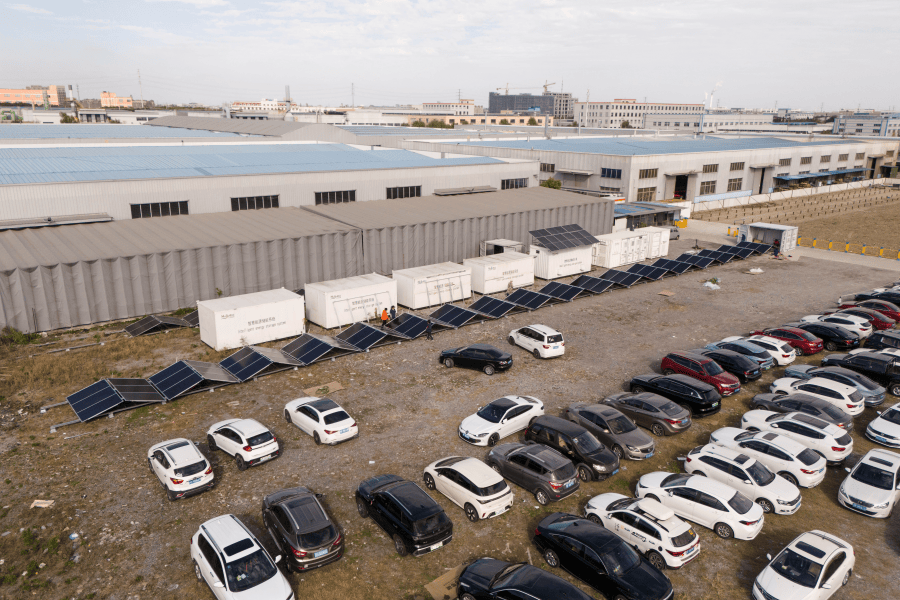
Let me give you a real example. We were brought into a project in Texas, a microgrid for a remote water treatment plant near Corpus Christi. The initial provider had installed a standard hybrid system. Within a year, the diesel genset controller was failing, and the battery management system was throwing communication errors.
Our team's assessment was a textbook case of salt intrusion. We didn't just swap parts. We redesigned the entire enclosure strategy around the coastal regulations framework. We replaced the standard container with a C5-M certified unit, installed pressurization systems, and upgraded all electrical panels to stainless steel NEMA 4X enclosures. For the battery, we selected a chemistry with a lower C-rate (explained simply: it generates less internal heat, reducing stress on the thermal system) and housed it in a dedicated, positively pressured compartment within the container.
The result? Three years on, that system's operational availability is above 99.5%, and their preventative maintenance checks show zero corrosion-related defects. The client's CFO told me the project's LCOE is now tracking 22% below their initial, troubled projections because they're not constantly spending on emergency repairs.
Beyond the Spec Sheet: An Engineer's Take on Durability and LCOE
If you take one thing from this, let it be this: in coastal environments, your safety regulations are your primary investment protection tool. Thinking about C-rate isn't just a battery tech detail. A lower, more conservative C-rate means less aggressive charge/discharge, which means less heat generated inside the cells. In a salty, humid box, managing that heat is cheaper and more reliable if the cells aren't pushed to their absolute limit. It directly extends lifespan and cuts cooling costs C a huge win for LCOE.
Thermal management, then, becomes the unsung hero. It's not just cooling; it's precise humidity and temperature control to prevent condensation, which when mixed with salt residues, creates a highly conductive soup on your electricals. This is where our field data is invaluable. We monitor not just cell temperature, but ambient dew point inside the container, adjusting the cooling and dehumidification cycles proactively.
Deploying a resilient system like this isn't a constraint; it's what unlocks true, worry-free value. It's the difference between a capital expense that keeps you up at night and a reliable asset that just works for its entire 15-20 year life. When you look at proposals, don't just look for the UL sticker. Dig into the how for coastal deployment. Ask the tough questions about material certs, filter grades, and coating specs. Your future self, and your balance sheet, will thank you.
What's the one corrosion-related failure you're most worried about in your next coastal project?
Tags: UL Standard BESS Coastal Energy Storage Safety Compliance Solar-Diesel Hybrid IEC Standard Corrosion Protection
Author
James Zhang
20+ years agricultural energy storage engineer / Highjoule CTO