
Safety Regulations for Black Start Energy Storage on Remote Islands | Highjoule
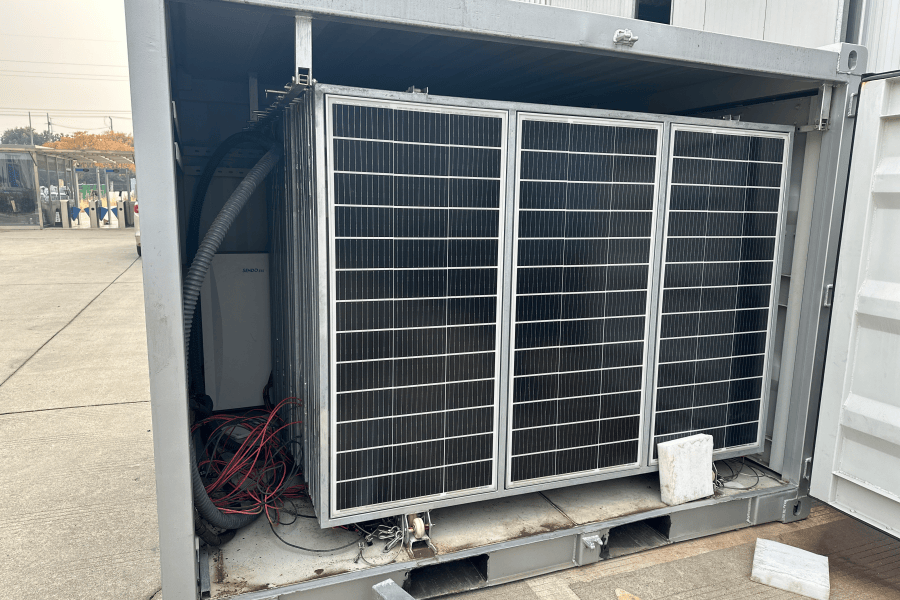
The Unseen Challenge: Why Safety is the True Foundation of Remote Island Black Start
Honestly, when we talk about deploying a Battery Energy Storage System (BESS) for a remote island microgrid, everyone gets excited about the technical specs - the megawatt-hours, the black start capability, the seamless integration with solar or wind. Over a coffee, that's what gets discussed. But after 20+ years on sites from the Scottish Isles to the Caribbean, I've learned there's a more fundamental conversation we need to have first. It's not just about can it restart the grid, but can it do so safely, reliably, and within the rules for decades? That's where the real expertise lies.
Jump to Section
- The Remote Reality: More Than Just a Power Outage
- When Good Intentions Meet Harsh Realities
- Building Trust: The Safety Regulation Framework
- From the Field: What the Spec Sheets Don't Tell You
The Remote Reality: More Than Just a Power Outage
Picture this: a storm knocks out the sole diesel generator on an island community. A black start-capable BESS is your hero, designed to energize the grid from a complete shutdown. But here's the catch - on a remote island, your BESS isn't just a piece of infrastructure; it's the lifeline. The local fire department might be volunteers. Specialist technicians are a plane or boat ride away. The ambient temperature might swing wildly. This isn't a suburban data center with easy access. The Safety Regulations for Black Start Capable Energy Storage Container for Remote Island Microgrids aren't bureaucratic red tape; they're the essential playbook for survival in these isolated conditions.
The core problem I've seen firsthand is a mismatch. Project developers often prioritize upfront cost and basic functionality, treating safety certifications as a final checkbox. But for island grids, safety isn't a feature; it's the prerequisite. A thermal runaway event or a protection system failure isn't just an equipment loss - it could mean a prolonged blackout, evacuation challenges, and a total loss of community trust in renewable technology.
When Good Intentions Meet Harsh Realities
Let's agitate that point a bit. A study by the National Renewable Energy Laboratory (NREL) highlighted that improper system design and integration are leading contributors to BESS incidents. Now, amplify that risk in a remote setting. The financial model crumbles quickly: a single safety-related incident can lead to catastrophic repair costs, astronomical insurance premiums, and project abandonment. I've consulted on projects where the Levelized Cost of Energy (LCOE) - the holy grail of project economics - was completely recalculated after a near-miss revealed non-compliant safety gaps. What looked cheap became prohibitively expensive.
Think about thermal management. In a temperate climate, a minimally vented container might pass. But on a sun-baked island, peak ambient temperatures can push internal cell temperatures beyond safe limits, degrading lifespan and, in the worst case, initiating a cascade failure. The regulations for these environments mandate rigorous, climate-adapted thermal design - something off-the-shelf units often lack.

Building Trust: The Safety Regulation Framework
So, what's the solution? It's a mindset shift. We must view the Safety Regulations for Black Start Capable Energy Storage Container for Remote Island Microgrids as the core design blueprint from day one. This isn't about one standard; it's about a holistic suite. At Highjoule, when we design for islands, we start with this integrated framework:
- UL & IEC as the Foundation: UL 9540 and IEC 62933 are non-negotiables for the system and cells. They validate basic safety. But for black start, we layer on...
- IEEE 1547 for Seamless Integration: This governs how the BESS interacts with the microgrid during restoration - managing voltage, frequency, and synchronization to prevent damage to connected assets.
- Local Fire & Building Codes: This is where localization is key. Distances from other structures, secondary containment for electrolytes, and specific fire suppression systems (like clean agent systems suited for electrical fires) are mandated.
For example, in a project we completed for a community in the Canadian Atlantic islands, the challenge wasn't just cold weather. It was ensuring the black start sequence could execute reliably at -20C while the system's safety protections remained fully active. Our design used a UL 9540-certified container with an integrated, fault-tolerant heating system within the thermal management loop, all validated against the local maritime safety codes. The container itself was more than a box; it was a self-regulating, resilient power node.
From the Field: What the Spec Sheets Don't Tell You
Let me give you some practical, from-the-trenches insight. When you read about "C-rate" (the charge/discharge speed), it's not just about power. For black start, a high C-rate is needed to provide the massive initial surge to spin up generators and motors. But a high C-rate generates more heat. So, a safe design for island black start must have a thermal management system rated for that peak C-rate continuously, not just occasionally. It's about sustained, safe peak performance.
And about LCOE - everyone wants it low. The real trick to lowering LCOE on an island isn't buying the cheapest cells; it's ensuring the system operates safely for its entire 15-20 year lifespan without major incidents or downtime. A robust, regulation-compliant design with superior thermal management will have lower degradation. This means you'll maintain your usable capacity for years longer, which dramatically improves your long-term economics. You're investing in certainty.
At Highjoule, this philosophy is baked into our product development. Our containers are built with these remote, harsh environments in mind from the first sketch - not as an afterthought. We've seen the difference it makes in total cost of ownership and, more importantly, in the peace of mind it gives the communities and operators who depend on these systems every day.
So, the next time you evaluate a BESS for a remote application, ask not just about its black start capability, but how it safely achieves that under the specific, stringent regulations your site demands. What's the one safety consideration that keeps you up at night for your next project?
Tags: UL Standard BESS LCOE Black Start Microgrid Remote Islands IEC Standard Energy Storage Safety
Author
James Zhang
20+ years agricultural energy storage engineer / Highjoule CTO