
Safety Regulations for Grid-forming Hybrid Solar-Diesel EV Charging Systems
Beyond the Plug: Why Safety is the Real Bottleneck for Your EV Charging Hub's Hybrid Power
Hey there. Let's grab a virtual coffee. Over my two decades on sites from California to Bavaria, I've seen the EV charging landscape transform. The new buzz? Pairing fast chargers with a grid-forming hybrid solar-diesel and battery system. It's a brilliant idea C resilience, lower costs, greener credentials. But honestly, I've also seen the hesitation in project managers' eyes. It's not about the tech specs anymore; it's the daunting maze of Safety Regulations for Grid-forming Hybrid Solar-Diesel System for EV Charging Stations. Getting it wrong isn't just a paperwork headache; it's a real operational and financial risk.
Quick Navigation
- The Real Problem: More Than Just a Checklist
- The Staggering Cost of Confusion
- Safety Regs: A Framework, Not a Hurdle
- Case in Point: A German Logistics Park
- Key Technical Considerations from the Field
- Making It Real: The Integrated Approach
The Real Problem: More Than Just a Checklist
The phenomenon is clear: everyone wants energy independence and stable power for their EV chargers, especially in areas with shaky grids or high demand charges. You combine solar, a diesel genset for backup, and a battery to smooth it all out. But here's the catch most vendors don't talk about enough: you're not installing three separate systems. You're creating a single, interactive power plant. And that's where the safety regulations get complex.
The core pain point isn't ignorance of standards like UL 9540 for energy storage or IEEE 1547 for interconnection. It's the integration gap. How do these standards interact when your grid-forming inverter is simultaneously managing PV input, battery C-rate, and a synchronizing diesel generator, all while supporting critical EV load? I've seen firsthand on site how a mismatch in protection coordination between subsystems can lead to nuisance tripping or, worse, unsafe islanding conditions.
The Staggering Cost of Confusion
Let's agitate that pain a bit. What happens if safety is an afterthought?
- Project Delays & Cost Overruns: Failing a utility interconnect study or AHJ (Authority Having Jurisdiction) inspection can set you back months. According to the National Renewable Energy Laboratory (NREL), interconnection and permitting can contribute up to 25% of soft costs for distributed energy projects. Redoing engineering designs is expensive.
- Operational Inefficiency & Risk: A system that isn't certified for safe interaction might force you to derate components. You bought a 250 kW battery, but thermal management fears mean you only discharge it at 0.5C, not its rated 1C. Your effective capacity is halved, killing your ROI.
- Liability & Insurance Nightmares: An incident at an EV charging station without clear, certified compliance trails can lead to massive liability. Insurers are increasingly asking for UL or IEC certification proofs. Without them, premiums skyrocket, or coverage is denied.

Safety Regs: A Framework, Not a Hurdle
So, what's the solution? It's about embracing the Safety Regulations for Grid-forming Hybrid Solar-Diesel System for EV Charging Stations as your design blueprint from day one. Think of UL, IEC, and IEEE not as obstacles, but as a 20-year collective wisdom on how to prevent failures. They answer the critical questions: What happens during a fault? How does the system shut down safely? How do components from different manufacturers communicate to ensure protection?
For instance, UL 9540A (the fire safety test) isn't just a test for the battery cell. It's a system-level evaluation. At Highjoule, we've learned that passing it requires an integrated design philosophy - how the battery rack's spacing, the HVAC's airflow, and the control system's thermal monitoring work as one. That's the level of cohesion needed.
Case in Point: A German Logistics Park
Let me give you a real example. We worked with a logistics company in North Rhine-Westphalia. They needed to power eight 150 kW EV chargers for their electric truck fleet, using onsite PV and a backup diesel generator. The challenge? The local grid connection was weak, and the utility demanded strict anti-islanding and power quality guarantees.
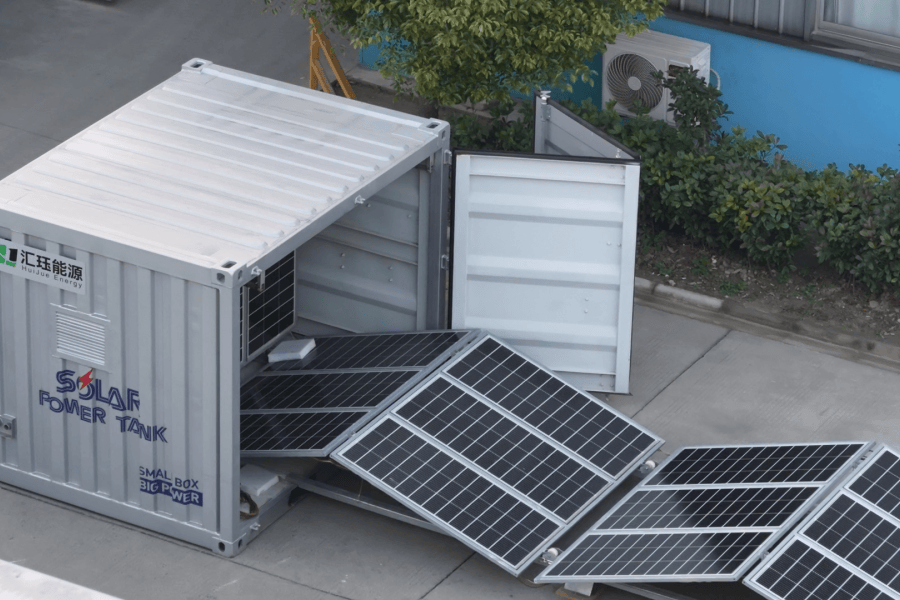
The project's success hinged on the grid-forming hybrid system's safety certification. We didn't just supply a battery (UL 9540) and an inverter (UL 1741 SB). We provided a pre-integrated, containerized solution where the entire power conversion and control system was tested and certified as a single functional unit under relevant IEC standards for grid-forming functionality. This "unit certification" approach dramatically simplified the utility approval process. The system now seamlessly forms a stable microgrid, prioritizing solar and battery, with the genset as a last-resort backup, all with guaranteed safety interlocks. Their Levelized Cost of Energy (LCOE) for charging dropped by over 40% compared to pure grid power.
Key Technical Considerations from the Field
When you're evaluating solutions, cut through the marketing speak and ask about these specifics:
- Grid-Forming Black Start: Can the system safely restart the microgrid (including synchronizing the genset) after a total shutdown? The sequence and timing are critical for safety and equipment life.
- Thermal Management Coordination: It's not just about cooling the battery. It's about managing heat rejection from the inverter, transformer, and genset in one enclosure or area. A 1C overshoot in a poorly designed cabinet can trigger cascading protections.
- LCOE with Safety Built-in: A cheaper battery with a lower upfront cost might have a higher C-rate, but if it requires a massive, energy-intensive cooling system to stay within safe limits, your long-term LCOE suffers. True cost optimization includes safe, sustainable operation.
Making It Real: The Integrated Approach
This is where experience matters. You need a partner who sees the system as a whole. At Highjoule, our design process starts with the safety and interconnection requirements. We model the protection coordination digitally before a single component is built. Our BESS platforms come with factory-integrated controls that are pre-programmed for standard-compliant behavior with gensets and PV, which slashes onsite commissioning time and error.
The goal isn't to sell you a battery. It's to deliver a predictable, safe, and profitable energy asset for your EV charging business. That means our service includes supporting your team through the local AHJ and utility approval process with the right documentation packs C because we've been through it a hundred times before.
So, as you plan your next EV charging hub, ask yourself: Is your hybrid power system designed as a compliant, integrated unit, or is it a collection of parts hoping to play nice? The difference determines your launch date, your budget, and your peace of mind.
What's the biggest safety or compliance hurdle your current project is facing?
Tags: UL Standard BESS LCOE Europe US Market EV Charging Infrastructure Renewable Energy Safety Regulations Grid-Forming Inverter
Author
James Zhang
20+ years agricultural energy storage engineer / Highjoule CTO