
IP54 Outdoor Pre-integrated PV Container Safety: The Overlooked Key to Eco-Resort ROI
Beyond the Brochure: Why Your Eco-Resort's Outdoor Battery Safety Is a Make-or-Break Decision
Hey there. Let's be honest, when you're planning a solar-plus-storage system for a remote eco-lodge or resort, the flashy specs - battery capacity, solar panel wattage - get all the attention. The steel box that houses it all? It often gets treated as an afterthought, a simple enclosure. After two decades on sites from the Swiss Alps to the Arizona desert, I can tell you that's where the biggest, most expensive mistakes are hidden. That "simple box," especially one claiming IP54 for outdoor use, is the literal foundation of your project's safety, longevity, and return on investment.
What We're Covering Today
- The Real Cost of a "Cheap Box"
- What IP54 Really Means On-Site
- A California Case Study: When Theory Meets Reality
- The Integrated Safety Mindset: More Than a Rating
The Real Cost of a "Cheap Box"
Here's the painful paradox I've seen firsthand. Developers pour millions into high-efficiency PV panels and premium battery cells, then opt for a low-bid, minimally compliant container to save maybe 1-2% on the CAPEX. The logic seems sound on a spreadsheet. The problem? Outdoor environments are relentless, creative destroyers of electrical equipment.
An NREL report on BESS failures points to environmental factors and enclosure issues as significant contributors to underperformance and safety incidents. We're not just talking about a little rain. It's about wind-driven dust that abrades components, coastal salt mist that corrodes connections in months, or diurnal temperature swings in a desert that stress every weld and seal. A container that's merely "water-resistant" might pass a basic test, but fail in a real-world, 10-year storm. The resulting downtime, emergency service calls, or worst-case scenario, a thermal event, doesn't just hurt your energy bill. It devastates guest experience and brand reputation at a luxury resort. Suddenly that 2% CAPEX saving looks like a catastrophic liability.
What IP54 Really Means On-Site
So you see "IP54" on a spec sheet. Great. But do you know what you're actually buying? The "IP" code (Ingress Protection) has two digits. The first, "5," means it's dust-protected - not dust-tight (that's IP6X) - but enough ingress won't interfere with operation. The second, "4," means it can handle water splashes from any direction.
Now, here's my on-site insight: A true, safety-focused IP54 outdoor pre-integrated container isn't about slapping some gaskets on a door. It's a holistic system. It means:
- Sealed Conduit Entries: Every cable pass-through is a potential failure point. It needs a proper gland, not just a hole with silicone.
- Pressurized & Filtered HVAC: The thermal management system (crucial for battery lifespan and safety) must maintain positive internal pressure to keep dust out, with filters that are serviceable from the outside. I've seen units where changing a filter breaks the enclosure seal - a terrible design.
- Material & Corrosion Resistance: The steel grade, paint thickness, and treatment for the specific environment (C4, C5-M for coastal) are non-negotiable. This is where standards like UL 9540 and IEC 62933-5-2 come into play, looking at the entire system's safety.
At Highjoule, when we talk about our pre-integrated containers, we're obsessed with these details because we're the ones getting the 3 AM call. Our design philosophy is that the container is the first and most critical component of the BESS, not the last. It's why we build to exceed base IP54, incorporating features like seismic bracing for California or enhanced corrosion protection for Florida sites right into the standard offering.
A California Case Study: When Theory Meets Reality
Let me tell you about a project we inherited in the hills near Napa Valley. A beautiful eco-resort had installed a solar+storage system a year prior. Their container was "IP54-rated." Come the first major winter, driving rain combined with heavy dust from nearby unpaved roads. Moisture and dust breached the enclosure, settling on busbars and monitoring equipment. It caused persistent ground-fault alarms, forcing the system offline repeatedly during peak utility rate periods. The resort was losing thousands in demand charge savings and facing huge service bills.
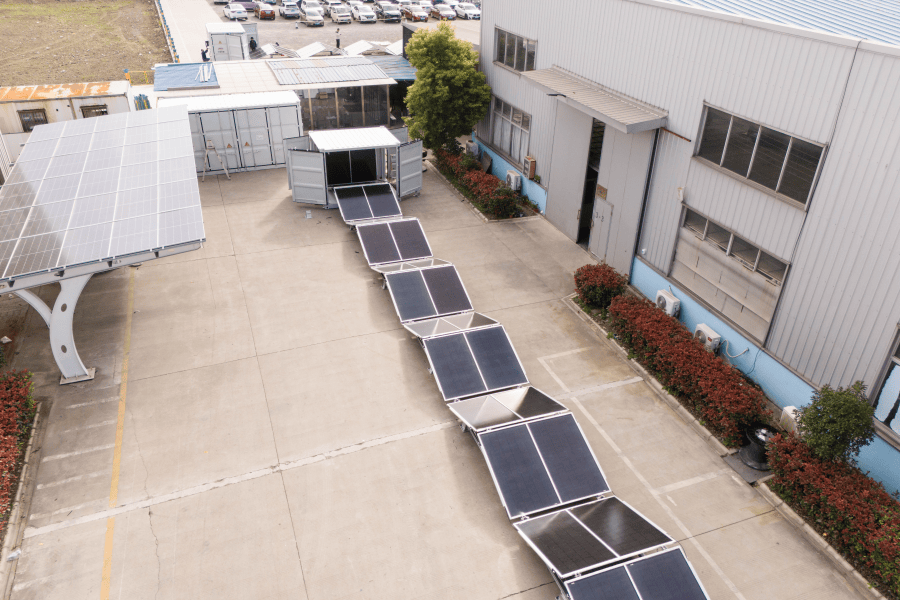
Our solution wasn't just a swap. We deployed one of our pre-integrated PV containers, but the key was the integrated safety design:
- A dedicated, sealed compartment for the inverter and AC switchgear, isolated from the battery section.
- An HVAC system with independent cooling loops and particle filters accessible via an external service hatch.
- All internal cabling in sealed trays with drip loops.
The result? Two full seasons in, zero environmental alarms. The system's actual Levelized Cost of Energy (LCOE) - the true measure of lifetime cost - plummeted because availability soared. The resort manager now sleeps through storms, and that's the ROI you can't put on a brochure.

The Integrated Safety Mindset: More Than a Rating
Ultimately, for decision-makers in the US and EU, compliance with Safety Regulations for IP54 Outdoor Pre-integrated PV Container for Eco-resorts isn't about checking a box for the local inspector. It's a strategic investment in asset resilience. It directly impacts your C-rate (the safe charge/discharge speed of the battery), because proper thermal management - which depends on a sealed, well-cooled environment - allows you to safely use more of the battery's power without degrading it prematurely.
Think about it this way: You wouldn't build a five-star resort with a subpar foundation. Your energy infrastructure is no different. The container is that foundation. It determines whether your high-tech battery system becomes a reliable profit center or a constant money pit.
So, next time you're evaluating proposals, dig into the how of that IP54 rating. Ask the vendor: "Walk me through your seal design for the main door." or "Show me your UL 9540 test report for the full enclosure system." The answers will tell you everything you need to know. What's one site condition that keeps you up at night regarding your energy assets?
Tags: UL Standard BESS Renewable Energy IP54 Solar Storage Container Outdoor Safety Project ROI
Author
James Zhang
20+ years agricultural energy storage engineer / Highjoule CTO