
Smart BESS Safety for Telecom: Why UL & IEC Standards are Non-Negotiable
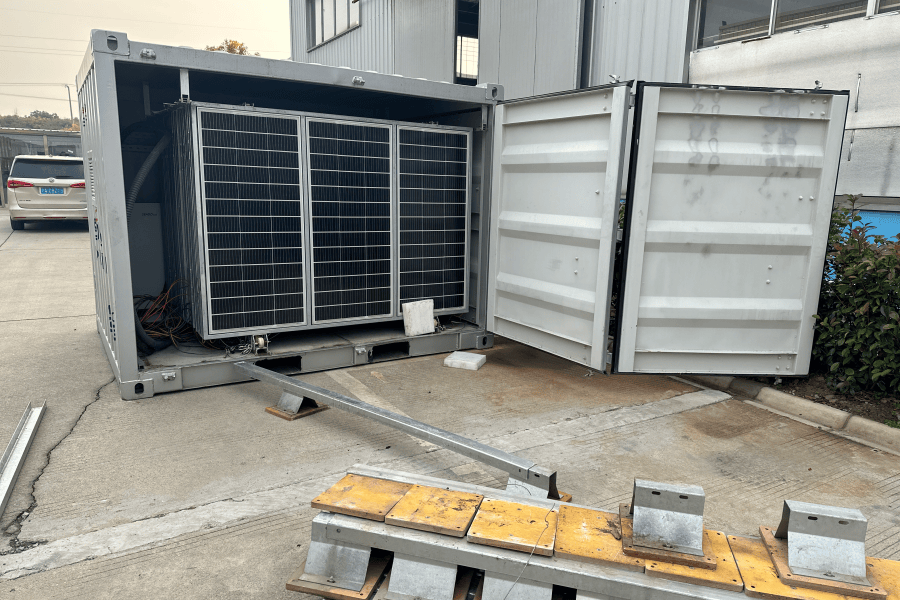
Table of Contents
- The Silent Risk in Your Backup Power Plan
- Beyond the Spec Sheet: Where Real-World Safety Gaps Appear
- The Integrated Solution: More Than Just a Box of Batteries
- A Case in Point: Learning from a German Deployment
- Speaking Your Language: Safety, Uptime, and LCOE
- The Right Questions to Ask Your Next BESS Provider
The Silent Risk in Your Backup Power Plan
Honestly, when most telecom operators think about deploying a Battery Energy Storage System (BESS) with solar for a remote base station, the checklist is pretty straightforward: capacity, cost, footprint. Safety? It's on the list, sure, but often as a compliance box to tick - UL listed, IEC certified, check. But after twenty-plus years on sites from the California desert to the Scottish Highlands, I've learned that true safety isn't just a certificate. It's a deeply integrated philosophy, especially for those pre-integrated PV containers we all love for their plug-and-play simplicity. The real challenge begins after the handover, when that container is out there alone, cycling daily, managing erratic solar input, and its brain - the Smart BMS - is making millions of decisions without you watching.
Beyond the Spec Sheet: Where Real-World Safety Gaps Appear
Let's agitate this a bit. You've got a containerized unit. It passed factory tests. But on-site, the thermal environment is never what the lab simulated. I've seen firsthand how a poorly managed thermal gradient inside a container can accelerate cell aging in one module while leaving others underutilized. The Smart BMS sees the voltage and temperature, but without regulations and design that enforce cell-level granularity and predictive algorithms, it's just reporting a problem, not preventing it. This isn't a hypothetical. The National Renewable Energy Laboratory (NREL) has highlighted that inconsistent thermal management is a key contributor to performance degradation and safety incidents in stationary storage. When you add in the complexity of integrating a fluctuating DC solar source directly into that same environment, the need for an overarching, rigorous safety protocol becomes crystal clear.
The pain point isn't just about preventing a catastrophic event (though that's paramount). It's about the slow bleed: reduced system lifespan, unexpected downtime for maintenance, and ultimately, a higher Levelized Cost of Energy (LCOE) that obliterates your ROI projections. A system that isn't inherently safe is inherently expensive.
The Core of Modern Safety: It's a System, Not a Component
This is where the concept of Safety Regulations for Smart BMS Monitored Pre-integrated PV Container for Telecom Base Stations moves from jargon to job-critical. It's not a single rule. It's a holistic framework that dictates how every component talks to each other from day one to end-of-life.
- The BMS as a Sentinel: It must go beyond monitoring. For a pre-integrated unit, it needs to govern the PV charge controller, manage the HVAC system's response to heat, and isolate faults at the string or even cell level within milliseconds.
- Container as a Protected Ecosystem: Safety regulations must cover ingress protection (IP rating for dust/moisture), fire suppression specifically rated for lithium-ion battery fires, and structural integrity to house both sensitive electronics and heavy battery racks.
- Standards as a Foundation, Not a Ceiling: UL 9540 and IEC 62933 are the baseline. But for telecoms in harsh or remote environments, the real safety is built on designing beyond these standards for your specific use case.
The Integrated Solution: More Than Just a Box of Batteries
So, what does a solution built on this philosophy look like? At Highjoule, we approach every pre-integrated container as a single, living organism. The safety protocol is its central nervous system. Our Smart BMS doesn't just read data; it executes a safety-first operational policy. For instance, if it predicts a potential thermal runaway based on cell voltage divergence and a rising C-rate (that's the speed of charge/discharge, crucial for understanding battery stress), it can proactively derate the system, engage supplemental cooling, and alert our 24/7 monitoring center - all before a standard alarm threshold is ever crossed.
This level of integration is what turns regulations into reliability. It ensures that the safety designed in the factory is the safety that operates in the field, every single day.
A Case in Point: Learning from a German Deployment
Let me share a scenario from a project in North Rhine-Westphalia. A telecom client needed to power a critical base station in a forested area with limited grid stability. They chose a pre-integrated solar-plus-storage container. The initial challenge was ensuring reliable operation through humid summers and cold winters, with the added risk of leaves and debris affecting the container's external cooling vents.
Our deployment focused on the integrated safety regulations from the start. The container featured a NEMA 3R enclosure rating (exceeding typical IP requirements) and a fire suppression system with dedicated thermal sensors not just in the battery zone, but in the power electronics compartment. The Smart BMS was programmed with seasonal algorithms, understanding that a high C-rate discharge on a cold morning requires a different safety buffer than on a hot afternoon. It managed the PV input to avoid stressful partial-state-of-charge conditions for the batteries. Two years in, the system has had zero unsafety-related shutdowns, and its state of health is tracking 15% better than the baseline model. That's the tangible result of safety-by-design.

Speaking Your Language: Safety, Uptime, and LCOE
I know, as a decision-maker, you need to translate engineering speak into business metrics. Here's the expert insight:
- Thermal Management = Money: Every 10C reduction in average operating temperature can double battery life. A robust, BMS-controlled thermal system directly lowers your replacement costs and LCOE.
- Smart Monitoring = Uptime: Predictive alerts mean you can schedule maintenance during a low-traffic period, not at 2 AM during a network outage. It transforms safety from a reactive cost to a proactive reliability tool.
- Compliance = Speed: A container built to stringent, recognized safety regulations navigates local permitting and fire code approvals faster. In the US, having a UL 9540 certified system with a listed fire rating is often the key to getting a permit signed off without months of back-and-forth.
This is where our focus at Highjoule truly aligns with client needs. We don't just sell a container; we provide a guaranteed operational envelope defined by these integrated safety principles. Our local teams in both the US and EU ensure the system is not only installed to spec but that its safety logic is validated on your specific site.
The Right Questions to Ask Your Next BESS Provider
So, next time you're evaluating a Smart BMS Monitored Pre-integrated PV Container, move beyond the datasheet. Grab a coffee with their engineer (or give us a call!) and ask:
- "How does your BMS actively intervene to prevent a safety event, rather than just log it?"
- "Can you walk me through the fire suppression system and its triggering logic? Is it UL 9540A tested for my specific battery chemistry?"
- "How do your safety protocols manage the interaction between the PV input and the battery charging cycles to minimize stress?"
- "What is your remote monitoring protocol for safety parameters, and what is the escalation path if an anomaly is detected?"
The answers will tell you everything you need to know about whether you're buying a commodity or a long-term partner for your critical infrastructure. Because in the end, the safest system is the one that keeps your network online, your community connected, and your total cost of ownership firmly under control.
Tags: UL Standard BESS Europe US Market Renewable Energy Smart BMS Telecom Energy Safety Regulations Pre-integrated Container
Author
James Zhang
20+ years agricultural energy storage engineer / Highjoule CTO