
Step-by-step Installation of 20ft High Cube 1MWh Solar Storage for Data Center Backup Power
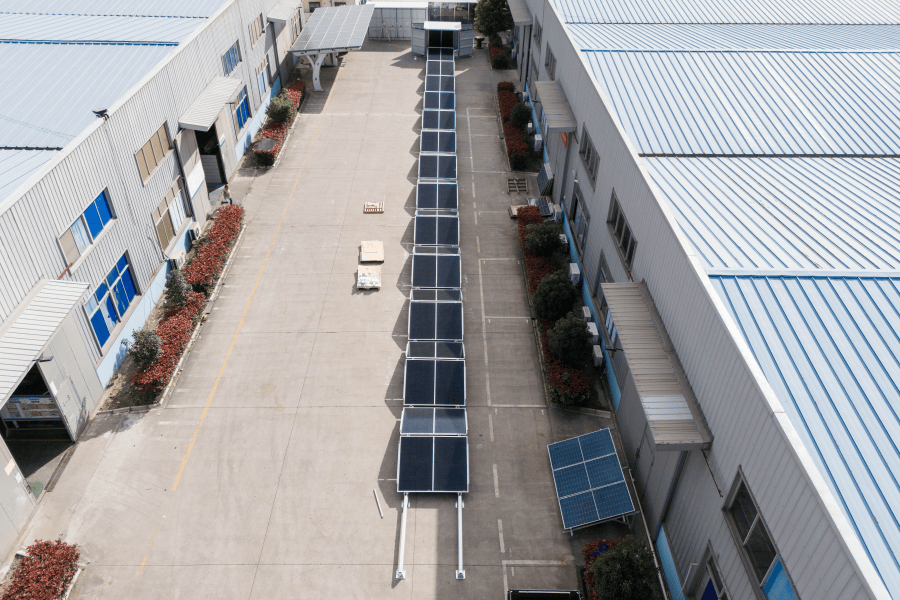
The Real-World Guide to Deploying a 1MWh Powerhouse for Your Data Center
Honestly, when a client first mentions they need backup power for a data center, I can see the anxiety in their eyes. It's not just about keeping the lights on; it's about protecting millions in assets, maintaining 99.999% uptime, and doing it all within a budget that makes sense. Over my 20+ years on sites from California to Germany, I've seen too many projects get bogged down by unexpected complexities, especially when it comes to integrating a large-scale battery energy storage system (BESS). The promise is huge, but the path to getting it right? That's where the real work happens.
Quick Navigation
- The Real Problem: It's More Than Just a Big Battery
- Why Getting It Wrong Matters (More Than You Think)
- Step-by-Step: From Concrete Pad to Commissioning
- Expert Insights: The Details Your Contractor Might Not Mention
The Real Problem: It's More Than Just a Big Battery
The common thinking is: "We'll order a container, drop it in the parking lot, and we're resilient." I wish it were that simple. The real challenge with a Step-by-step Installation of 20ft High Cube 1MWh Solar Storage for Data Center Backup Power is that you're not just installing equipment; you're integrating a complex, high-power electrochemical system into the most critical node of your IT infrastructure. The pitfalls aren't in the battery cells themselves, but in everything around them: site suitability, local grid interconnection rules, thermal management under full load, and navigating a maze of codes like UL 9540 and IEC 62933.
Why Getting It Wrong Matters (More Than You Think)
Let me be blunt. A poorly planned installation doesn't just fail quietly. I was on a site in Texas where a BESS meant for peak shaving was installed without adequate spacing for airflow. During a heatwave, the system derated itself to prevent overheating, just when the client needed it most. The financial loss from missed demand charge savings was significant. According to the National Renewable Energy Laboratory (NREL), improper thermal management can accelerate battery degradation by up to 30%, slashing your system's lifespan and ROI. For a data center, a failed transition during an outage isn't an inconvenience - it's a headline-making event that damages reputation and triggers SLA penalties.

The Solution: A Blueprint for a Seamless 1MWh Deployment
So, what's the answer? It's treating the installation as a mission-critical project phase, with as much rigor as you'd apply to commissioning a new server hall. At Highjoule, we've learned that success hinges on a standardized yet adaptable process, deep local code knowledge, and obsessive attention to thermal and electrical safety. Our 20ft High Cube 1MWh system is designed for this, but the installation blueprint is what brings the design to life. It's about creating a predictable, efficient path to resilience.
Step-by-Step: From Concrete Pad to Commissioning
Based on our work for a financial services data center in Frankfurt, here's the real-world sequence we follow. This project needed seamless backup for their core trading servers, with zero tolerance for grid disturbance.
Phase 1: Pre-Site Preparation & Design (Weeks 1-4)
This is where 50% of the battle is won. We don't just look at a satellite image; we walk the site.
- Site Audit & Civil Engineering: We verify soil bearing capacity for the ~20-ton container, plan crane access routes, and identify the optimal location for cable runs to the main switchgear. Proximity to the data hall matters for efficiency, but so does safety clearance.
- Utility & Authority Having Jurisdiction (AHJ) Coordination: We handle the paperwork for interconnection applications, ensuring our system design is pre-approved against IEEE 1547 and local grid codes. This avoids last-minute surprises.
- Foundation Pouring: A perfectly level, reinforced concrete pad with embedded grounding lugs is poured. We specify tolerances of less than 3mm over 10 meters. This isn't overkill; it prevents structural stress on the container frame.
Phase 2: Delivery & Placement (Day 1)
The delivery day is a ballet of heavy machinery. The pre-fabricated container arrives on a low-loader truck. Using a 100-ton mobile crane, we lift and position it onto the anchor bolts. The key here is using a spreader bar to avoid twisting the unit. I've seen containers damaged by a rushed crane op. We then secure it, install vibration isolators, and verify the absolute level.
Phase 3: Mechanical & Electrical Integration (Days 2-7)
Now the connections start. This is where our UL and IEC-certified design pays off.
- Electrical Hook-up: Certified electricians pull the medium-voltage (or low-voltage) cables from the PCS to the data center's main distribution board. Every termination is torqued to spec and marked. We install the dedicated isolation switches - a non-negotiable for safe maintenance.
- Thermal Management System Activation: We commission the integrated HVAC system. For a 1MWh pack, you're not looking at a simple A/C unit. It's a redundant, precision cooling system that maintains an even 25C (2C) across all battery racks. We test both primary and secondary cooling paths.
- Control & Communication Links: Fiber optic cables are run to the data center's Building Management System (BMS) and Energy Management System (EMS). This integration is crucial for automated "grid-to-battery" transfer commands.
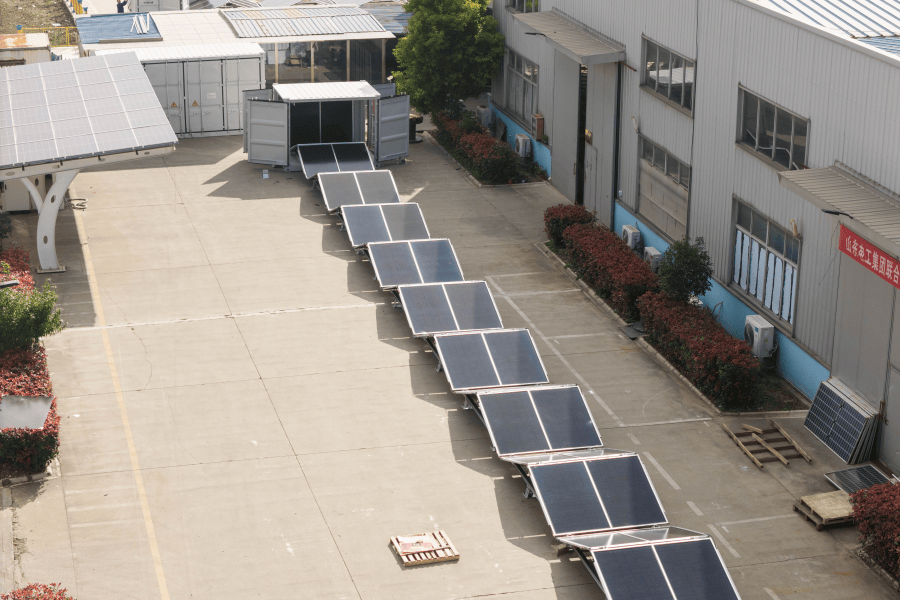
Phase 4: Testing & Commissioning (Days 8-10)
We don't assume anything works. We prove it.
- Functional Tests: Isolate the system and run self-diagnostics. Check every battery management system (BMS) module, every sensor.
- Performance Tests: We conduct a full discharge and recharge cycle at the rated C-rate (often C0.5 or C1 for data center backup) to validate the 1MWh capacity. We measure round-trip efficiency.
- Integration Test: The big moment. In coordination with the data center ops team, we simulate a grid failure. The system must detect the outage, signal the switchgear, and pick up the designated critical load - all within 2 seconds. We did this three times in Frankfurt, flawlessly.
Expert Insights: The Details Your Contractor Might Not Mention
Let's get technical for a moment, in plain English.
C-rate Isn't Just a Number: For backup, you often see a C-rate of 1 (meaning a 1MWh system can deliver 1MW for 1 hour). But a lower C-rate (like 0.5) often means less stress on the batteries, longer life, and better thermal performance. It's a trade-off between power and longevity we help clients navigate.
Thermal Management is Everything: The International Energy Agency (IEA) notes that proper thermal control is the single largest factor in long-term BESS health. Our systems use active liquid cooling for dense packs because it's 3-4 times more efficient at heat removal than air, crucial for that 20ft container packed with cells.
Thinking in LCOE (Levelized Cost of Energy): The real cost isn't the purchase price. It's the LCOE - the total cost over the system's life divided by the energy it dispatches. A slightly higher upfront cost for a superior cooling system or higher-cycle cells can dramatically lower your LCOE by extending the system's life from 10 to 15+ years. That's the kind of math that wins over CFOs.
Ultimately, a successful Step-by-step Installation of 20ft High Cube 1MWh Solar Storage for Data Center Backup Power is about marrying robust product design with flawless field execution. It's what lets you sleep soundly, knowing that when the next grid disturbance hits, your data center won't even blink. What's the one site-specific challenge you're most concerned about for your own backup power project?
Tags: UL Standard BESS Data Center Backup Power Renewable Energy Microgrid Energy Storage Installation
Author
James Zhang
20+ years agricultural energy storage engineer / Highjoule CTO