
A Step-by-Step Guide to Installing a 20ft High Cube Industrial ESS Container
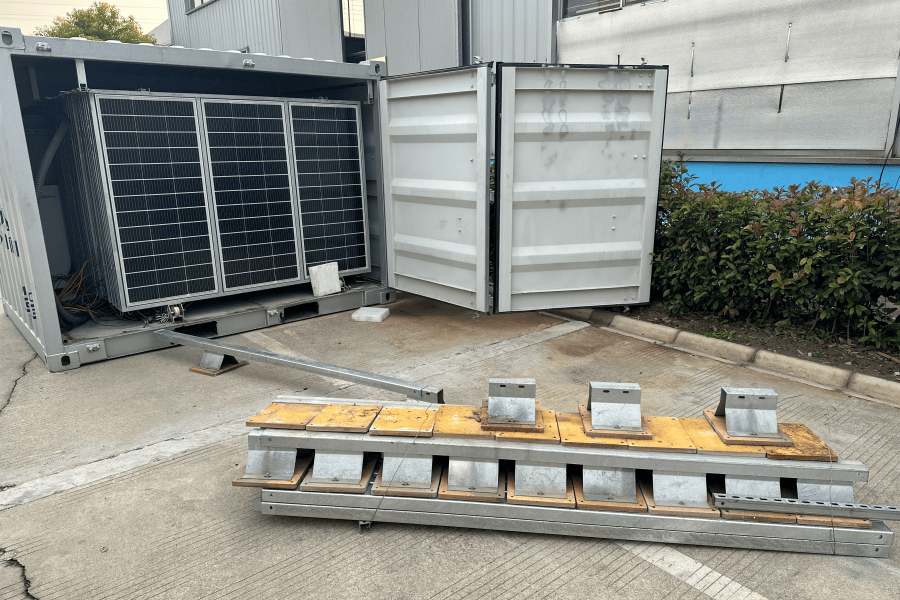
Your Industrial Park Needs Power Resilience. Let's Talk About How to Get It, Step-by-Step.
Honestly, over my two decades of deploying battery storage across the globe, I've seen a shift. It's not just about going green anymore for industrial clients. It's about hard economics, operational continuity, and frankly, taking control of an unpredictable grid. The 20ft High Cube Industrial ESS Container has become the go-to workhorse for this job. But here's the thing I see firsthand on site: the installation is where the magic - or the migraine - happens.
In This Article:
- The Real Problem: It's More Than Just Plugging In a Giant Battery
- Why the Installation Process Makes or Breaks Your ROI
- The Highjoule Step-by-Step: From Empty Slab to Live System
- Beyond the Basics: Expert Insights for Decision-Makers
The Real Problem: It's More Than Just Plugging In a Giant Battery
The phenomenon is clear: every industrial park manager from California to North Rhine-Westphalia is looking at. The driver? According to the International Energy Agency (IEA), global industrial electricity demand is set to grow by over 30% by 2030, with much of that growth happening in regions with aging grid infrastructure. You're facing demand charges, grid instability, and decarbonization targets all at once.
The aggravation kicks in when you realize that deploying industrial-scale storage isn't like ordering a generator. The biggest pain points I've witnessed aren't the batteries themselves, but the site integration:
- Regulatory Maze: Navigating UL 9540 (US), IEC 62933 (EU), and local fire codes can stall a project for months if not planned for upfront.
- Hidden Site Costs: That "perfect" pad location might need tens of thousands in civil work for proper drainage and load-bearing foundation.
- Interconnection Delays: Getting the utility's blessing for a system that can both draw from and feed the grid is a complex dance.
- Safety Silos: The electrical crew, the civil crew, and the BESS commissioning team often don't speak the same language, leading to gaps in safety protocols.
Why the Installation Process Makes or Breaks Your ROI
Let me put it this way: a poorly installed BESS will have a higher Levelized Cost of Storage (LCOS) every single day of its life. How? Inefficient thermal management from poor airflow design forces the system to waste energy on cooling, degrading batteries faster. A rushed electrical hookup can lead to imbalance between battery racks, reducing overall capacity. Every day of delay in commissioning is a day you're missing out on demand charge savings or grid service revenue.
I remember a project in Texas where the initial contractor underestimated the cable run from the container to the main switchgear. The voltage drop was significant enough to trigger protective alarms during peak discharge, effectively capping the system's output. We had to re-pull larger cables - a costly and avoidable retrofit. That's why a meticulous, step-by-step approach isn't just best practice; it's financial prudence.

The Highjoule Step-by-Step: From Empty Slab to Live System
Based on our deployments for clients like a major automotive parts manufacturer in Germany, here's how a smooth installation of a 20ft High Cube ESS Container should unfold. This isn't just theory; it's our field-tested playbook.
Phase 1: Pre-Site Delivery (The Most Critical Phase)
This happens weeks before the container arrives. We work with your team to:
- Finalize Site & Foundation: The pad must be level, within a 10mm tolerance, and capable of supporting the dynamic load (container + batteries, about 26+ metric tons). Proper drainage away from the container is mandatory.
- Utility & Interconnection Coordination: All protection relay settings, interconnect agreements, and meter configurations are locked in. No surprises.
- Safety & Logistics Planning: We map out crane placement, delivery truck access, and establish clear site safety protocols that everyone - from your electricians to our crew - agrees to.
Phase 2: Receiving & Placement
The day of delivery. The container arrives pre-assembled and tested from our facility. Key steps:
- Visual inspection for any transport damage.
- Using a certified crane, the container is gently placed onto the pre-positioned leveling pads or anchor bolts on the foundation.
- We precisely level the container and secure it to the foundation per seismic requirements (IBC codes in the US, Eurocode locally in EU).
Phase 3: Mechanical & Electrical Integration
Now we make the connections. This is where our UL and IEC-certified designs show their value.
- AC/DC Integration: High-voltage cabling is run from the container's PCS (Power Conversion System) to your facility's main distribution board. All terminations are torqued to spec and labeled.
- Thermal Management Hookup: For air-cooled or liquid-cooled systems, we ensure the external HVAC units have clear airflow or the coolant lines are securely connected and leak-checked.
- Communications & Control: We link the BESS controller to your plant's SCADA or energy management system. This is what turns a "battery" into a smart grid asset.
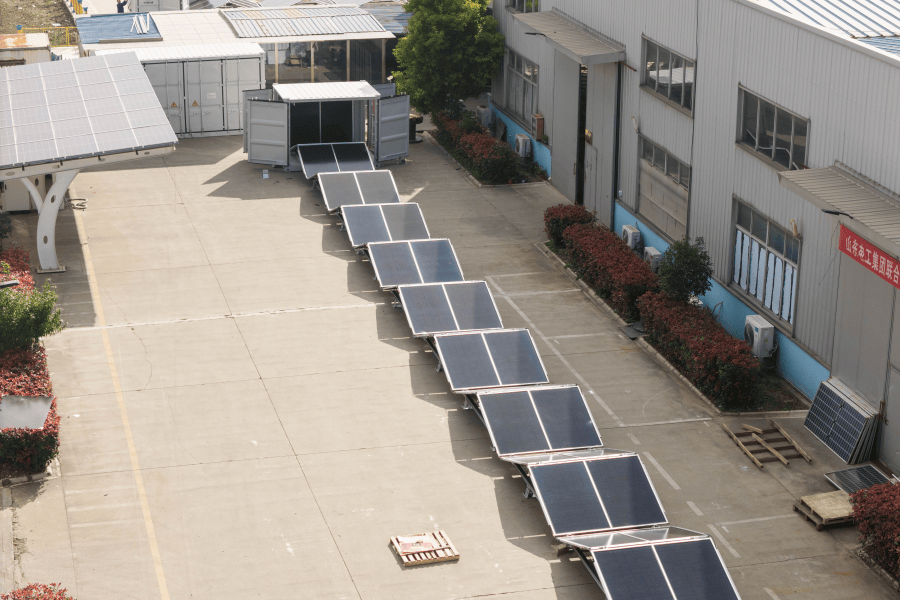
Phase 4: Commissioning & Handover
This is the system's "first breath." We power up sequentially:
- Perform insulation resistance and dielectric withstand tests on all new cables.
- Energize the auxiliary power, then the BMS (Battery Management System), then the PCS.
- Run functional tests: charge/discharge cycles at various C-rates, verify thermal management kicks in correctly, test all safety shutdowns (like smoke detection and gas suppression).
- Finally, we sit down with your operations team for a hands-on training session. You get the keys, the manuals, and our direct local support line.
Beyond the Basics: Expert Insights for Decision-Makers
If you're the one signing the check, here are two non-technical concepts you should understand, explained simply:
1. C-rate Isn't Just Engineer Speak: Think of it as the "speed" of the battery. A 1C rate means the battery can fully charge or discharge in one hour. A 0.5C rate takes two hours. Why care? A system designed for a lower C-rate (like 0.25C) often has a lower upfront cost but can't dispatch power as quickly for things like sudden demand charge spikes or fast frequency response. For most industrial parks, a system optimized around 0.5C-1C offers the best balance of performance and longevity. We model this against your load profile to get it right.
2. Thermal Management is Your Battery's Lifespan: Heat is the enemy. A well-designed container doesn't just have an air conditioner; it has a targeted airflow path that pulls cool air evenly across every battery module. I've seen systems where the top rack runs 5C hotter than the bottom, leading to uneven aging. Our design uses CFD (Computational Fluid Dynamics) modeling to prevent this, which directly protects your investment and keeps your LCOS low.
The goal isn't just to install a container. It's to commission a reliable, revenue-generating or cost-saving asset that operates seamlessly for 15+ years. That only happens with a step-by-step process born from experience, a relentless focus on local standards, and a partnership that doesn't end at commissioning.
So, what's the first physical site constraint you're looking at for your potential BESS location? The available space near your main substation, or perhaps the soil conditions? Let's start the conversation there.
Tags: UL Standard BESS LCOE Europe US Market Industrial Energy Storage Renewable Energy ESS Container Installation
Author
James Zhang
20+ years agricultural energy storage engineer / Highjoule CTO