
Step-by-Step Installation of Air-Cooled PV Storage for Data Center Backup
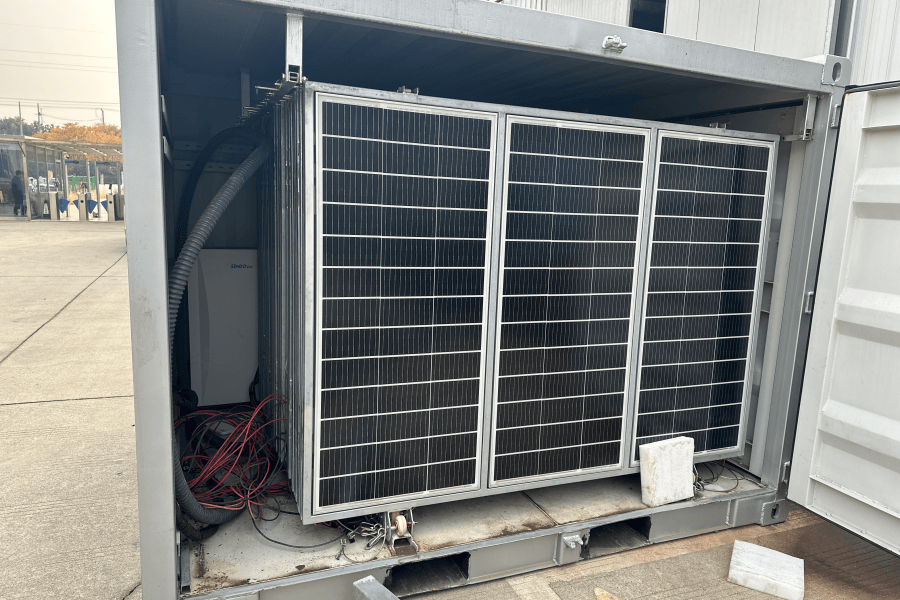
Table of Contents
- The Silent Threat to Your Data Center Uptime
- Why Traditional Backup Solutions Fall Short
- Air-Cooled PV Storage: Your Step-by-Step Installation Blueprint
- Real-World Success: A California Data Center Case Study
- Key Technical Considerations (Made Simple)
The Silent Threat to Your Data Center Uptime
Honestly, folks, over coffee at countless industry events, I hear the same worry from data center managers across the US and Europe: "Our backup power is a ticking cost bomb and a compliance headache." Relying solely on diesel gensets feels increasingly archaic. They're noisy, emit like freight trucks, and frankly, that 10-30 second switch-over time during an outage? It's an eternity for critical servers. The IEA reports that data centers consume 1-2% of global electricity C and outages cost millions per minute. Your backup isn't just about emergencies; it's about financial resilience and meeting strict ESG goals.
Why Traditional Backup Solutions Fall Short
I've seen this firsthand on-site. That diesel dependency creates three massive pain points:
- Cost Spiral: Fuel prices swing wildly, maintenance is relentless, and regulators are slapping heavier carbon taxes on standby generators. That "cheap" initial install? It bleeds you dry over 5 years.
- Safety & Compliance Gambles: Storing large diesel tanks introduces fire risks. New UL 9540A fire safety standards for energy storage are stringent C and rightly so. Non-compliance isn't an option, but retrofitting old systems is a nightmare.
- The Green Mismatch: Pairing solar with a diesel backup is like putting a Prius engine in a Hummer. You generate clean energy, then burn dirty fuel when the grid flickers. Investors and clients notice this disconnect.
One stormy night last year in Frankfurt, I watched a data center's gensets stutter on startup due to damp air. That near-miss cost them sleepless nights and a hefty emergency service call. It shouldn't be this hard.
Air-Cooled PV Storage: Your Step-by-Step Installation Blueprint
Here's the good news: Integrating an air-cooled BESS with your existing PV for data center backup is smoother than you think. Forget complex liquid cooling setups C modern air-cooled systems like ours at Highjoule are built for this. Let's walk through it:
Phase 1: Pre-Installation (Weeks 1-2)
- Site Assessment & Design Finalization: Our team verifies structural load capacity (concrete pads are king!), optimal container placement (shade, ventilation access), and shortest cable runs to your critical PDUs. We finalize single-line diagrams stamped for local AHJ (Authority Having Jurisdiction) compliance C think UL 1973, IEC 62619, IEEE 1547.
- Utility Interconnection Paperwork: Don't underestimate this! We handle the utility studies and agreements upfront. In the US, this means coordinating with the local POCO (Power Company); in Germany, it's the Verteilnetzbetreiber.
- Local Crew Briefing: Safety first. We run joint sessions covering Highjoule's BESS-specific LOTO (Lockout-Tagout) procedures and NFPA 855 spacing requirements. Even seasoned electricians need this refresh.

Phase 2: Core Installation (Weeks 3-4)
- Container Placement & Anchoring: Crane day! We use laser levels for perfect alignment on the prepped pad. Expansion anchors get torqued to spec C no shortcuts. Wind load calcs matter, especially in coastal zones like Marseille or Miami.
- DC & AC Electrical Integration: Here's where precision counts. PV DC feeds land on dedicated, labeled breakers in the BESS combiner. The AC output ties into your backup distribution panel via a certified automatic transfer switch (ATS). We use color-coded, oversized conduits C future-proofing maintenance. Grounding? Double-checked with independent testing.
- Controls & Communications: This is the "brain" hookup. Fiber or shielded CAT6 links the BESS controller to your existing SCADA/EMS. We configure protocols (Modbus TCP/IP, DNP3) for seamless "talk" between systems. Critical step: Isolate these cables from power runs to avoid noise.
Phase 3: Commissioning & Handover (Week 5)
- Functional Checks: We simulate grid failures. Does the ATS switch to BESS power within 20ms? Check. Does the BMS throttle charging if the container temp hits 35C? Check. We validate every alarm contact.
- Performance Testing: A full 4-hour discharge at nameplate capacity. We log voltage sag, temperature rise across racks, and fan response. Real data beats theory every time.
- Local AHJ & Fire Marshal Sign-Off: We provide the stamped test reports, equipment certs (UL, CE), and as-built drawings. Your local inspectors get a guided tour.
- Operator Training: No thick manuals. We do a 3-hour hands-on session: "This is the emergency stop. Here's how you read the SOC (State of Charge) dashboard. Call this number for 24/7 support."
Honestly, the biggest win I see? Data centers using their BESS for daily peak shaving and backup. That dual use slashes LCOE C sometimes cutting payback to under 4 years in high-tariff zones like California or Italy.
Real-World Success: A California Data Center Case Study
Take a 20MW facility in Silicon Valley we deployed last fall. Their pain? Frequent grid instability warnings and $350k/month demand charges. Their old gensets only ran during outages C a costly insurance policy.
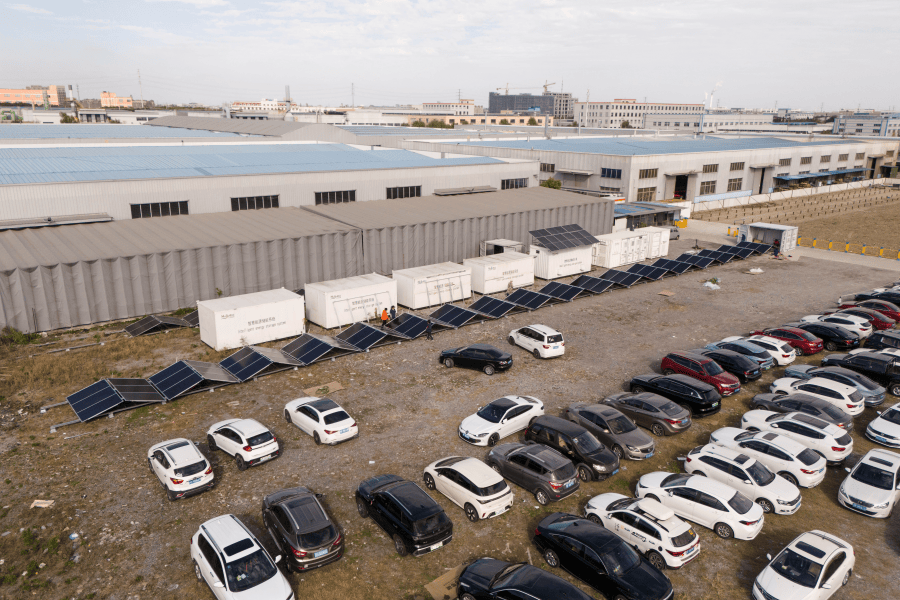
The Solution: A 4MWh Highjoule air-cooled BESS integrated with their rooftop solar. Key steps we nailed:
- Challenge: Tight space next to a seismic bracing wall. We used custom shallow-depth containers and directional venting.
- Thermal Win: California heat demanded smart airflow. Our design used ambient night air for cooling, cutting auxiliary fan power by 40% vs. standard setups. The BMS dynamically adjusts fan speed based on cell temp and load.
- Result: 92% round-trip efficiency. They shave 2 hours off daily peak grid draw, saving $110k/month. During a January storm outage, the BESS carried critical loads for 83 minutes until the gensets fully stabilized C with zero interruption.
Key Technical Considerations (Made Simple)
Let's demystify two terms that make non-engineers glaze over:
- C-Rate (It's Just Speed): Think of it like filling a bathtub. A 1C rate means discharging the full battery in 1 hour (fast, high power for short outages). A 0.25C rate drains it in 4 hours (slower, better for sustained backup). For data centers, we typically design for 2-4 hour backup (0.25C-0.5C) C balancing runtime and cost. Higher C-rates stress the battery more.
- Thermal Management (The Unsung Hero): Air-cooling isn't "dumb fans." It's about predictive airflow. We place sensors at every 5th cell. If one rack heats up faster (maybe due to sun exposure), fans ramp up just there, not the whole container. This extends cell life and prevents hotspots C a major cause of premature aging. Honestly, I've seen poorly managed systems lose 20% capacity in 2 years; ours typically degrade under 3% annually.
The bottom line? Modern air-cooled BESS isn't your grandfather's battery bank. With smart design and rigorous installation C focused squarely on UL/IEC safety and real-world site dynamics C it becomes the most reliable, cost-effective backup partner your data center can have. Curious how your specific site stacks up? Let's grab a (real or virtual) coffee and sketch it out.
Tags: BESS Microgrids Data Center Backup IEEE 1547 Air-Cooled Storage PV Integration UL9540
Author
James Zhang
20+ years agricultural energy storage engineer / Highjoule CTO