
Step-by-step Installation of Black Start Capable Off-grid Solar Generator for Construction Site Power
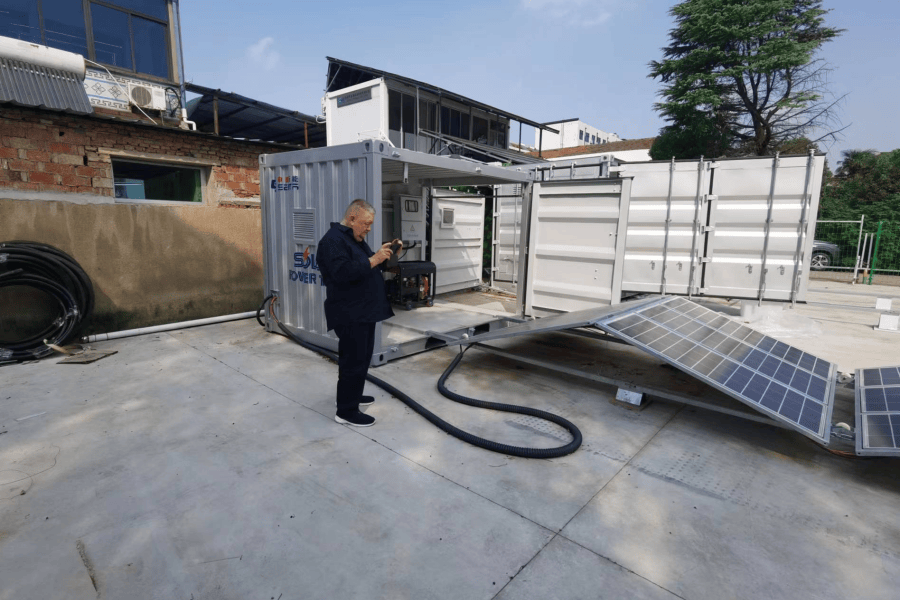
Table of Contents
- The Silent (and Costly) Problem on Every Remote Job Site
- Why Traditional "Fixes" Fall Short (And Burn Cash)
- The Modern Solution: A Power Plant You Can Drop From a Truck
- The Step-by-Step Breakdown: From Delivery to First Electron
- The Expert Angle: What We Look For That You Might Not
- Thinking Beyond Day One: The Real ROI
The Silent (and Costly) Problem on Every Remote Job Site
Let's be honest. If you're managing a construction project in a greenfield site in Texas or a new logistics hub in Brandenburg, your first thought isn't "how do I get pristine, reliable power?" It's "how do I get any power?" The default answer, for decades, has been the diesel generator. We've all seen them, heard them, and smelled them. They're a known quantity. But here's the real problem we don't talk about enough: that initial "known" cost is just the tip of the iceberg.
The true pain point isn't the fuel delivery for Gen Set #1. It's the complete lack of grid-forming capability when you need to scale. You bring in a second gen-set for another part of the site? You're now running isolated systems. A third for the office trailers? That's more fuel logistics, more maintenance schedules, more noise zones. The operational complexity and silent cost creep are enormous. According to the National Renewable Energy Laboratory (NREL), construction site energy costs can consume up to 5-8% of total project soft costs, with inefficiency and fuel volatility being major contributors.
Why Traditional "Fixes" Fall Short (And Burn Cash)
So, we see the problem. The traditional "solution" has been to just order more diesel. But this approach fails on three fronts I've seen firsthand:
- Resilience Zero: A diesel gen-set can't start itself. If it fails or runs out of fuel, everything stops. Dead. You're waiting on a technician, losing thousands per hour in idle labor and delays.
- Cost Opacity: You think you're paying for fuel. You're actually paying for fuel transport, frequent filter changes, engine overhauls, and the massive carbon tax liabilities that are becoming very real in both the EU and parts of the US.
- Scalability Nightmare: Synchronizing multiple large diesel generators for stable, site-wide power is a job for a specialist engineer, not your site foreman. One misstep can fry sensitive equipment like survey tools or BIM stations.
This is where the conversation shifts. We're not just talking about power. We're talking about a foundational utility that your entire project's schedule and budget sit on top of.
The Modern Solution: A Power Plant You Can Drop From a Truck
This is where a properly specified Black Start Capable Off-grid Solar Generator changes the game. It's not just a "solar battery." Think of it as a microgrid in a container. The core value is the Black Start capability C the system's ability to boot itself up from a completely dead state using its stored energy, and then form a stable, clean "grid" that other loads (and even other generators) can safely connect to. It's the maestro of your site's power orchestra.
At Highjoule, we've deployed these systems from arid Australian mines to windy Scottish Highlands sites. The principle remains the same: deliver a self-contained, plug-and-play power foundation that slashes diesel dependence from day one. Our units are built to the UL 9540 and IEC 62933 standards as a baseline C non-negotiable for site safety and insurance C but the real magic is in the system integration.

The Step-by-Step Breakdown: From Delivery to First Electron
Forget complex engineering manuals. Here's what a typical deployment looks like, broken down into the real-world steps we follow:
Phase 1: Site Prep & Drop (Days 1-2)
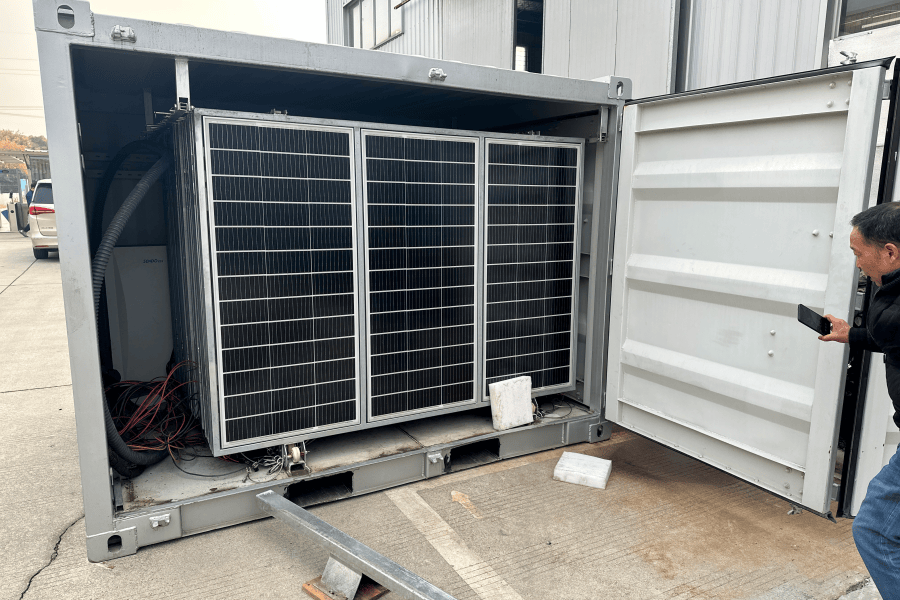
We don't need a concrete pad, just a stable, level gravel or crushed rock base. The unit arrives on a flatbed. A standard site crane lifts the containerized system (all pre-integrated inside C batteries, inverter, thermal management, controls) and sets it in place. The solar array mounting is separate and goes in nearby. Honestly, the most time-consuming part here is often just clearing the best path for the trucks.
Phase 2: The Critical Hook-Up (Day 3)
This is where expertise matters. Our field crew does three key connections:
- DC Side: Connecting the pre-wired solar PV strings to the unit. We use robust, weather-sealed connectors.
- AC Side: Running the main output cable to your site's primary distribution panel. This is the "grid" we're creating.
- Communication & Control: Setting up the remote monitoring gateway. This lets you and our support team see performance, state of charge, and fuel savings in real-time from a phone or laptop.
Phase 3: Commissioning & Black Start Test (Day 4)
Now for the show. We don't assume it works; we prove it. The system is started from zero. The battery wakes up, the inverter energizes, and it establishes a perfect 60Hz/50Hz (depending on region) voltage. We then methodically connect sample loads C lights, tools, a small compressor. Finally, we simulate a failure and restart. Once signed off, we train your site lead on the basic "go/no-go" indicators and hand over the keys. The system is now your baseload power.
The Expert Angle: What We Look For That You Might Not
When I'm on site evaluating a system, I'm looking past the spec sheet. Here are two technical aspects that make or break a project:
1. C-rate Isn't Just a Number: It's about longevity and punch. A battery's C-rate tells you how fast it can discharge power. For a construction site, you need a high "pulse" C-rate to start big inductive loads (think a large auger or pump) without blinking, but a low "continuous" C-rate for daily cycling to ensure the system lasts the whole 18-month project. We design our battery stacks to handle both, which is a specific chemistry and management choice.
2. Thermal Management is Everything: A battery container in the Arizona sun or a Minnesota winter is a harsh environment. Passive cooling won't cut it. We use a closed-loop liquid cooling system that keeps the battery cells within a 2-3C range of each other. Why? Because temperature imbalance is the fastest way to kill battery life. This directly impacts your Levelized Cost of Energy (LCOE) C the total cost of ownership divided by the energy produced. Better cooling means more cycles over the system's life, which means a lower LCOE than diesel.
Thinking Beyond Day One: The Real ROI
The beauty of this setup is its legacy. I remember a project for a data center campus in Northern Germany. The initial phase used our BESS as the primary off-grid power for site establishment. Once the permanent grid connection was live, the same system was seamlessly transitioned to provide peak shaving and backup power for the completed facility. The client avoided the "throw-away" cost of temporary diesel infrastructure.
Your black-start solar generator isn't a cost. It's a strategic asset. It de-risks your schedule from fuel shortages and price spikes. It meets increasingly strict local emissions regulations. And when the construction hoarding comes down, it can be relocated to your next site or repurposed, with a known performance history tracked in our cloud portal.
The question isn't really whether you can afford this solution. It's whether you can afford the hidden costs of the old way for one more project. What's the one piece of equipment on your next remote site that absolutely cannot afford a power interruption?
Tags: UL Standard BESS Off-grid Power Black Start Solar Generator Energy Storage Installation Construction Site
Author
James Zhang
20+ years agricultural energy storage engineer / Highjoule CTO