
Step-by-step Installation of Grid-forming Off-grid Solar Generator for EV Charging Stations
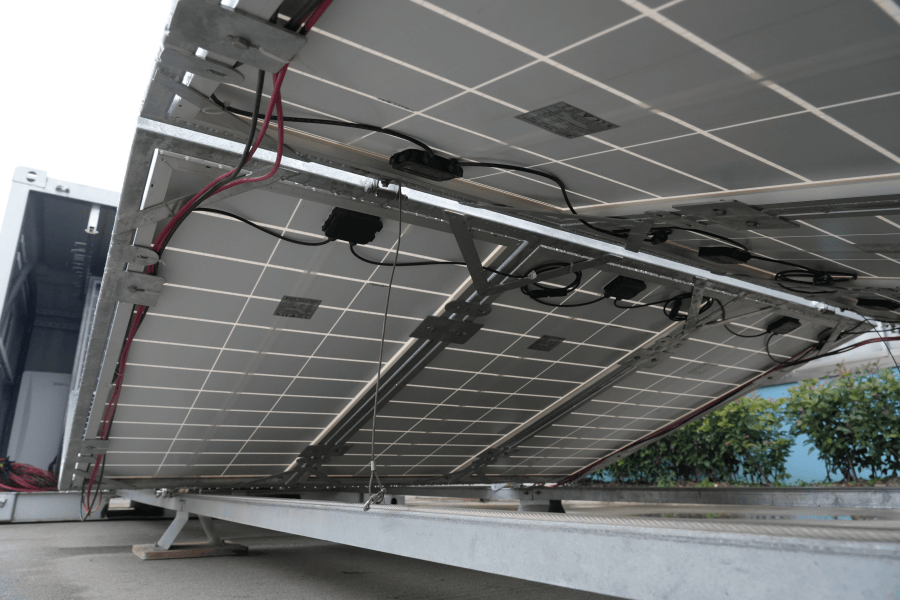
Table of Contents
- The Real Challenge: It's Not Just About Power
- Why "Grid-Forming" Changes Everything for Off-Grid EV Charging
- A Field-Proven, Step-by-Step Installation Guide
- The Highjoule Approach: Engineering for the Real World
- Your Next Step: What to Ask Your Vendor
The Real Challenge: It's Not Just About Power
Honestly, over my two decades on sites from California to Bavaria, I've seen the same story play out. A business wants to future-proof their operations, support sustainability goals, and attract EV-driving customers or employees. They decide to install a solar-powered EV charging station, often in a location where the grid connection is weak, non-existent, or prohibitively expensive to upgrade. The initial thought is simple: slap on some panels, a big battery, and a charger. But that's where the real headaches begin.
The core problem isn't generating power; it's creating a stable, reliable mini-grid that can behave like the utility. A standard grid-following inverter shuts down when the main grid fails. For an off-grid site, there is no "main grid" to follow. You need a system that can establish voltage and frequency from scratch - that's grid-forming capability - and handle the brutal, instantaneous load demand of multiple DC fast chargers kicking on. I've been called to sites where voltage sags from a single EV charger starting would cause the entire off-grid system to stumble, flicker lights, and drop other critical loads. It's a recipe for frustrated customers and operational downtime.
Agitating the Pain Point: The Hidden Costs
Let's talk numbers. According to the National Renewable Energy Lab (NREL), the levelized cost of energy (LCOE) for solar-plus-storage has plummeted. But LCOE is a theoretical average. On the ground, poor system integration can lead to:
- Battery Abuse: Oversizing to handle surge loads, then cycling them too aggressively (high C-rate), which murders lifespan.
- Thermal Runaway Risks: Inadequate thermal management in a containerized system under constant, high-power cycling is a fire safety officer's nightmare. UL 9540 and IEC 62933 aren't just checkboxes; they're your insurance policy.
- Lost Revenue: A charger that's offline because the off-grid power system tripped is a direct hit to your ROI.
Why "Grid-Forming" Changes Everything for Off-Grid EV Charging
This is the solution pivot. A grid-forming inverter doesn't wait for a signal. It's the leader. It creates a perfect, stable 60Hz (or 50Hz) sine wave, forming the "grid" for the entire site. This allows traditional grid-following equipment, including most EV chargers, to plug in and work seamlessly. Think of it as the difference between a follower and a conductor of an orchestra.
I remember a project at a remote logistics depot in Texas. The challenge was powering four 150kW chargers for their electric fleet trucks, with the nearest substation miles away. The grid connection quote was in the millions. We deployed a grid-forming BESS as the backbone. The key was the inverter's ability to provide massive short-term fault current - something batteries aren't naturally great at - to handle the inrush current of the chargers without blinking. That system has been running for three years now, and their "fueling" costs are locked in at near-zero.

A Field-Proven, Step-by-Step Installation Guide
Forget the overly simplistic diagrams. Here's the sequence we follow, honed by real-world mistakes and successes.
Phase 1: Site Audit & Design (The Most Critical Phase)
- Load Profiling, Not Just Summation: Don't just add up charger ratings. Understand the simultaneous use pattern. Will two 350kW chargers ever fire at 100% at the exact same moment? Probably not. Realistic profiling prevents massive, unnecessary oversizing.
- Solar Yield & Battery Sizing: Model seasonal generation. That winter low-production period dictates your battery energy capacity (kWh). The peak surge from chargers dictates your battery power capacity and C-rate (kW).
- Footprint & Thermal Planning: Place the BESS container considering prevailing winds, sun exposure for cooling, and cable run costs to the solar array and chargers. Airflow is everything.
Phase 2: Core System Installation
| Step | Key Activity | Expert Insight |
|---|---|---|
| 1. Foundation & Container Placement | Pour pad, position BESS and inverter skids. | Ensure perfect leveling. A sloped container stresses frames and can affect liquid cooling loops. |
| 2. DC Side Build-out | Install solar arrays, run DC cabling to combiner boxes, then to the BESS DC bus. | Use oversized conduits. I've seen this firsthand: future expansion or cable replacement is a nightmare if conduits are packed tight. |
| 3. AC Integration & Grid-Forming Heart | Connect the grid-forming inverter output to the site's main AC distribution panel that will feed the EV chargers. | This is where you program the "grid rules": voltage (e.g., 480V), frequency (60Hz), and protection settings. Coordinate these settings with the EV charger supplier to avoid nuisance trips. |
Phase 3: Commissioning & Burn-in
- Sequential Ramp-Up: Energize the grid-forming system first. Verify voltage and frequency stability with dummy loads. Then, bring one EV charger online at low power, then gradually ramp up.
- Stress Test: Simulate a worst-case scenario: full solar output, battery at partial state of charge, and simultaneous start of multiple chargers. Watch the system response. The thermal management system should ramp up smoothly.
- Safety System Verification: Test every alarm and shutdown sequence - gas detection, thermal runaway sensors, utility reconnection (if applicable). Document everything for the local Authority Having Jurisdiction (AHJ).
The Highjoule Approach: Engineering for the Real World
At Highjoule, our product development is driven by these field realities. When we design a system for an off-grid EV charging application, we don't just sell a battery box. We engineer for the high C-rate, high-cycle life demand profile that fast charging creates. Our thermal management is designed to handle the heat rejection from constant 1C+ discharges, not just the occasional peak. And because we've worked from Scandinavia to Arizona, our containers are built to local extremes - from IEC standards for humidity to UL standards for fire safety and IEEE 1547 for grid-forming performance.
Our service model mirrors this. We provide not just the hardware, but the commissioning scripts and site-specific settings that have been proven across hundreds of deployments. It's the difference between a system that works on paper and one that hums reliably on a -10C morning when the first fleet truck needs a charge.

Your Next Step: What to Ask Your Vendor
So, you're considering an off-grid solar EV charging project. Fantastic. When you're talking to potential suppliers, move beyond spec sheets. Ask them:
- "Can you show me a project case study where your grid-forming system has been supporting 150kW+ EV chargers for over 12 months? What were the operational learnings?"
- "How does your battery management system actively manage cell-level temperatures and state-of-charge to extend life given the irregular, high-power pulses from charging sessions?"
- "Walk me through your commissioning process for coordinating the protection settings between the grid-forming inverter and the brand of EV charger I'm using."
The right partner will have detailed, sometimes gritty, answers to these questions. They'll speak from experience, not just a manual. Because in the end, a successful off-grid charging station isn't about the flashiest hardware; it's about a system engineered and installed with the end goal in mind: reliable, silent, clean power for vehicles, day in and day out. Got a specific site challenge in mind? I love digging into those.
Tags: UL Standard BESS LCOE EV Charging Infrastructure Grid-forming Inverters
Author
James Zhang
20+ years agricultural energy storage engineer / Highjoule CTO