
A Step-by-Step Guide to Installing LFP Pre-integrated PV Containers for Construction Sites
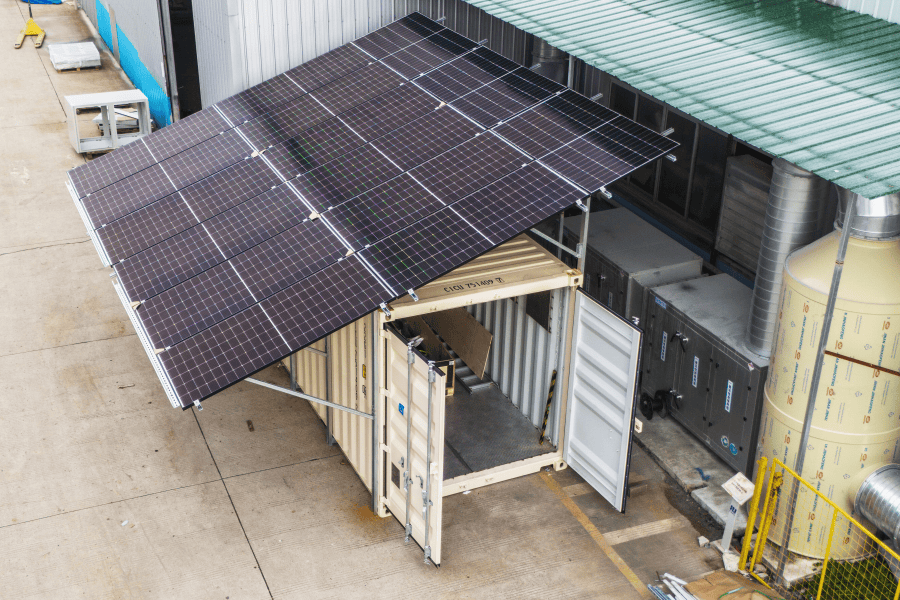
Table of Contents
- The Power Problem on Your Next Job Site
- Why the Diesel Generator is Failing You
- The Practical Solution: A Power Plant in a Box
- A Real-World, Step-by-Step Installation Guide
- The Tech That Makes It Work (Without the Headache)
- What's Your Biggest Site Power Challenge?
The Power Problem on Your Next Job Site
Let's be honest. When you're managing a construction project, temporary power is one of those necessary evils. It's rarely the glamorous part of the job, but when it fails, it becomes the only part of the job. I've been on sites from the sun-scorched plains of Texas to the rainy outskirts of Berlin, and the story is often the same: the constant hum (and smell) of diesel generators, the frantic calls when fuel runs low, the budget line for "miscellaneous power" that keeps creeping up.
You're dealing with more than just an invoice for fuel. You're managing a critical, volatile, and often noisy piece of equipment that ties you to supply chains, adds safety complexities, and frankly, doesn't align with the sustainability goals many of our projects now have. The traditional approach is a patch, not a solution.
Why the Diesel Generator is Failing You
We need to talk about the real cost. It's not just the per-gallon price. According to the National Renewable Energy Laboratory (NREL), fuel delivery and generator maintenance for remote sites can inflate energy costs by 300% or more compared to grid power. Think about the logistics: securing fuel contracts, scheduling deliveries (often to unimproved roads), storage security, spill containment, and the emissions reporting. It's a whole secondary operation.
I was on a site in Northern California where the access road washed out. The fuel truck couldn't get in for three days. We had a crew of 40, critical drying equipment for concrete, and security systems - all sitting idle. The project manager's face that day? I'll never forget it. That's the agitation point. It's about unpredictable cost and unacceptable risk to your schedule. Every hour of downtime isn't just lost labor; it's a ripple effect on your critical path.
The Practical Solution: A Power Plant in a Box
This is where the concept of a pre-integrated LFP (Lithium Iron Phosphate) solar container shifts from being an "alternative" to the obvious choice. It's not a science experiment; it's a refined, plug-and-play power asset. Imagine delivering a secure, weatherproof container to your site. Inside, the solar inverters, the LiFePO4 battery racks, the thermal management system, and the control brains are all pre-wired, pre-tested, and certified to standards like UL 9540 and IEC 62619 before it even leaves the factory.
At Highjoule, we call this our PowerCube platform. The value isn't just in the components; it's in the integration and the dramatic simplification of deployment. You're not buying a collection of parts and hoping an electrician can figure it out. You're receiving a validated power system. This approach directly attacks those pain points of cost and risk by eliminating the vast majority of on-site integration work, which is where delays and safety issues often creep in.

A Real-World, Step-by-Step Installation Guide
Based on deployments from Scotland to Arizona, here's what a streamlined installation actually looks like. This is the "step-by-step" that turns a complex engineering feat into a straightforward site task.
Weeks 1-2: Site Prep & Foundation. This is your most critical phase. Our team provides exact foundation specs - usually a simple, reinforced concrete pad. The key is ensuring it's level and has the correct tie-down points. We worked with a developer in the German state of North Rhine-Westphalia on a logistics park project. Their ground crew poured the pad alongside initial site grading. By the time the container arrived, the "power plant location" was ready, just like any other utility stub.
Day 1: Delivery & Placement. The container arrives on a flatbed. A standard site crane lifts it onto the foundation. Crews secure it using the pre-welded brackets. Honestly, this is often a half-day operation. The complexity is inside the box, not in placing the box.
Day 2: AC & DC Hookup. Here's the beauty of pre-integration. Your electricians have a few clear connection points:
- AC Connection: A single, large-gauge cable from your site's main distribution panel to the container's designated AC terminal. It's one point of connection.
- PV Array Connection: The DC inputs from your temporary ground-mount or rooftop solar array are landed on labeled terminals inside a dedicated combiner box on the container's exterior.
- Communication Link: Often just an Ethernet cable run to the site trailer for remote monitoring via our portal or your BMS.
Day 3: Commissioning & Go-Live. A Highjoule technician (or a certified local partner) arrives for system bring-up. They power on the system, run automated self-checks, configure setpoints for charge/discharge based on your load profile, and verify communication. The system begins powering the site, prioritizing solar, using the battery for peak shaving or overnight power, and only calling on the grid (if connected) as a backup. The diesel genny becomes the backup to the backup.
The Tech That Makes It Work (Without the Headache)
You don't need a PhD to get why this is reliable. Let me break down two key things we obsess over:
1. Thermal Management & Safety: LFP chemistry is inherently more stable than other lithium types, but proper thermal management is non-negotiable. Our containers use a closed-loop liquid cooling system. It's like the climate control in a high-end server room - it maintains the battery at an ideal temperature range (around 25C/77F) whether it's -10C or 40C outside. This prevents stress, extends lifespan, and is a core part of the UL certification. I've seen systems in Nevada operate at full output in 115F heat because the internal environment was perfectly controlled.
2. Understanding C-rate and LCOE: Jargon alert, but stick with me. C-rate is basically how fast you charge or discharge the battery. A 1C rate means discharging the full battery in one hour. For construction sites, you don't need ultra-high C-rates. You need steady, reliable power over long shifts (a 0.25C-0.5C rate is often perfect). This moderate pacing is kinder to the battery, which brings us to LCOE (Levelized Cost of Energy). By combining "free" solar fuel with a battery designed for longevity (LFP easily handles 6000+ cycles), and slashing O&M compared to diesel, the total cost per kWh you use over the system's life plummets. You're buying predictable, clean kilowatt-hours, not gallons of diesel.
What's Your Biggest Site Power Challenge?
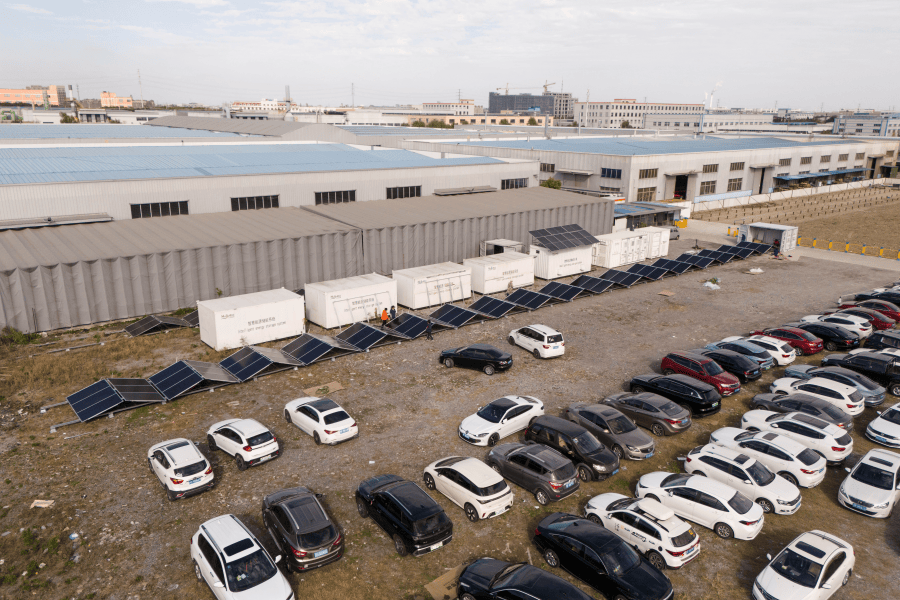
The shift to solutions like pre-integrated PV containers isn't just about being green. It's about being smart, predictable, and in control of your project's critical path. The technology is proven, the standards are in place, and the step-by-step process is now a refined logistics operation.
So, next time you're planning a site, ask yourself: Is the temporary power plan a source of risk or a source of resilience? I'd love to hear what specific hurdle you're facing - is it fuel volatility, noise restrictions, or purely the bottom-line math? Getting the power right from day one might just be the most straightforward win you can have on your entire project schedule.
Tags: Construction Site Power UL Standard BESS Solar Container LFP Battery
Author
James Zhang
20+ years agricultural energy storage engineer / Highjoule CTO