
Hybrid Solar-Diesel System Installation for Mining: A Step-by-Step Guide
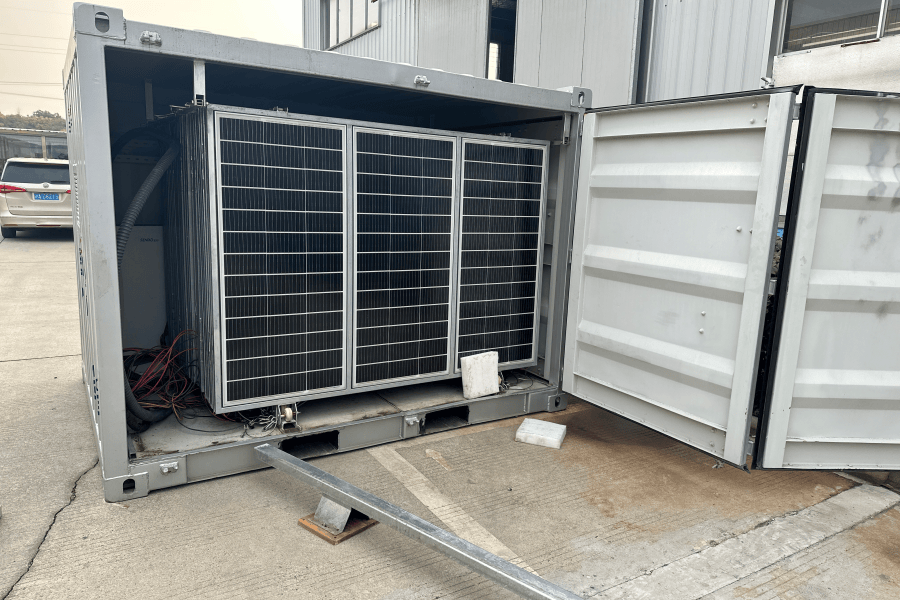
From the Field: How We Deployed a Rock-Solid Hybrid System for a Remote Mine
Honestly, if you're managing energy for a remote industrial or mining operation, you're probably dealing with the same headache I see everywhere: the brutal, unpredictable cost of running on diesel. It's not just the fuel bills - it's the logistics, the noise, the emissions, and that constant worry about reliability. You know solar and storage can help, but the question is, how do you actually make it work in a place that's dusty, hot, and miles from the nearest service center? I've seen firsthand on site how a poorly integrated system can become a maintenance nightmare.
What We'll Cover
- The Real Problem: More Than Just Fuel Costs
- Why a True Hybrid, Not Just a Bolt-On
- The Step-by-Step: From Site Audit to Commissioning
- The Game Changer: Taming the Heat with Liquid Cooling
- Your Next Move: Questions to Ask Your Vendor
The Real Problem: More Than Just Fuel Costs
Let's talk numbers. The International Energy Agency (IEA) points out that diesel generation can constitute over 40% of total operating costs in some off-grid mining scenarios. That's staggering. But when I'm on the ground, the pain points are even more tangible. It's the voltage dips when a big crusher kicks in that stresses your equipment. It's the 45C (113F) ambient heat that derates your diesel gensets and murders battery lifespan. You can't just drop a standard, air-cooled battery container meant for a temperate climate data center into a Mauritanian desert and hope for the best. The thermal management fails, cycle life plummets, and your promised return on investment vanishes into thin, hot air.
Why a True Hybrid, Not Just a Bolt-On
Many think adding solar is simple. But a true hybrid system isn't just solar panels next to diesel gensets. It's an orchestrated dance between generation sources, managed by a sophisticated controller that decides, in milliseconds, the most efficient and stable mix. The goal? Maximize solar consumption to slash fuel use, while using the battery storage to provide instantaneous power for load spikes - smoothing the operation and letting diesels run at their optimal, efficient load points. This directly attacks the Levelized Cost of Energy (LCOE), which is the total lifetime cost of your power. By reducing fuel and maintenance while extending asset life, you move the needle on your single most important energy metric.
I remember a project in Nevada, USA, for a processing plant. The challenge was rapid load fluctuations that caused frequent and inefficient genset cycling. By integrating a properly sized BESS with advanced grid-forming controls, we reduced diesel runtime by over 60% and cut fuel consumption by 40%. The key was the system's ability to provide "spinning reserve" instantly, something solar alone can't do.

The Step-by-Step: From Site Audit to Commissioning
So, how do you build a system that lasts? It's all in the process. Here's the phased approach we follow, honed from projects from Chile to Australia:
Phase 1: The Deep Dive Audit
This isn't just about checking a box. We analyze at least one full year of load profile data. We need to see every spike, every dip, the seasonal variations. We model the solar resource (using data from sources like NREL) and simulate thousands of operating scenarios. This tells us the right size for the solar array, the battery's energy capacity (kWh) and, critically, its power rating or C-rate (how fast it can charge/discharge). An oversized battery wastes capital; an undersized one won't capture all the savings.
Phase 2: Design with Standards & Service in Mind
Every component, especially the BESS, must be built to the highest safety and reliability standards for your market - that's UL 9540 and IEC 62619 for the system, and IEEE 1547 for grid interconnection. At Highjoule, we design our containerized solutions around these from day one. But we also design for serviceability. In a remote location, can a technician easily access and swap a faulty module? We place service corridors and use common, field-proven parts to minimize downtime.
Phase 3: Staged Commissioning is King
You don't just flip a switch. We commission in layers:
- First, the diesel gensets and primary switchgear.
- Then, we bring the BESS online independently, testing its charge/discharge cycles and safety protocols.
- Next, integrate the solar PV, confirming the MPPT and DC/AC conversion is stable.
- Finally, we "teach" the hybrid controller the rules. We set the algorithms for when to prioritize solar, when to charge the battery from excess sun, and when to call on the diesel. This is where the magic happens.
The Game Changer: Taming the Heat with Liquid Cooling
This is the technical heart of it. For harsh environments, air cooling just doesn't cut it. Dust clogs filters, and hot ambient air is a poor coolant. Liquid-cooled BESS, like the one we deployed in Mauritania, circulates a dielectric coolant directly to the cells. It's like giving each battery cell its own personal, precise air conditioning system. The benefits are massive:
- Extended Life & Consistency: Cells maintain an even, optimal temperature (usually around 25C). This nearly eliminates thermal runaway risk and can double the cycle life compared to an air-cooled system in the same heat.
- Higher Power in a Smaller Footprint: Because cooling is so efficient, you can safely push a higher C-rate - meaning more power from a smaller battery bank. This is crucial for handling those big motor starts.
- Zero Dust Ingestion: The system is completely sealed. The Mauritanian desert dust stays outside where it belongs.
Explaining this to a non-engineer, I say: "An air-cooled system cools the room hoping the batteries are okay. A liquid-cooled system cools the battery directly, guaranteeing its performance." It's a fundamental shift in reliability.
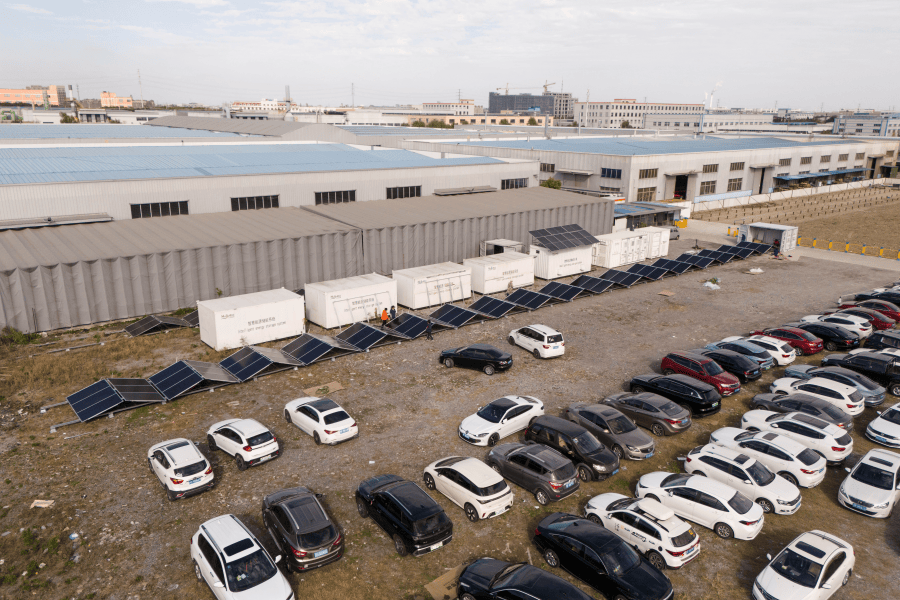
Your Next Move: Questions to Ask Your Vendor
So, you're considering a hybrid system. Don't just get a quote. Have a coffee with the engineering team. Ask them:
- "Can you show me a detailed simulation of my specific load profile with your proposed system?"
- "How is the BESS thermally managed, and what is the expected cell temperature delta in my climate?"
- "Can you provide the UL/IEC certification documents for the complete containerized system, not just the cells?"
- "What does your remote monitoring platform show, and what's the response time for an alarm?"
- "Walk me through the module-level replacement procedure for a technician at my site."
The right partner won't just sell you hardware; they'll bring two decades of field experience to your table, designing a system that works on paper and, more importantly, works at 3 AM in a dust storm. That's the difference between a cost center and a strategic asset. What's the one operational constraint keeping you up at night when you think about your site's power?
Tags: UL Standard BESS LCOE Mining Energy Hybrid Power Systems Solar-Diesel Integration Off-grid Solutions
Author
James Zhang
20+ years agricultural energy storage engineer / Highjoule CTO