
Step-by-step Installation of Novec 1230 Fire Suppression Off-grid Solar Generator for Data Center Backup Power
Contents
- The Quiet Problem in the Server Room
- Why This Keeps Facility Managers Up at Night
- A Better Way: Integrating Safety from the Ground Up
- The Installation Blueprint: It's More Than Just Bolts and Wires
- Beyond the Installation: The Real-World Payoff
- Your Next Step
The Quiet Problem in the Server Room
Honestly, when most people think about data center resilience, they picture the big diesel gensets outside. But the real conversation, the one I have over coffee with CTOs and facility managers, is about the gap between the grid failing and that generator roaring to life. That's 10, 15, sometimes 30 seconds of pure vulnerability. Your UPS handles it, but for how long? And what if the outage stretches into hours during a grid-down event? That's where off-grid solar generators - large-scale Battery Energy Storage Systems (BESS) - come in as the silent, instant bridge. But here's the quiet problem: installing this critical backup power source can't introduce a new risk, especially not a fire risk, right next to your million-dollar server racks.
Why This Keeps Facility Managers Up at Night
Let's agitate that a bit. The industry is moving towards denser lithium-ion batteries for their great energy density and falling LCOE (Levelized Cost of Energy, basically your long-term cost per kWh). But density brings thermal management challenges. While catastrophic failures are rare, the risk isn't zero. I've seen firsthand on site how a standard sprinkler system, while good for a building fire, is a disaster for a lithium battery fire - it can spread the event. The National Renewable Energy Laboratory (NREL) has extensive research on BESS safety, and the consensus is clear: you need a suppression agent designed for electrical and chemical fires. For a data center, the stakes are multiplied. It's not just asset loss; it's downtime, data integrity, and reputation. A standard BESS installation checklist suddenly feels insufficient when you're backing up a data hall.
The Standards Gap
In the US, you've got NFPA 855 and UL 9540A setting the benchmark for BESS safety. In Europe, it's IEC 62933. These aren't just acronyms; they're your blueprint for insurance and compliance. The tricky part is that meeting these standards isn't a checkbox you tick after installation; it's a design and installation philosophy that starts on day one. You can't retrofit true safety.

A Better Way: Integrating Safety from the Ground Up
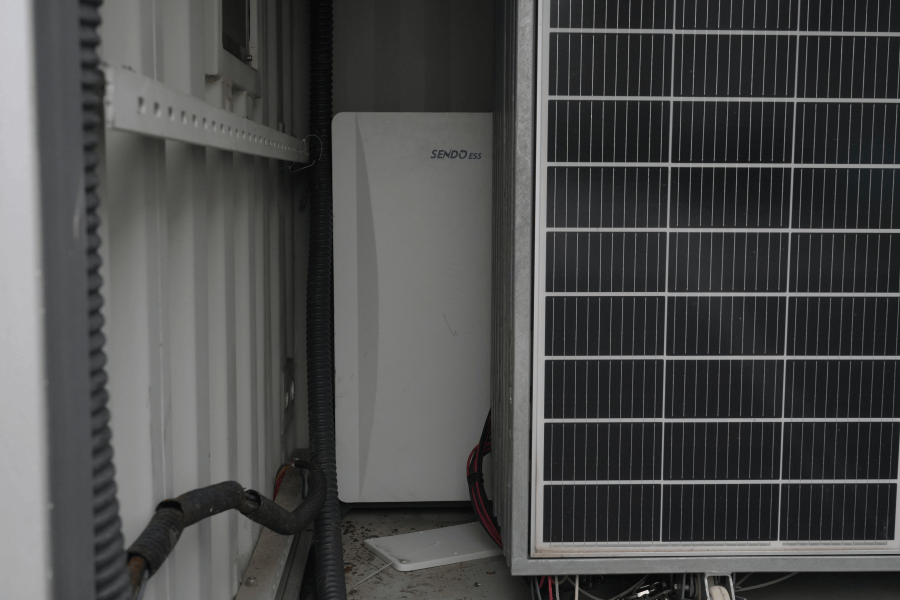
This is where the concept of a Step-by-step Installation of a Novec 1230 Fire Suppression Off-grid Solar Generator shifts from a technical task to a strategic advantage. Novec 1230 fluid isn't an afterthought; it's a cornerstone. It's a clean agent - it extinguishes fire without leaving residue or conducting electricity, and it's safe for occupied spaces. The solution is to design the BESS container with an integrated Novec 1230 system from the outset. At Highjoule, we don't see fire suppression as an add-on module; it's baked into our containerized BESS design for critical infrastructure. This integrated approach is what satisfies the UL and IEC standards in a way that inspectors and risk managers understand and trust.
The Installation Blueprint: It's More Than Just Bolts and Wires
So, what does this integrated, step-by-step process actually look like? Forget the generic installation guide. Here's the sequence that matters for a data center:
Phase 1: Pre-Site & Design (The Most Important Phase)
- Hazard Analysis & System Sizing: This isn't just about kWh capacity. We model thermal runaway scenarios. How many Novec 1230 cylinders are needed to flood the BESS container volume to the exact concentration required to suppress a Li-ion fire? This math is done with the fluid's specific properties in mind.
- Container Prep: Our BESS containers arrive with the suppression system piping framework already installed. Conduits for the smoke/heat detectors and the agent release lines are integrated into the cable management pathways. This avoids messy field modifications that compromise integrity.
- Site Coordination: Where does the container go? It needs access for maintenance, but also clear egress. The Novec 1230 storage cylinders need a specific, accessible location, often on the exterior, with clear labeling per NFPA standards.
Phase 2: On-Site Installation & Integration
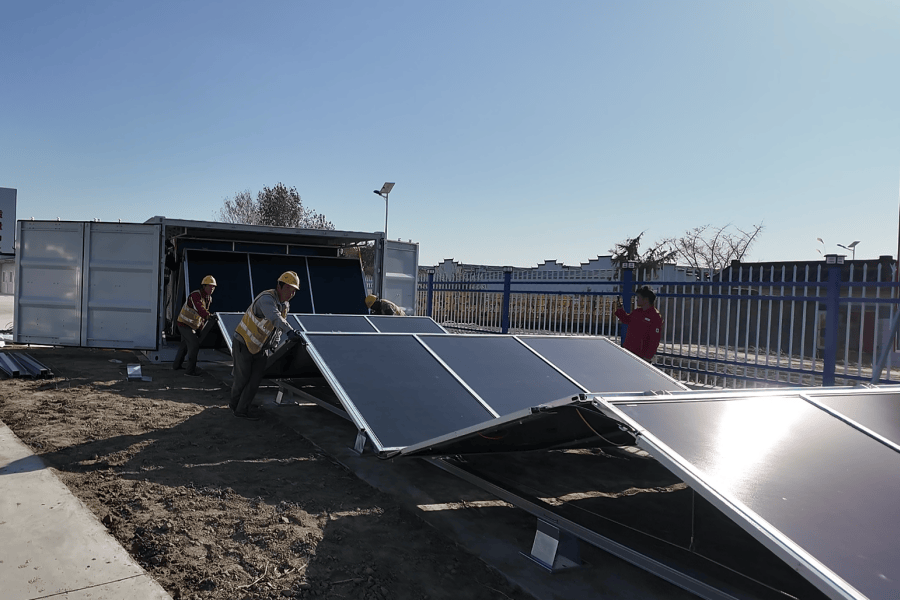
- Foundation & Placement: A perfectly level pad is critical. Vibration or settling can misalign those pre-run pipes. We use laser leveling - it sounds simple, but I've seen projects delayed by a wonky foundation.
- Mechanical & Electrical Hookup: While the team connects HVAC and grid ties, our safety techs are simultaneously finishing the suppression loop: mounting detectors (usually a combination of smoke and rapid thermal rise), connecting the agent distribution nozzles inside the battery racks, and pressure-testing all lines.
- The Control System Handshake: This is the brains. The BESS's own internal control system (monitoring voltage, C-rate - that's the charge/discharge speed - and cell temperature) is directly interfaced with the fire alarm panel. It's not two separate systems; it's one. If the BESS reports a thermal anomaly, the fire panel goes to pre-alarm. It's a layered defense.
Phase 3: Commissioning & Acceptance
- Functional Testing: We test every single detector. We simulate a fault signal to ensure the correct sequence: alarm, HVAC shutdown (to contain the agent), and finally, a manual release command. Automatic release on first alarm is often avoided in integrated systems to prevent false discharges.
- Authority Having Jurisdiction (AHJ) Walkthrough: We walk the local fire marshal and your risk team through the system. We show them the UL listings, the piping diagrams (P&IDs), and the clear separation between the BESS power and safety systems. This transparency builds confidence.
- Training: We don't just hand over a manual. We train your onsite engineers on the unique aspects of the system: "Here's the abort switch. Here's how you check cylinder pressure. This is what a normal status light looks like."
Beyond the Installation: The Real-World Payoff
I remember a project for a colocation provider in Frankfurt. Their challenge was space; they needed backup power but couldn't have a fire-rated wall 10 meters from their building due to zoning. Our integrated Novec 1230 solution was the key. Because the system was self-contained and used a clean agent, we could place the BESS much closer, meeting both German BImSchG (emissions) and fire safety requirements. The step-by-step installation process, documented and signed off at each phase, was what got the building permit approved. The LCOE mattered, but the permit was the gatekeeper.
The payoff is operational peace of mind. You're not just adding backup power; you're adding a resilient and safe asset. Your insurance premiums reflect that. Your disaster recovery plan is stronger for it. And when you do that final commissioning test, and you see that the power system and the life-safety system speak the same language, you know you've built something that isn't just efficient, but fundamentally responsible.
Your Next Step
If you're evaluating backup power and the word "safety" in the RFP feels like a generic line item, let's change that conversation. Ask your vendors: "Walk me through your step-by-step installation process for the fire suppression system. How is it integrated, not just added on? Show me the UL 9540A test report for this specific configuration."
At Highjoule, this isn't a theoretical exercise. It's what we do on site, every time. The real question is, when your grid flickers next, what's standing - securely - between your data and the dark?
Tags: UL Standard BESS Off-grid Solar Data Center Backup Novec 1230 Fire Suppression Energy Storage Installation
Author
James Zhang
20+ years agricultural energy storage engineer / Highjoule CTO