
Step-by-step Installation of a Scalable Modular 5MWh BESS for Industrial Parks
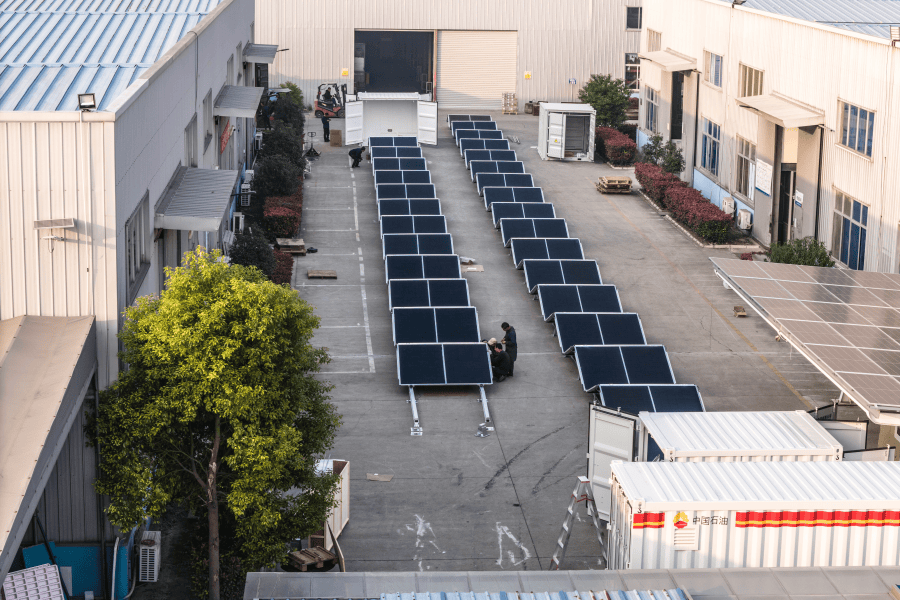
The Real-World Guide to Installing a 5MWh Battery for Your Industrial Park
Honestly, if I had a dollar for every time a plant manager told me their energy bills were unpredictable and their grid connection felt fragile, I'd probably be retired on a beach somewhere. Over two decades of deploying BESS systems across the US and Europe, I've seen this firsthand on site: the ambition to integrate renewables and gain energy independence is universal, but the path to a successful, large-scale battery installation feels like a maze. Let's talk about that maze, and more importantly, the clear, step-by-step map to navigate it.
Table of Contents
- The Problem: Why Big Battery Projects Stall Before They Start
- The Agitation: The Hidden Costs of Getting It Wrong
- The Solution: Modularity is Your Best Friend
- The Blueprint: A Real 5MWh Installation, Step-by-Step
- The Expert View: What You Really Need to Know
The Problem: Why Big Battery Projects Stall Before They Start
You've run the numbers. The business case for a 5-megawatt-hour (MWh) battery system in your industrial park is solid - peak shaving, backup power, maybe even some frequency regulation revenue. But then you look at the installation. The common approach has been these massive, monolithic systems. They require heavy civil works, a perfect site ready on day one, and a deployment that feels all-or-nothing. What if your needs change in 18 months? What if Phase 2 of your park development is delayed? The inflexibility is a huge blocker. According to the National Renewable Energy Laboratory (NREL), project complexity and uncertain scalability are among the top barriers for C&I energy storage adoption.
The Agitation: The Hidden Costs of Getting It Wrong
Let me agitate that point a bit. A non-modular, custom-engineered installation isn't just inflexible; it's expensive and risky. The site prep needs to be 100% complete upfront. The commissioning is a monumental, single-point event. If there's a hiccup with one cell stack, it can delay the entire system. And from a safety and compliance perspective, certifying a one-off giant system to UL 9540 and IEC 62933 standards is a lengthy process. I've been on sites where delays from permitting or interconnection issues meant expensive crews and equipment sitting idle, burning through the project's ROI before the system even produced a single kilowatt-hour. That's the reality we need to avoid.
The Solution: Modularity is Your Best Friend
This is where the scalable, modular approach isn't just a nice-to-have; it's a game-changer. Think of it like building with high-tech, pre-approved LEGO blocks. Instead of one 5MWh monolith, you're deploying multiple, factory-assembled and pre-tested 500kWh or 1MWh modules. Each module is a self-contained unit with its own battery management, thermal control, and safety systems, all certified to the required UL and IEC standards before it leaves the factory. At Highjoule, our ModuStack series is built on this exact philosophy. It transforms the installation from a high-stakes "big bang" into a manageable, phased process that aligns with your cash flow and site readiness.
The Blueprint: A Real 5MWh Installation, Step-by-Step
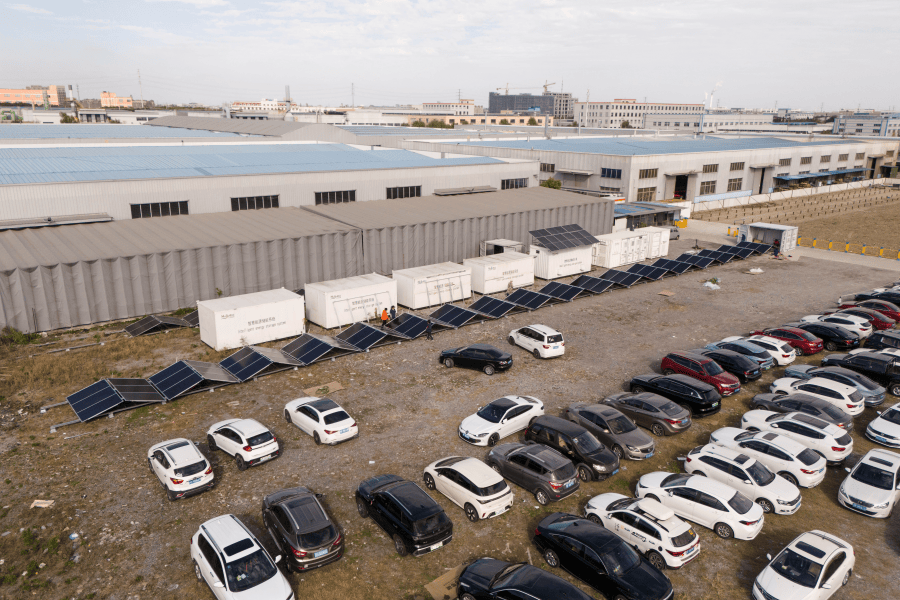
Let's walk through how this actually works on the ground, based on a project we completed for a manufacturing park in Texas last year. Their challenge was needing storage capacity but having a constrained, uneven site that couldn't accommodate a large footprint all at once.
Phase 1: Site Assessment & Foundation (Weeks 1-4)
We don't start with concrete. We start with data. A detailed site survey checks soil bearing capacity, drainage, and access routes. For a modular system, you often use simple, pre-cast concrete pads or a gravel ballast system. It's far less invasive than pouring a giant slab. Simultaneously, our engineers work with the local utility on the interconnection agreement - having a standardized, pre-certified system significantly smoothes this process.
Phase 2: Delivery & Positioning of Initial Modules (Week 5)
The first two 1MWh modules arrived on standard flatbed trucks. Each was a sealed container, factory-tested and pre-charged to a safe state. Using a standard crane, they were placed on the prepared pads. Honestly, it looked less like a power plant construction and more like delivering shipping containers. This modularity meant minimal site disruption for the operating factories nearby.
Phase 3: Plug-and-Play Integration & Commissioning (Weeks 6-7)
Here's the beauty. The high-voltage DC and cooling lines use standardized, quick-connect couplings. Our team connected the modules to the central power conversion system (PCS) and the plant's medium-voltage switchgear. Commissioning was done per module: verify communication, run safety diagnostics, then bring it online. We had the first 2MWh operational and revenue-generating within 7 weeks of breaking ground.
Phase 4: Scalable Expansion (Months 6 and 18)
As the park expanded and their load grew, they added more modules. The second phase added another 2MWh, and a third phase is planned. Each addition reused the same process, the same drawings, and the same permitting fast-track. The Levelized Cost of Energy Storage (LCOE) for the overall project dropped because we avoided overbuilding upfront and leveraged repeatable, efficient processes.
The Expert View: What You Really Need to Know
Beyond the steps, here are the insights I share over coffee with clients:
- Thermal Management is Non-Negotiable: People obsess over battery chemistry (and they should), but how you keep those batteries cool is what defines their lifespan and safety. Our modular units use an independent, closed-loop liquid cooling system. It's like each module has its own, precisely controlled climate. This is critical for maintaining performance in a Texas summer or a German heatwave and is a core part of the UL safety certification.
- Understanding C-rate in Plain English: You'll hear "1C" or "0.5C". Think of it as the speed limit for charging/discharging. A 1C rate on a 5MWh system means you can pull 5MW of power for 1 hour. A 0.5C rate means 2.5MW for 2 hours. Higher C-rates (faster power) are great for frequency regulation but can stress the battery. Modular systems let you optimize different blocks for different services - some for fast response, some for long-duration peak shaving.
- The LCOE Mindset: Don't just look at upfront capital cost. Look at the total cost over the system's life, divided by the total energy it will throughput. Modularity improves LCOE by reducing installation complexity (lower CapEx), enabling phased investment, and simplifying maintenance (if a module needs service, you isolate it without shutting down the whole system).
The goal isn't just to install a battery. It's to create a resilient, adaptable energy asset that grows with your business. The step-by-step installation of a scalable, modular system is the only approach I've seen that truly reduces risk, aligns with real-world site constraints, and delivers the financial and operational flexibility that industrial energy users demand. So, what's the first phase of your energy independence look like?
Tags: UL Standard BESS LCOE Utility-scale Battery Energy Storage Installation Industrial Energy Management
Author
James Zhang
20+ years agricultural energy storage engineer / Highjoule CTO