
Step-by-step Installation of Tier 1 Battery Cell Off-grid Solar Generator for Construction Site Power
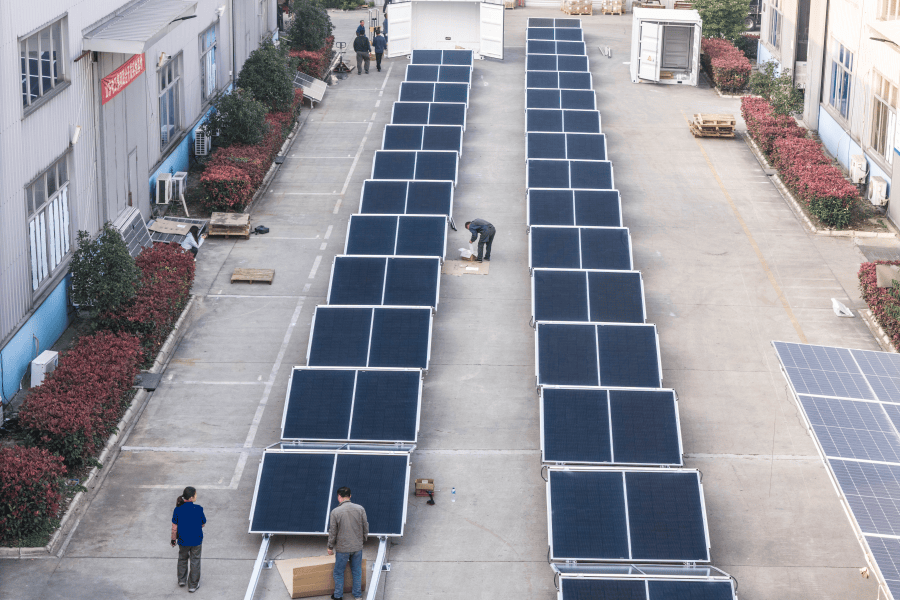
Table of Contents
- The Diesel Hangover on Your Construction Site
- Why This Hurts More Than You Think
- A Smarter Way to Power Up: The Tier 1 Off-grid Solution
- The Installation Playbook: It's Not Just Plug and Play
- A Tale from the Field: Seeing It Work in Texas
- The Tech That Makes It Tick (In Plain English)
- What This Means for Your Bottom Line
The Diesel Hangover on Your Construction Site
Honestly, if I had a dollar for every time I've rolled onto a remote construction site and heard that familiar, throaty rumble of diesel generators, I'd have a very nice early retirement fund. It's the default, right? You need power where the grid isn't, you call the fuel truck. But let's have a coffee-chat about what that noise really represents. It's not just power; it's a constant, ticking meter of operational headache. The smell, the deliveries, the maintenance, the permits for the fuel storage... and that's before we even talk about the carbon footprint or the price volatility that can blow a project budget overnight. According to the International Energy Agency (IEA), diesel still accounts for over 70% of off-grid construction power in many regions, a figure that hasn't budged much in a decade despite the renewable revolution happening everywhere else.
Why This Hurts More Than You Think
I've seen this firsthand on site. The pain goes way beyond the fuel bill. It's the 3 AM generator stall that stops concrete curing and pushes your schedule back a day. It's the skilled electrician standing around, waiting for stable power to commission systems. It's the noise complaints from a nearby neighborhood that trigger costly sound-dampening measures or even work-hour restrictions. This isn't just an expense line item; it's a direct drag on your project's critical path. The aggravation is real, and it compounds. Every hour of downtime isn't just lost labor; it's cascading delays in a tightly sequenced plan. You're managing a construction site, not a generator rental business, yet the latter often demands an unfair share of your superintendent's attention.
A Smarter Way to Power Up: The Tier 1 Off-grid Solution
So, what's the alternative that doesn't leave you praying to the fuel gods? It's a hybrid, off-grid solar generator built around a Tier 1 battery cell Battery Energy Storage System (BESS). Think of it as your own mini, silent, solar-powered utility on site. The solar panels work during the day, the batteries store that energy, and a smart inverter manages the flow to power your tools, trailers, and equipment - day and night. The key here is the "Tier 1" cell. In our world, that's not a marketing term; it refers to cells manufactured by the handful of globally recognized, large-scale producers (think the automotive-grade suppliers). They come with proven, decades-long cycle life data, which is the bedrock of predictability for your project's duration.
At Highjoule, this is our bread and butter. We've spent years designing containerized BESS units specifically for the tough, temporary, and mobile needs of construction. The core philosophy? Safety and simplicity. Every unit we ship for a site like yours is built to UL 9540 and IEC 62619 standards right out of the gate. That means the safety testing isn't an afterthought; it's baked into the design. For you, it simplifies permitting and gives your site safety officer one less major risk to worry about.
The Installation Playbook: It's Not Just Plug and Play
Alright, let's get practical. How do you actually get one of these systems up and running on your site? The beauty is in the step-by-step process, which is designed for efficiency. Here's a typical sequence:
- Site Prep & Foundation (Day 1): This is often the most variable part. A level, stable pad - usually a simple gravel or concrete block foundation - is prepared. The goal is to ensure water runoff and stability. Our project plans always include clear civil requirements.
- Container Placement & Anchoring (Day 1): The BESS and the accompanying solar inverter container (if separate) are craned into place. They're then securely anchored. This is a one-lift operation, dramatically faster than assembling a generator farm.
- AC/DC Electrical Hookup (Day 2): Qualified electricians connect the main AC distribution from the BESS to your site's main panel or temporary pole. The DC connections between the battery racks and the inverter are finalized. This is where pre-wired, factory-tested units save dozens of man-hours.
- Solar Array Integration (Day 2-3): The pre-installed combiner boxes in the container are connected to the strings of solar panels you've mounted on ground racks or a nearby structure. The system starts to see its fuel source - the sun.
- Commissioning & System Check (Day 3): This is the magic moment. We power on the system, run the integrated Battery Management System (BMS) through its diagnostics, configure setpoints for charge/discharge based on your load profile, and verify all safety shutdowns work. The control interface - often a simple tablet or web portal - is handed over to your team.
- Load Transfer & Go-Live (Day 3): We systematically transfer site loads from the old generators (which can now be relegated to emergency backup) to the new BESS. You watch the diesel rumble fade to silence.
From delivery to power-on, a well-planned project can take as little as 3-5 working days, with minimal disruption to ongoing work.
A Tale from the Field: Seeing It Work in Texas
Let me give you a real example. Last year, we deployed a system for a mid-sized commercial development outside Austin, Texas. The challenge? The grid connection was 9 months out, but site work (grading, foundation, trailer power) needed to start immediately. The developer was looking at over $40,000 in projected diesel costs and noise ordinances that limited night work.
We installed a 250kW/500kWh all-in-one containerized system with a ground-mount solar array on the cleared part of the site. Honestly, the county permitting was smoother because of the UL certifications - they recognized the standards. Within a week of the equipment arriving, the site office trailers, tool charging stations, and perimeter lighting were running 100% on solar + storage. The two old diesel gensets sat silent, only started once a month for a maintenance cycle. The project manager told me the most immediate benefit he felt was the quiet - he could actually have a phone conversation outside. Over the 8-month off-grid period, they slashed their expected fuel costs by over 70%.

The Tech That Makes It Tick (In Plain English)
I know terms get thrown around, so let's demystify two that matter most for your ROI and safety:
- C-rate (Charge/Discharge Rate): Simply put, this is how fast the battery can be charged or discharged relative to its size. A 1C rate means a 100kWh battery can deliver 100kW for one hour. For construction, you need a battery that can handle high C-rates to start big tools (think large augers or concrete mixers) without browning out. Tier 1 cells are engineered for this. We spec our systems so the C-rate matches your peak load demands, not just your average use.
- Thermal Management: This is the unsung hero. Batteries generate heat, and heat is the enemy of longevity and safety. A cheap system might just use a fan. Our units have active liquid cooling, a closed-loop system that keeps every cell within its ideal temperature range, whether it's 110F in Nevada or -10F in Colorado. This is non-negotiable for 24/7 site reliability and getting the full 10-15 year design life out of the asset.
These features directly lower your Levelized Cost of Energy (LCOE) - the total cost of owning and operating the system per kWh it produces. A higher upfront investment in Tier 1 cells and robust thermal management means a much lower cost per kWh over the 5-year life of a typical major project, beating diesel hands down.
What This Means for Your Bottom Line
So, after two decades in this game, what's my take? Moving to a step-by-step installed Tier 1 BESS for off-grid construction power isn't just an "green initiative." It's a hard-nosed operational decision. It converts a volatile, noisy, high-maintenance cost (diesel) into a predictable, silent, low-maintenance asset. It removes a critical point of failure from your project timeline.
Our role at Highjoule is to make that transition as turnkey as the old generator rental used to be. We handle the system design to match your load profile, provide the standards-compliant hardware, and can even connect you with local partners for the installation and ongoing monitoring. The goal is to give you clean, reliable site power so you can focus on what you do best: building.
Is your next remote site still on the diesel budget? What would shifting that line item to a capital asset do for your project's risk profile?
Tags: UL Standard BESS Off-grid Power Tier 1 Battery Solar Generator Construction Site
Author
James Zhang
20+ years agricultural energy storage engineer / Highjoule CTO