
Integrating a 20ft BESS for EV Charging: Solving Grid Strain & High Costs
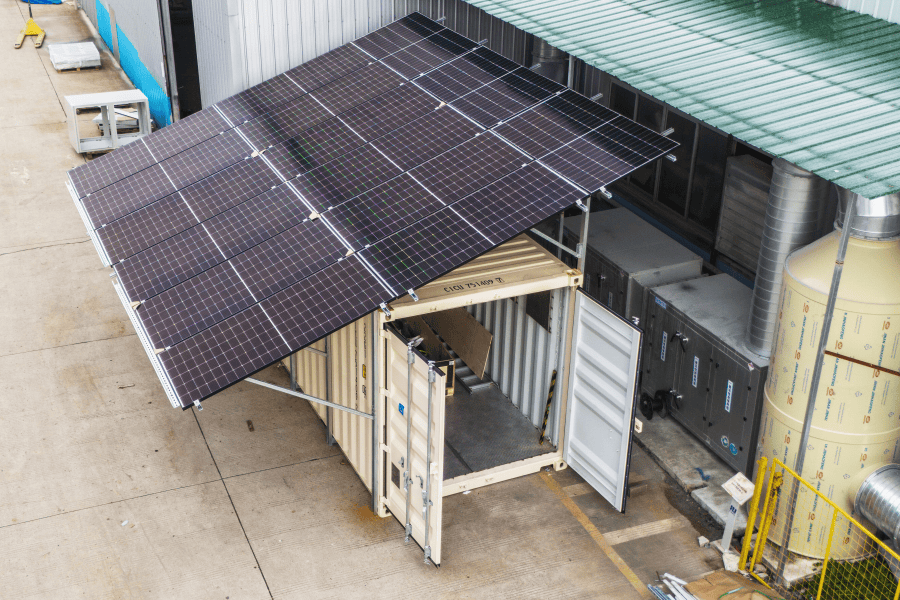
The Unspoken Grid Challenge at Your EV Charging Hub C And How a 20ft Box Solves It
Honestly, if I had a coffee for every time a commercial or industrial client told me their EV charging expansion plans were being throttled by the grid or insane demand charges, I'd be wired for a month. It's the single biggest pain point I see on the ground, from California to North Rhine-Westphalia. You want to support the energy transition, meet customer demand, but the infrastructure and costs can feel like a hard stop. The good news? The solution has matured, and it often fits neatly in a 20-foot high-cube container. Let's talk about what that really means for your project.
Quick Navigation
- The Real Problem: More Than Just Power Outlets
- Why It Hurts: The Cost & Reliability Double Bind
- The 20ft Container Solution: A Swiss Army Knife for Energy
- Key Specs Decoded: What to Look For Beyond the Brochure
- A Case in Point: Making it Work in the Real World
- Making the Decision: It's About Total Cost of Ownership
The Real Problem: More Than Just Power Outlets
Deploying EV fast chargers, especially DC fast charging (DCFC), isn't like plugging in a new appliance. Each station can demand power equivalent to a small shopping center - and that demand comes in sharp, unpredictable spikes. The grid connection you have was likely sized for a different era. Upgrading that connection? It's a marathon of utility paperwork, engineering studies, and capital expenditure that can stall a project for years and add hundreds of thousands to the budget. I've seen this firsthand on site: a logistics park in New Jersey ready to install a charging depot, only to be quoted an 18-month wait and a $500k+ bill for a new substation. It's not just an inconvenience; it's a business model killer.
Why It Hurts: The Cost & Reliability Double Bind
Even if your grid connection can handle the peak load, can your wallet handle the demand charges? For commercial operators, these charges, based on your highest 15-minute power draw in a billing cycle, can constitute up to 70% of your electricity bill. One fleet depot in Germany saw their peak demand skyrocket the moment they synchronized ten chargers, completely eroding their projected fuel savings. Furthermore, grid reliability is becoming a growing concern. The National Renewable Energy Lab (NREL) has highlighted how clustered EV charging can stress local distribution networks, leading to voltage fluctuations and potential brownouts. You're not just buying power; you're managing a micro-grid node.
The 20ft Container Solution: A Swiss Army Knife for Energy
This is where a pre-engineered, all-in-one 20ft High Cube Photovoltaic Storage System shifts from being a "nice-to-have" to the core of a viable strategy. Think of it as a power buffer and a power plant rolled into one. It does three critical jobs:
- Peak Shaving: It supplies the burst of power for simultaneous fast charging, keeping your grid draw below the threshold that triggers crippling demand charges.
- Grid Independence: Paired with on-site solar (the "Photovoltaic" part of the spec), it allows you to charge with green energy, even when the sun isn't shining, and provides critical backup during outages.
- Grid Services: In some markets, you can even generate revenue by having the system provide frequency regulation or capacity services to the utility when your chargers aren't at full use.
The beauty of the containerized approach is the "plug-and-play" aspect. At Highjoule, we engineer these units to meet local codes off the production line, so a lot of the complex engineering and safety integration is done before it ever reaches your site. That drastically cuts down on soft costs and commissioning time.

Key Specs Decoded: What to Look For Beyond the Brochure
Anyone can list battery capacity (MWh) and power rating (MW). The devil is in the engineering details that dictate safety, lifespan, and total cost. When you look at a Technical Specification of 20ft High Cube Photovoltaic Storage System for EV Charging Stations, here's what I, as an engineer who has to maintain these systems, focus on:
1. Thermal Management & Safety Certifications
Batteries hate heat. Poor thermal management is the fastest way to degrade your asset and, in worst cases, create a hazard. Look for liquid cooling systems - they're simply superior for high-C-rate, frequent cycling applications like EV charging. More importantly, the entire system must be certified to the UL 9540 standard (for the US) and IEC 62933 (for EU). This isn't just about the cells; it's the entire assembly. Our units, for instance, have the UL mark on the full container, which streamlines local permitting immensely.
2. C-Rate and Cycle Life C The Throughput Engine
For EV charging, you need power now. The C-rate tells you how quickly the battery can discharge relative to its capacity. A 2MWh system with a 1C rate can deliver 2MW of power. For a DCFC hub, you often need a high C-rate (0.5C to 1C). But high power strains the battery. That's why the spec must pair a high C-rate with a guaranteed cycle life (e.g., 6,000 cycles at 80% depth of discharge). This balance is what determines your long-term Levelized Cost of Storage (LCOS) C the real metric for ROI.
3. DC/AC Ratio and Inverter Efficiency
This is a subtle but crucial point for solar integration. If your container has a 1MW inverter but 1.5MW of solar panels and 2MWh of storage, that's a 1.5 DC/AC ratio. It maximizes solar harvest during peak sun. The inverter's peak efficiency (look for >98.5%) determines how much of that precious, self-generated energy you actually get to use. Every percentage point lost is money left on the table.
A Case in Point: Making it Work in the Real World
Let me give you a non-proprietary example from a project we supported in Texas. A truck stop chain wanted to add eight 350kW chargers. The utility upgrade quote was prohibitive. The solution? A 20ft Highjoule container with 2.4MWh storage and a 1.2MW inverter, coupled with a 1MW solar canopy. The system is programmed to primarily charge from solar and the grid during off-peak, low-rate hours. During the day, it shaves the charging load peaks completely. Honestly, the most complex part was the interconnect agreement, but because our system had all the required UL certifications and grid-support functions, the utility approval process was smoother. The project cut their demand charges by an estimated 40% in the first year, turning a cost center into a manageable, future-proof asset.

Making the Decision: It's About Total Cost of Ownership
So, when you're evaluating a Technical Specification of 20ft High Cube Photovoltaic Storage System for EV Charging Stations, you're not just buying a battery. You're investing in a grid upgrade deferral, a demand charge manager, a resilience provider, and a sustainability enabler. The upfront cost needs to be weighed against the 10-15 year avoided costs and potential revenues.
The question I leave you with is this: What's the true cost of not having that control over your power? As you plan your next EV charging deployment, consider whether the constraint is the grid's capability - or your ability to bring your own power to the party. The specs matter, but the outcome matters more. What's the one operational headache in your energy bill you wish you could eliminate tomorrow?
Tags: UL Standard BESS LCOE Energy Storage Photovoltaic Storage Microgrid EV Charging
Author
James Zhang
20+ years agricultural energy storage engineer / Highjoule CTO