
Pre-Integrated PV Container for Construction Sites: Cut Diesel Costs & Boost Safety
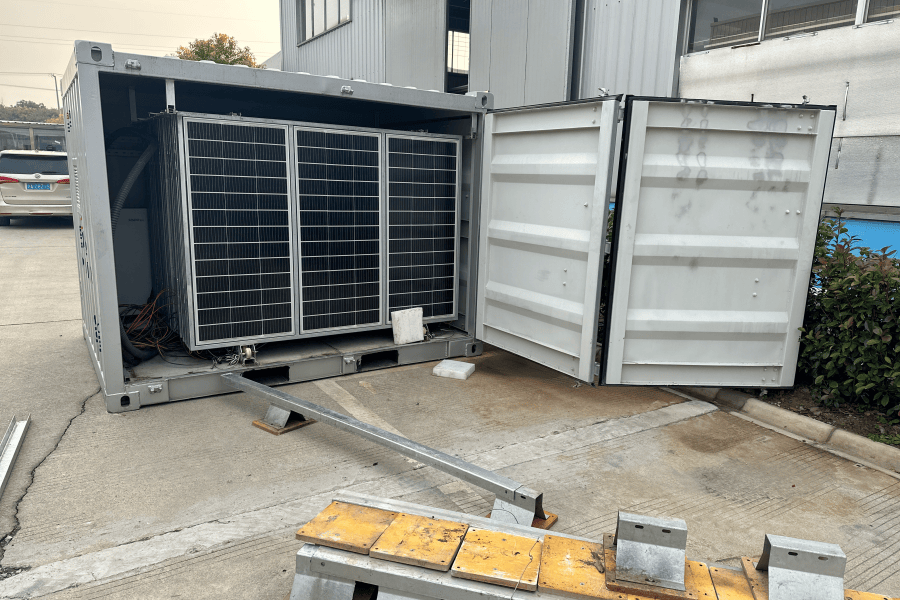
Table of Contents
- The Diesel Habit (And Why It's Breaking Your Budget)
- Beyond the Fuel Bill: The Hidden Costs of "Temporary" Power
- A Containerized Solution That Actually Works On-Site
- Cracking the Specs: What Makes a Good Pre-Integrated PV Container?
- A Tale from Texas: How One GC Ditched the Generators
- Your Next Move: Smarter Power for Your Next Project
The Diesel Habit (And Why It's Breaking Your Budget)
Let's be honest. For decades, rolling in a diesel genset has been the default move for powering remote construction sites. It's familiar, it's "reliable" in a brute-force kind of way, and the rental process is straightforward. But over my 20+ years deploying energy systems globally, I've seen this firsthand on site: that familiar habit is now the single biggest drain on your project's bottom line and a major operational headache.
You're not just paying for diesel. You're paying for the logistics - the fuel trucks, the security for on-site fuel storage, the noise mitigation to keep neighbors (and regulators) happy. In the US and Europe, where emission standards are tightening by the day, that "temporary" diesel set can suddenly become a compliance nightmare. I've had project managers in California tell me their fuel costs for a mid-sized site ballooned by over 40% in 18 months, eaten up by price volatility and new carbon adder fees. The International Energy Agency (IEA) has highlighted the extreme volatility of fossil fuel prices as a key risk for energy-intensive industries, and a construction site is essentially a small, mobile factory.
Beyond the Fuel Bill: The Hidden Costs of "Temporary" Power
The pain goes deeper than the fuel bill. Think about the man-hours lost. A generator needs refueling, maintenance, and monitoring. That's skilled labor not focused on the core job. Then there's the noise - it's not just an annoyance. In many residential-adjacent or urban infill projects I've worked on, strict noise ordinances limit productive work hours. You can't pour concrete at 5 AM if your generator violates the local decibel limit.
And safety? Storing thousands of liters of flammable diesel on-site is a risk every site manager loses sleep over. It's an environmental liability waiting to happen. The modern construction leader is juggling sustainability mandates from corporate, pressure from local communities, and the relentless drive for efficiency. The old diesel model is fighting a war on all three fronts - and it's losing.
A Containerized Solution That Actually Works On-Site
This is where the concept of a pre-integrated, containerized power solution stops being a "nice-to-have" and becomes a "must-evaluate." I'm talking specifically about a Technical Specification of 20ft High Cube Pre-integrated PV Container for Construction Site Power. The key is in the phrasing: pre-integrated and containerized.
This isn't a bunch of loose components thrown in a trailer. It's a fully engineered system, built and tested in a controlled factory environment to meet rigorous standards like UL 9540 for energy storage and UL 1973 for battery safety - critical for any site in North America. In Europe, it's designed from the ground up to comply with IEC 62933 and the relevant parts of the IEEE 1547 series for grid interconnection, even if you're operating in islanded microgrid mode on site.
At Highjoule, when we build these units, we treat them like a product, not a project. Every cable, every battery rack, the power conversion system, the climate control, and the integrated solar PV readiness - it's all designed to work together seamlessly. This means when it arrives on your site, it's literally a "plug and play" operation. You position it, connect your main distribution, and you have stable, silent, emissions-free power in a matter of hours, not weeks.

Cracking the Specs: What Makes a Good Pre-Integrated PV Container?
Anyone can put batteries in a box. Making it reliable, safe, and cost-effective for the brutal environment of a construction site is the real engineering challenge. Here's what I look for, based on lessons learned from deployments from Germany to Arizona:
- Thermal Management is Non-Negotiable: Batteries hate extreme heat and cold. A robust, independent HVAC system isn't an add-on; it's the heart of the system. It must maintain optimal temperature (usually 20-25C) year-round, whether it's 110F in Nevada or -10C in Sweden. This directly impacts battery life and safety.
- Understanding C-rate in Practical Terms: You'll see specs about C-rate (charge/discharge rate). Simply put, a 1C rate means a 100 kWh battery can deliver 100 kW of power. For a construction site, you need a high enough C-rate to start big inductive loads (think cranes or large pumps) without stumbling. A system designed with a prudent C-rate, matched to your load profile, ensures reliability without overspending on oversized batteries.
- The LCOE (Levelized Cost of Energy) Winner: This is the financial clincher. While the upfront capital might be higher than a rental generator, the operating cost is near-zero for the solar-charged portion. You're locking in your energy cost for the project's duration. No more budget surprises from diesel spikes. Over a typical 2-3 year project, the total LCOE of a solar+storage container often undercuts diesel by 30-50%, especially when you factor in carbon pricing mechanisms in places like the EU or California.
- Built for the Real World: This means ingress protection (IP rating) against dust and water, structural integrity for potentially uneven ground, and cybersecurity for the monitoring system. It should be a fortress for your power.
A Tale from Texas: How One GC Ditched the Generators
Let me give you a real example. We worked with a large general contractor on a multi-year logistics hub project outside Dallas. The site was massive, with phased power needs. Their initial plan was a bank of six 500kW diesel generators.
The challenge was clear: fuel costs were unpredictable, noise was an issue for a planned adjacent commercial park, and their corporate ESG goals demanded a reduction in carbon footprint.
We deployed two of our 20ft High Cube Pre-integrated units as the primary power source for the first phase. Each was equipped with a sizable battery bank and a pre-wired, rooftop-ready solar array that their crew could install quickly. The system was designed to UL 9540 standards, which smoothed the permitting process with the local authority.
The outcome? In the first year, they displaced over 150,000 gallons of diesel. The site was noticeably quieter and safer. The project manager told me the biggest win was "budget certainty." The power cost was fixed. They could accurately forecast that line item, which is a rare luxury in construction. The units were also mobile; as the project phased, they simply towed the containers to the new work zone.

Your Next Move: Smarter Power for Your Next Project
The technology isn't futuristic anymore. It's proven, compliant, and financially savvy. The question isn't really if containerized solar-storage becomes the standard for temporary site power, but when.
Your next bid, your next project plan - does it include a line item for volatile diesel, or does it feature a fixed, clean energy cost? The difference is more than just fuel; it's about risk management, community relations, and ultimately, project profitability. What's the one operational headache on your current site that a silent, self-sufficient power plant could solve?
Tags: Construction Site Power UL Standard BESS LCOE Renewable Energy Microgrid Pre-integrated PV Container
Author
James Zhang
20+ years agricultural energy storage engineer / Highjoule CTO