
215kWh Mobile Energy Storage for Construction Sites: Power, Safety, Compliance
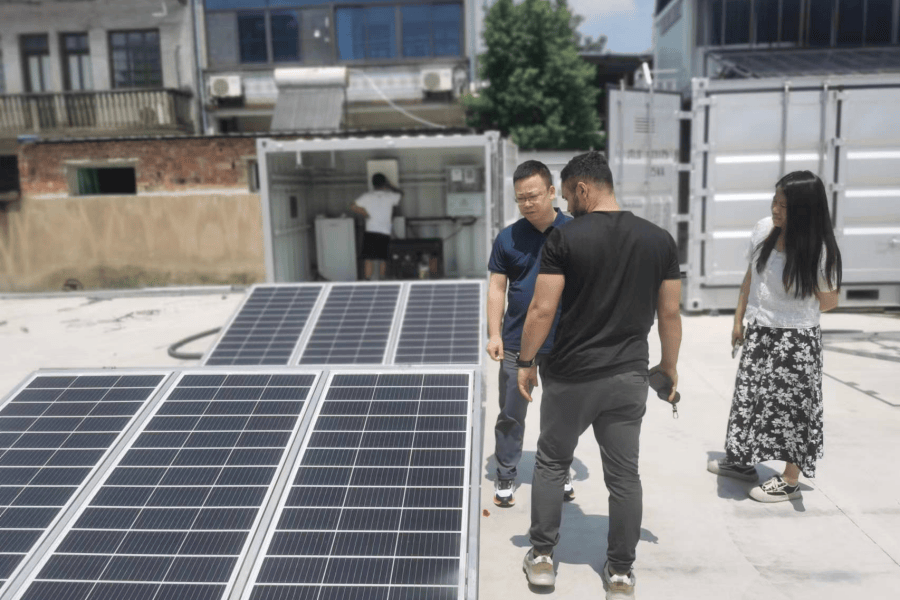
Table of Contents
- The Noise, Emissions, and Cost Problem on Site
- Why "Just Use a Generator" Isn't the Answer Anymore
- The 215kWh Cabinet: More Than Just a Battery Box
- Seen on Site: A California Project's Turnaround
- Let's Talk Tech: C-rate, Thermal Runaway, and Real LCOE
- How to Make This Work for Your Next Project
The Noise, Emissions, and Cost Problem on Site
Let's be honest. When you're managing a construction site, power is often an afterthought - until it becomes the biggest headache. You roll in diesel generators because that's what everyone does. Suddenly, you're dealing with constant background roar that makes neighbor complaints a weekly event, fuel costs that seem to have a mind of their own, and the looming pressure of local emissions regulations, especially here in California or across the EU. I've been on sites where the generator fuel bill for temporary power rivaled the cost of some permanent electrical work. It's chaotic, expensive, and frankly, not very 21st century.
Why "Just Use a Generator" Isn't the Answer Anymore
The math is changing. The International Energy Agency (IEA) has pointed out that the levelized cost of storage (LCOS) for battery systems has fallen dramatically, making them competitive for more applications. But it's not just about dollar-per-kWh. It's about total cost of operation. A diesel gen-set might have a lower upfront tag, but add in fuel volatility, scheduled maintenance, unscheduled downtime, and potential fines for noise or carbon output - your "cheap" option gets expensive fast. For a temporary site, you need something you can literally drop in, switch on, and forget about. That agility is worth its weight in gold.
The Regulatory Squeeze
In the US, local ordinances are cracking down on noise pollution. In the EU, strict emissions standards under the Effort Sharing Regulation trickle down to the municipal level. Your project timeline can't afford a "stop work" order because your generators are over the decibel limit at 7 AM. I've seen this firsthand on site in Germany, where a project had to switch to night shifts at a premium cost just to keep the generators running. It was a brutal lesson in operational planning.
The 215kWh Cabinet: More Than Just a Battery Box
This is where the spec of a well-designed 215kWh cabinet energy storage container becomes your playbook. We're not talking about a bunch of loose battery racks. This is a fully integrated, plug-and-play power asset. Think of it as a silent, self-contained utility in a steel cabinet. The key specs that matter for a construction boss aren't just the energy capacity; it's the peak power output (often a 1C or higher discharge rate for those big tool startups), the built-in thermal management that works in a Texas summer or a Canadian winter, and the fact it's pre-certified to UL 9540 and IEC 62619 standards. That last bit saves you months of compliance headaches.

At Highjoule, when we engineered our site power solution around this specification, we obsessed over three things: safety, simplicity, and serviceability. The container isn't just UL listed; its internal design isolates modules to prevent thermal runaway propagation. The connections are color-coded and tool-less where possible, because no one has time for complex commissioning. And every major component is accessible from the front or sides - because when you're on a muddy site, you don't want to disassemble half the unit to check a connection.
Seen on Site: A California Project's Turnaround
Let me give you a real example. We deployed a 215kWh system for a mid-rise residential developer in San Jose. Their challenge was classic: tight urban site, adjacent to occupied buildings, and a city mandate for reduced emissions. Diesel was a non-starter. They paired our container with a modest 50kW solar canopy for the site office.
The result? They eliminated 100% of daytime generator use. The battery provided all base load for tools, lighting, and site offices, charging from solar and a nightly grid charge (using cheaper off-peak rates). The project manager told me the biggest win wasn't even the fuel savings - it was the silence. Crews could communicate without yelling, and the zero complaints from neighbors meant zero delays from inspectors. Their total energy cost for temporary power dropped by an estimated 60% over the project's duration. That's a real-world LCOE (Levelized Cost of Energy) win.
Let's Talk Tech: C-rate, Thermal Runaway, and Real LCOE
I know, "C-rate" sounds like engineering jargon. Let's simplify. If a battery is 215kWh, a 1C rate means it can discharge 215kW in one hour. For construction, you need a high C-rate - sometimes 1.5C or more. Why? Because when a whole crew fires up their hammer drills and saws at 8 AM, you get a massive power spike. A weak system would sag or trip. A system designed for this duty cycle handles it smoothly, like a heavy-duty truck taking a hill.
Thermal management is the unsung hero. Lithium-ion batteries don't like extreme heat. A passive system might not cut it in direct sun. Our approach uses an active liquid-cooling loop that keeps cells at their ideal temperature range. This does two huge things: it extends the battery's life (directly improving your LCOE) and it maintains safety margins, keeping the system within its UL certification parameters 24/7.
Honestly, the real LCOE calculation for a construction site includes soft costs: the risk of delay, the cost of fuel logistics, the wages lost during generator refueling. When you factor that in, the battery container moves from being an "alternative" to the obvious smart choice.

How to Make This Work for Your Next Project
So, you're considering it. Here's my advice from the field:
- Plan Early: Integrate the storage container into your site logistics plan day one. It needs a flat, stable spot, just like any other major equipment.
- Hybridize if You Can: Even a small solar array or a connection to the main grid (for overnight charging) dramatically boosts your fuel displacement and ROI.
- Ask for the Certificates: Don't just take "UL compliant" at face value. Ask for the UL 9540 certification file. Any reputable provider, like us at Highjoule, will have it ready.
- Think Beyond the Project: The beauty of a container? It's mobile. When this job is done, it can be trucked to your next site, or even used for backup power at a permanent facility. That asset reusability changes the financial model completely.
The future of construction site power isn't louder, dirtier, or more expensive. It's smarter, quieter, and right there in the spec of a 215kWh cabinet. What's the first project you'd power this way?
Tags: Construction Site Power Energy Storage Container UL Standard BESS Renewable Energy
Author
James Zhang
20+ years agricultural energy storage engineer / Highjoule CTO