
Utility-Scale BESS for Remote Islands: Liquid-Cooled 5MWh System for Grid Stability
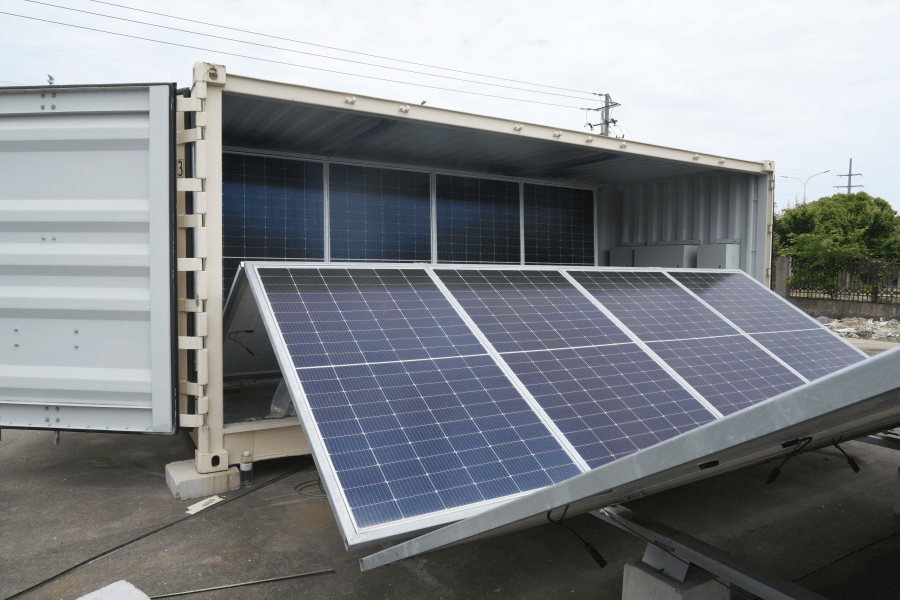
Beyond the Diesel Generator: A Real-World Look at Deploying Utility-Scale BESS on Remote Islands
Honestly, if you're managing energy for a remote island community or industrial outpost, you've probably had this thought: "There has to be a better way than this." I've stood on site, listening to the constant hum of diesel generators, smelling the fuel, and watching the O&M team wrestle with logistics and costs that just keep climbing. It's a widespread reality. For decades, islands from the Mediterranean to the Pacific have been locked into expensive, polluting, and logistically fragile power systems. The dream of running on sun and wind hits a very real wall when the grid is small and isolated - renewables can cause havoc with frequency and voltage if not managed perfectly.
This isn't just an operational headache; it's an economic and environmental straitjacket. But after 20+ years in this field, I can tell you the game has changed. The solution isn't just adding batteries; it's deploying the right kind of battery system, engineered from the ground up for the brutal realities of island grids. Let's talk about what that actually looks like on the ground.
Quick Navigation
- The Real Problem: More Than Just Fuel Costs
- Why "Utility-Scale" is Non-Negotiable for Island Grids
- The Thermal Management Game-Changer
- A North Sea Case Study: From Theory to Practice
- Beyond the Spec Sheet: The LCOE & Safety Conversation
The Real Problem: More Than Just Fuel Costs
We all know diesel is expensive. But the pain points for island microgrids run much deeper. First, there's inertia - or the lack of it. Traditional grids use massive spinning turbines in generators to provide stability. When a large load switches on or a cloud passes over a solar farm, that inertia keeps the frequency from crashing. In a small grid, a single event can trigger a blackout. I've seen a hotel's air conditioning unit kick on and take down a village's power. It's that fragile.
Then there's the intermittency curse. The IRENA reports that islands often have some of the world's highest levelized costs of electricity (LCOE), frequently above $0.30/kWh, with fuel making up 60-80% of that cost. You want to add a 10MW solar farm? Great. But without a massive shock absorber, its variable output can make the grid unstable, forcing you to curtail (waste) precious renewable energy or keep diesel gensets running inefficiently at low load - which is terrible for the engines. It's a lose-lose.
Why "Utility-Scale" is Non-Negotiable for Island Grids
This is where the "utility-scale" part of our 5MWh spec becomes critical. We're not talking about a few cabinets behind a building. For an island to truly decarbonize and stabilize, the BESS needs to be a grid-forming asset. It must provide:
- Frequency Regulation & Voltage Support: Acting like a digital shock absorber, reacting in milliseconds to keep the grid at 50 or 60 Hz.
- Black Start Capability: The ability to restart the grid from a blackout without relying on diesel - a true lifeline.
- Ramp Rate Control: Smoothing out the sudden drops when clouds cover solar or the spikes when wind gusts hit.
A 5MWh system, with the right power conversion specs (often a 2.5MW PCS for a 2-hour duration), is typically the sweet spot for many mid-sized island applications. It's large enough to handle meaningful grid services but modular enough to ship and deploy. The key is the C-rate - a term we use for charge/discharge speed. A system designed for a 0.5C rate (like our 5MWh/2.5MW configuration) offers the perfect balance: enough punch for stability services, without the excessive wear and thermal stress of higher C-rates. It's built for endurance, not just a sprint.

The Thermal Management Game-Changer
Let me be blunt: if you're putting a utility-scale BESS in a tropical or desert island environment, air-cooling is a risk I wouldn't take. I've been inside containerized BESS units in the Arizona desert and on Caribbean islands. With air-cooling, you get massive temperature gradients - cells in the middle of the rack can be 15C hotter than those on the edges. This inconsistency accelerates degradation, kills your warranty, and in the worst case, creates thermal runaway hotspots.
Liquid cooling, like what's specified in advanced systems, is a different beast. It's like comparing a box fan to the precision cooling in a data center. A sealed coolant loop directly contacts the cell surfaces, maintaining temperature uniformity within 2-3C. This does three huge things:
- Extends Lifespan: Consistent temps slow cell degradation, protecting your investment.
- Boosts Safety: It dramatically reduces thermal runaway risk, which is why it's becoming the gold standard for high-density, utility-scale projects.
- Cuts O&M: No more clogged air filters to replace in salty, dusty air. The system is sealed.
For a remote site where a service technician might be a plane ride away, this reliability isn't a luxury; it's the core of the business case.
A North Sea Case Study: From Theory to Practice
Let's look at a real project. We worked on an offshore island community in Northern Europe. Their challenge was classic: high wind potential, but grid instability limited them to using only 30% of their turbine capacity. They were drowning in curtailment.
The solution was a 10MW/20MWh installation, effectively two of our 5MWh liquid-cooled units. The deployment had to meet brutal EU marine environment standards (IEC 61400 for wind, plus strict local codes). The liquid-cooled design was chosen specifically for its ability to handle the salt spray and maintain performance in sub-zero winters and mild summers. Post-installation, the system now provides:
- Frequency Regulation: Allowing the diesel gensets to run at optimal, efficient set points or shut down entirely.
- Wind Firming: Capturing excess wind energy that would have been spilled, increasing renewable utilization by over 40%.
- Spinning Reserve: Replacing the need to keep a diesel generator idling 24/7.
The result? A projected 55% reduction in diesel consumption in the first year and a grid that's finally stable enough to accept more renewables. This isn't a lab result; it's what's happening right now.
Beyond the Spec Sheet: The LCOE & Safety Conversation
When decision-makers look at a technical spec, the numbers on cycle life and efficiency matter, but they feed into one bigger metric: the Levelized Cost of Storage (LCOS). For an island, this is everything. A liquid-cooled system, with its longer lifespan (often 6,000+ cycles vs. 4,000 in less managed systems) and lower degradation, delivers a lower LCOS over 15-20 years. You're not just buying capacity; you're buying enduring capacity.
Then there's safety and compliance. In the US, UL 9540 is the benchmark for BESS safety. In the EU, it's IEC 62933. Any system you consider must have these certifications - not just for the cells, but for the entire assembled unit. At Highjoule, our approach has always been to design beyond the standard. For instance, our liquid-cooled cabinets are arranged with physical fire breaks and integrated gas detection that goes beyond code. Why? Because on a remote island, the fire department isn't 10 minutes away. The system must be inherently, passively safe. We build that in from day one, because we've seen what's at stake.
So, what's the next step? The technology is proven. The standards are clear. The question for any island community or developer isn't "Can we do this?" but "How do we tailor this solution to our specific load profile and renewable mix?" That's where the real engineering begins - moving from a generic spec sheet to a system that's your island's new energy backbone.
What's the one grid constraint that's holding your island project back? Is it frequency volatility, or maybe the inability to black start? Let's discuss the specifics.
Tags: UL Standard BESS LCOE Liquid Cooling Utility-Scale Energy Storage IEC Standard Remote Microgrids
Author
James Zhang
20+ years agricultural energy storage engineer / Highjoule CTO