
Rapid Deployment BESS for Industrial Parks: Cutting Cost & Complexity
Contents
- The Grid-Waiting Game (And Why It's Costing You Millions)
- Beyond the Spreadsheet: The Hidden Costs of a "Custom" Build
- The Container Mindset: Your Fast-Track to Energy Resilience
- Decoding the Specs: What Really Matters for Your Site
- A Story from the Field: From Parking Lot to Power Plant in 12 Weeks
- Your Next Step: Asking the Right Questions
The Grid-Waiting Game (And Why It's Costing You Millions)
Let's be honest. If you're managing energy for an industrial park in Ohio or a manufacturing site in North Rhine-Westphalia, you're playing a high-stakes game. You see the volatility in energy prices, you feel the pressure from corporate sustainability goals, and you've probably run the numbers on solar. The business case is there. But then you look at the path to deploying a Battery Energy Storage System (BESS) to pair with it, and the timeline alone makes you hesitate. We're talking 18 to 24 months, sometimes more, from feasibility study to commissioning. I've seen this firsthand on site C the endless rounds of engineering, the permitting maze with local utilities (everyone has their own interpretation of IEEE 1547, right?), the civil works, and the slow, piece-by-piece assembly.
This isn't just an inconvenience. The International Renewable Energy Agency (IRENA) highlights that system integration and grid connection delays are among the top barriers to renewable energy deployment. Every month of delay is a month of missed savings on demand charges, a month of exposure to peak pricing, and a month where your sustainability roadmap is stuck in neutral. The problem isn't the technology; it's the deployment model.
Beyond the Spreadsheet: The Hidden Costs of a "Custom" Build
We often focus on the capital cost per kilowatt-hour. But the real cost, the Levelized Cost of Energy Storage (LCOE), includes everything: installation, financing, maintenance, and yes, the time value of getting the system online. A traditional "stick-built" BESS project amplifies all the soft costs. You need a small army of specialists C civil engineers, structural crews, electricians specializing in DC and AC systems, and commissioning agents C all orchestrating a complex dance on your property. A single component delay, a last-minute change order, or a failed inspection can set you back weeks.
Then there's safety and compliance. For our markets, this isn't optional. UL 9540 and IEC 62933 aren't just acronyms; they're your insurance policy. But ensuring a site-built system meets every nuance of these standards from the ground up is a monumental task for the EPC team. I've walked into sites where the thermal management design looked great on paper but didn't account for the specific afternoon sun exposure on the west-facing battery wall, creating a hotspot. That's a rework, a delay, and a risk.
The Container Mindset: Your Fast-Track to Energy Resilience
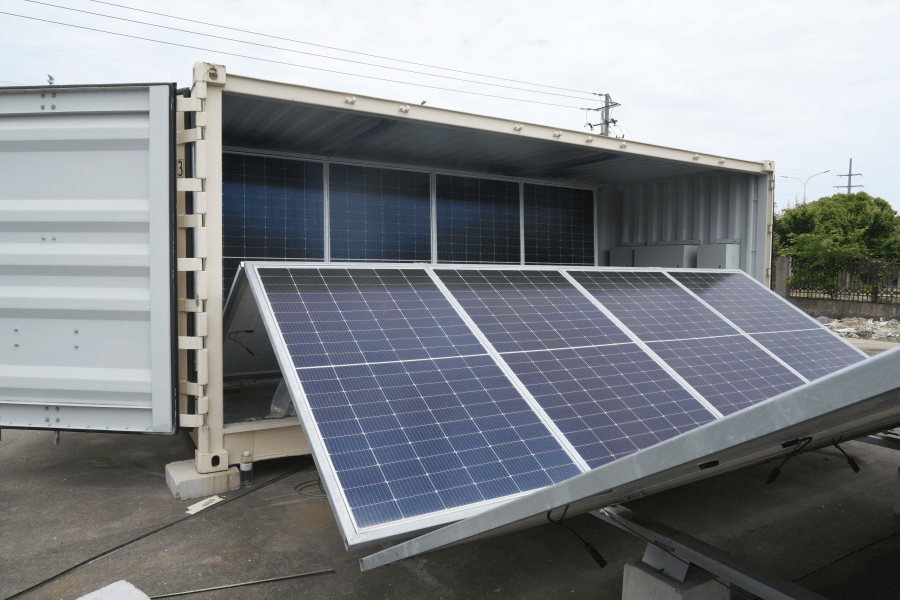
This is where the philosophy behind a well-defined Technical Specification of Rapid Deployment Pre-integrated PV Container for Industrial Parks changes the game. It flips the script from "construction project" to "power plant delivery." The core idea is profound in its simplicity: the entire system C batteries, inverters, thermal management, fire suppression, and controls C is factory-integrated, tested, and certified before it ever leaves the dock.
At Highjoule, we build our GridFort? containers this way. Think of it like buying a certified, pre-fabricated data center instead of trying to build one server-rack-by-rack on a concrete pad. The value isn't just in the steel shell; it's in the hundreds of hours of integration and testing that happen in our controlled environment, not on your rainy Tuesday afternoon job site. This approach is inherently safer and consistently meets the UL and IEC standards we rigorously design to, because we're repeating a perfected process.
Decoding the Specs: What Really Matters for Your Site
When you evaluate a pre-integrated container spec, don't just look at the energy capacity (MWh). Dig into the details that dictate performance and longevity. Let me translate a few key ones:
- C-rate: This is basically the "speed" of the battery. A 1C rate means a 2 MWh container can discharge 2 MW in one hour. A 0.5C rate means it delivers 1 MW over two hours. For smoothing solar output in an industrial park, a moderate C-rate (like 0.5C) is often perfect and easier on the battery's lifespan. The spec should match your primary use case: fast response for grid services, or longer, slower discharge for energy arbitrage.
- Thermal Management: This is the unsung hero. Batteries are like athletes; they perform best within a tight temperature range. A spec that mentions a liquid-cooled, closed-loop system with independent climate zones is talking about precision. It means every battery module is kept at its ideal temperature, maximizing life and preventing the thermal runaway scenarios that keep facility managers up at night. This is non-negotiable for us in our designs.
- Grid Interconnection: The spec should explicitly call out compliance with the standards your local utility demands C IEEE 1547-2018 in the US, grid codes like VDE-AR-N 4110 in Germany. This isn't a future upgrade; it should be baked into the factory firmware.
Here's a simplified breakdown of how these specs translate to site benefits:
| Technical Spec Element | On-Site Impact for You |
|---|---|
| Pre-certified to UL 9540/A | Faster, more predictable permitting; reduced insurance hurdles. |
| Factory-integrated HVAC & Fire Suppression | Eliminates field integration errors; ensures safety systems work as a unified whole. |
| Plug-and-Play AC & DC Busbars | Drastically reduces on-site electrical work; connection is literally "bolt-on." |
| Unified Energy Management System (EMS) | Single pane of glass to control storage, solar, and manage loads against tariffs. |
A Story from the Field: From Parking Lot to Power Plant in 12 Weeks
Let me give you a real example. A food distribution cold storage facility in California's Central Valley was facing crippling peak demand charges and needed to shore up resilience. They had space in a parking lot. A traditional BESS bid came in with a 22-month timeline.
We proposed a pre-integrated GridFort? container solution. The unit was built and tested to UL 9540 in our facility. On site, we prepared a simple level concrete pad and brought in the medium-voltage connection. The container arrived on a Tuesday. It was placed, anchored, and the pre-terminated AC cables were connected. By the following Friday, we were in commissioning. From site work start to commercial operation: 12 weeks. They now shift their cold storage load, shave their peak demand by over 30%, and have backup power for critical refrigeration. The speed of deployment was a bigger value driver than they had even initially calculated.

Your Next Step: Asking the Right Questions
So, when you're looking at these rapid deployment container specs, move beyond the brochure. Ask your potential provider:
- "Can you show me the UL certification for the entire energy storage unit, not just the components?"
- "Walk me through your factory acceptance test protocol. What performance metrics do you guarantee before shipment?"
- "What does your local service and maintenance network look like? If I have an alert at 2 PM on a Friday in Belgium, who shows up?" (That last one is crucial C Highjoule invests in local technical partners for this exact reason).
The future of industrial energy isn't about building more complex projects; it's about deploying proven, resilient power assets faster. The right technical specification for a pre-integrated container isn't just a list of parts; it's the blueprint for taking back control of your energy costs and carbon footprint, without the traditional headaches. What's the single biggest delay risk you're facing in your next energy project?
Tags: UL Standard BESS LCOE Rapid Deployment Europe US Market Industrial Energy Storage Renewable Energy Pre-integrated Container
Author
James Zhang
20+ years agricultural energy storage engineer / Highjoule CTO