
Scalable Modular BESS for Construction Sites: Cut Costs & Boost Power
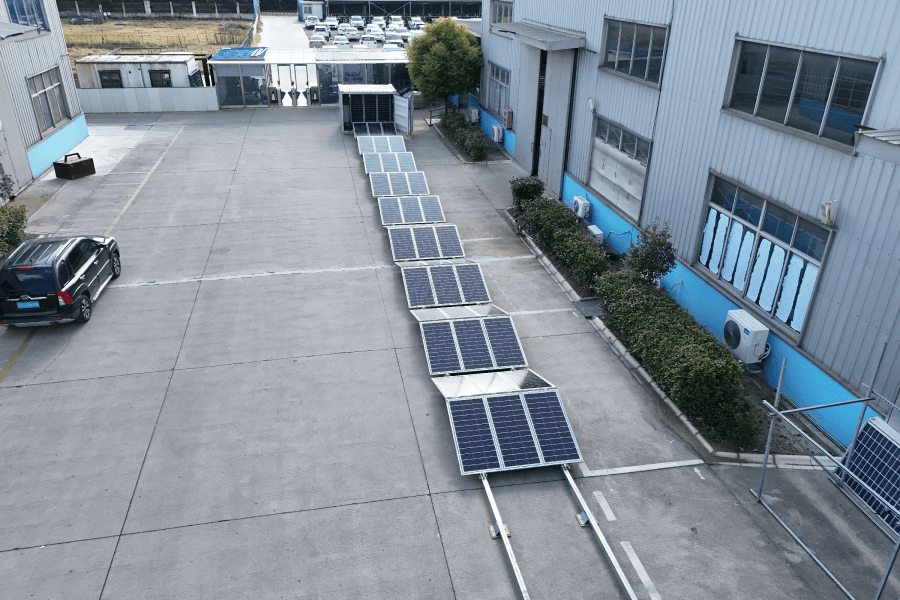
Table of Contents
- The Real Power Problem on Your Construction Site
- Why This Hurts Your Bottom Line (More Than You Think)
- The Game Changer: Scalable Modular BESS for Construction Sites
- Specs in Action: A Case from California
- Expert Insights: Reading the Spec Sheet Like a Pro
- Making the Move: What to Look For
The Real Power Problem on Your Construction Site
Let's be honest. When you're managing a construction project in the US or Europe, temporary power is often an afterthought. It's a line item, a necessary evil. You typically see two scenarios: you're either running loud, fume-spewing diesel generators 24/7, or you're dealing with the massive hassle and cost of bringing in a permanent grid connection way before you actually need it for the finished building.
I've been on-site for over two decades, from wind farms in Texas to commercial builds in Germany. I've seen project managers tearing their hair out over fuel delivery logistics, noise complaints from neighbors that halt work, and those frustrating, unpredictable spikes in diesel prices that can blow a project's budget. The International Energy Agency (IEA) has noted that diesel generators remain a dominant source of off-grid power, but their operational and environmental costs are increasingly untenable. There's got to be a better way, right?
Why This Hurts Your Bottom Line (More Than You Think)
Let's agitate that pain point a bit. It's not just about the fuel bill. Think about the total cost of ownership for that temporary power.
- Fuel & Logistics: You're not just buying diesel; you're paying for secure storage, frequent deliveries (which disrupt site traffic), and theft prevention.
- Maintenance Downtime: Generators need servicing. When they're down, your tools are down. That's idle labor, missed deadlines.
- Noise & Emission Regulations: Especially in the EU and in regulated US states like California, noise ordinances can limit your working hours. Emissions can affect your project's sustainability scoring or even trigger fines.
- Oversizing & Underutilization: You rent a 500 kVA generator because you need that peak for a crane, but 80% of the time, you're only drawing 100 kVA for tools and site offices. You're burning money for capacity you don't use.
This is the old way. It's inefficient, costly, and honestly, it's becoming a liability.
The Game Changer: Scalable Modular BESS for Construction Sites
This is where the technical specification of a scalable modular Battery Energy Storage System (BESS) becomes your secret weapon. The core idea is simple, yet transformative: instead of just generating power on-demand by burning fuel, you store energy intelligently and release it exactly when and where you need it.
A modern site BESS is essentially a plug-and-play power bank on wheels. It's a containerized or trailer-mounted system that you can drop on your site in a day. The "scalable modular" part is key. You start with a base power and capacity module (say, 250 kW / 500 kWh). As your project phases grow - maybe you're moving from foundation work to steel erection needing more peak power - you simply add another identical module. They stack and sync seamlessly. This isn't a future concept; this is what we at Highjoule Technologies have been deploying for the last 5 years.
The magic is in the system's brain. It can be paired with a silent solar canopy to charge during the day, or it can do something called "grid buffering." Here's a real-life trick: if your site has a minimal, existing grid connection (just enough for site offices), the BESS can slowly trickle-charge from that cheap grid power overnight. Then, during the day, it discharges to run your heavy equipment, completely avoiding expensive demand charges or the need for a huge, costly grid upgrade. It flattens your power demand curve. I've seen this cut temporary power costs by 40-60% on well-designed sites.
Specs in Action: A Case from California
Let me give you a concrete example from a project we supported in Silicon Valley. A developer was building a mid-rise tech office. Local regulations were extremely tight on noise and emissions. Diesel was basically a non-starter. The challenge was powering tower cranes, electric piling rigs, and a full site compound.
The solution was a scalable modular BESS system. We started the project with two 500 kWh trailer-mounted units, primarily charged from the existing, limited grid connection at night (off-peak rates). During the day, the system handled the base load. For the peak demand of the crane, the BESS provided instantaneous power, its inverters capable of high C-rate discharge (more on that below).
Later, when a third crane was added, the team simply brought in a third module. No re-engineering, no complex integration. It plugged in and was operational in hours. The project manager later told me they avoided over $15,000 a month in what would have been "demand charge" fees from the utility alone, not to mention zero fuel costs and a pristine noise report. The system was UL 9540 certified, which smoothed the permitting process with the local authority having jurisdiction (AHJ).

Expert Insights: Reading the Spec Sheet Like a Pro
When you're evaluating a Technical Specification of a Scalable Modular BESS for Construction Site Power, don't just glance at the kWh and kW numbers. Here are three specs I always dig into, explained simply:
- C-rate (Charge/Discharge Rate): This tells you how "athletic" the battery is. A 1C rate means a 500 kWh battery can deliver 500 kW for one hour. A 2C rate means it can deliver 1000 kW for 30 minutes. For construction, you want a higher C-rate (like 1.5C to 2C) to handle the sudden, high-power draw of a crane hoist or a pile driver without the system stumbling.
- Thermal Management: This is the unsung hero of safety and longevity. A spec that says "liquid cooling" or "active thermal management system" is gold. Batteries generate heat, especially at high C-rates. On a dusty, hot Texas summer site, passive air cooling just won't cut it. A liquid-cooled system keeps the cells at an optimal temperature, which prevents premature aging and is a cornerstone of safety design we insist on at Highjoule. It directly aligns with UL and IEC safety standards by managing thermal runaway risks.
- LCOE (Levelized Cost of Energy): This is your true north metric. It's the total lifetime cost of owning and operating the system, divided by the total energy it will deliver. A good BESS spec sheet should let you model this. While the upfront cost might be higher than a generator, the LCOE over a 2-3 year project - with zero fuel, lower maintenance, and revenue from avoiding grid charges - often tells a completely different, winning story.
Honestly, the best systems are designed with these site realities in mind. They're built to IP54 or higher standards to keep out dust and water. Their containers are stackable for easy transport. And their communication protocols are open, allowing them to talk to your site's energy management system or even future solar arrays.
Making the Move: What to Look For
So, you're considering this for your next project. Fantastic. My advice from the field is this: partner with a provider who understands your endgame. It's not just about selling you a box of batteries.
Look for a partner who offers a clear path to localization - meaning their systems are pre-configured to meet UL, IEC, or IEEE standards relevant to your region, so you're not stuck in permit purgatory. Ask about their service and maintenance model. Do they have local technicians? Can they provide remote monitoring, so you can see your site's power status from your phone, and we can often diagnose issues before they become problems?
At Highjoule, this is the service wrapper we build around our technology. We help you model the financials, navigate the codes, and deploy a system that grows with your project phase. The goal is to make your temporary power silent, clean, predictable, and most importantly, a cost-saving asset rather than a burning expense.
What's the biggest temporary power headache on your upcoming project sheet? Maybe a modular BESS can take it off the list for good.
Tags: Construction Site Power UL Standard BESS Europe US Market Modular Energy Storage Temporary Power
Author
James Zhang
20+ years agricultural energy storage engineer / Highjoule CTO