
Scalable Off-grid Solar for Telecom Towers: Solving Grid Reliability & Cost Challenges
Contents
- The Silent Power Crisis at Remote Cell Sites
- Why Traditional Backup Power Solutions Fall Short
- The Modular, Scalable Approach: More Than Just Specs on Paper
- Safety First: It's Not Just About UL 9540 and IEC 62619 on Paper
- A Real-World Case: From Spec Sheet to Reliable Site in Texas Hill Country
- The True Metric: Understanding LCOE for Your Off-Grid Power
- Your Next Step: Thinking Beyond the Generator
The Silent Power Crisis at Remote Cell Sites
Honestly, if you're managing telecom infrastructure in North America or Europe, you're living a paradox. Your network is expected to be more resilient than ever, yet the grid it often relies on isn't. I've seen this firsthand on site. A remote base station in California goes dark during a PSPS event. A tower in rural Germany faces erratic grid supply. The immediate cost? Downtime. The real cost? Lost revenue and eroded trust. According to the National Renewable Energy Laboratory (NREL), resilience is now the top driver for distributed energy adoption in the commercial sector. It's not just about backup; it's about ensuring continuous, predictable operation where the grid can't.
Why Traditional Backup Power Solutions Fall Short
For years, the default was diesel gensets. We all know the drill. They're loud, require constant fuel logistics (a nightmare in remote or volatile weather areas), have high maintenance cycles, and frankly, they're a PR problem in an ESG-focused world. On the other hand, a basic, fixed-size solar+storage system often lacks the flexibility. You overbuild for future load and bleed capital, or underbuild and can't adapt. The thermal management on some early BESS units for telecom was also an afterthought C leading to reduced lifespan in extreme desert heat or Nordic cold. This is where the Technical Specification of a Scalable Modular Off-grid Solar Generator moves from a vendor document to your operational playbook.
The Modular, Scalable Approach: More Than Just Specs on Paper
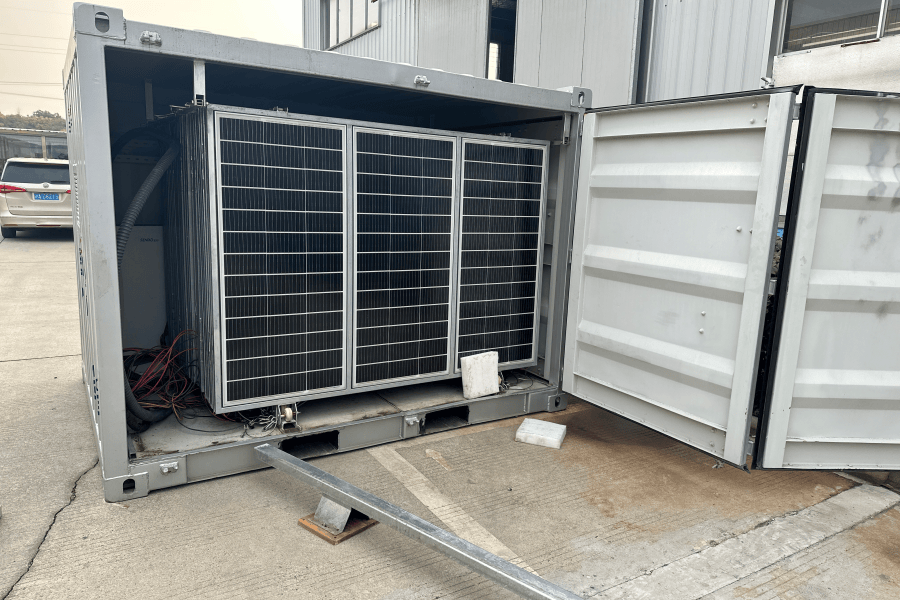
So, what does "scalable and modular" really mean on a muddy site at 3 PM? It means you're not buying a monolithic, one-size-fits-all power plant. Think of it like adding server racks. You start with a core power block C maybe sized for your current load plus 20%. Each module is a self-contained unit with its own power conversion, battery management, and critically, its own thermal system. The magic is in the controller that seamlessly integrates new modules. Need to add capacity for a new 5G radio or edge computing server? You slot in another power module, not redesign the entire system. This cuts CapEx upfront and allows OpEx to align with actual growth.

Key Specs That Matter on the Ground
- C-rate Intelligence: You'll see a C-rate (charge/discharge rate) in the specs. A 1C rate means a full discharge in 1 hour. For telecom, you often need a blend of high power for short peaks and sustained energy for long outages. A well-designed modular system can manage cells to deliver both, without the stress that shortens battery life. It's about having the right tool for the job, not hammering everything with the same tool.
- Thermal Management Built for Real Weather: The spec should shout about this. Passive cooling might work in mild climates, but for the majority of sites, you need an active, closed-loop liquid cooling or precision air system. I've seen packs with a 15-year warranty fail in year 7 because heat was cooking the cells unevenly. Proper thermal design, aligned with IEEE and local environmental standards, is what separates a 5-year product from a 20-year asset.
Safety First: It's Not Just About UL 9540 and IEC 62619 on Paper
Any supplier can list UL 9540 (the standard for Energy Storage Systems) or IEC 62619 (safety for industrial batteries). The question is: how is it implemented? At Highjoule, when we design a scalable modular system, safety is architected at the module level and the system level. Each module has its own, certified isolation and suppression. So, if an issue ever occurs, it's contained to that single, swappable unit. The system doesn't go down; you get an alert and schedule a swap at the next routine maintenance. This modular safety approach is a game-changer for minimizing risk and downtime, something we're deeply committed to across all our deployments.
A Real-World Case: From Spec Sheet to Reliable Site in Texas Hill Country
Let me give you a non-salesy example from a project we were involved in. A regional telecom operator in Texas had a cluster of towers in an area with frequent grid sags and summer outages. Diesel delivery costs were skyrocketing. They needed a solution that could handle 72+ hours of backup, integrate existing solar, and allow for future load growth. We deployed a modular off-grid system based on the very principles we're discussing.
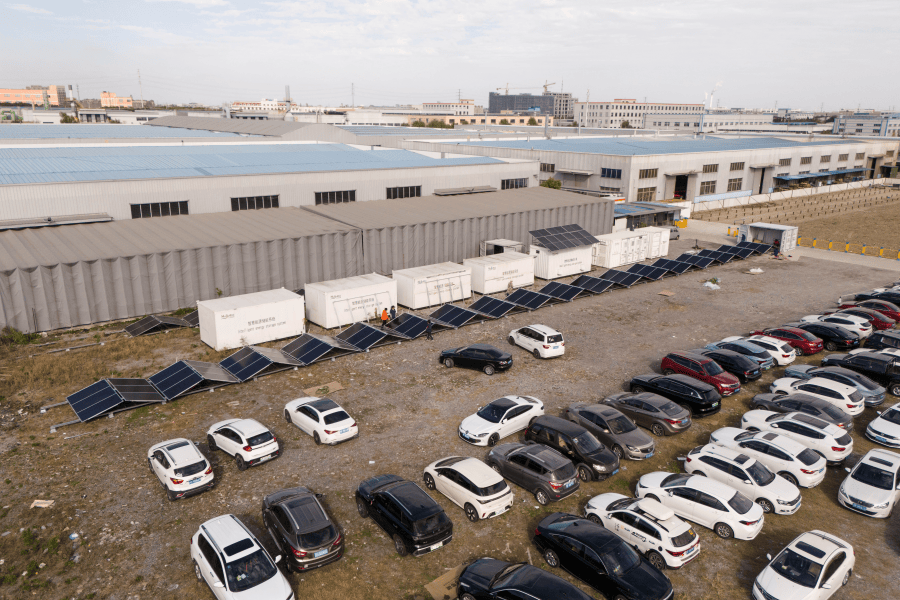
The initial phase covered immediate needs with four power modules. The installation was clean C pre-assembled, containerized modules dropped on pre-poured pads. The real test came two years later when they upgraded tower equipment. Instead of a costly system overhaul, they added two more modules over a weekend. The system controller recognized them, and the available power and energy scaled linearly. The thermal management, tested to UL standards, has kept the system operating at peak efficiency through 45C summers. The operator's site visits are now for upgrades, not emergency repairs.
The True Metric: Understanding LCOE for Your Off-Grid Power
Finance teams love to look at upfront cost. But you and I, we need to talk about Levelized Cost of Energy (LCOE). LCOE is the total lifetime cost of your power system divided by the energy it produces. A cheap, non-scalable system with a short lifespan has a terrible LCOE. A scalable modular system, with its longer life (from proper thermal and charge management), lower maintenance, and ability to scale efficiently, delivers a superior LCOE over 15-20 years. When you run the numbers, the business case becomes clear. It transforms the system from a cost center into a predictable, manageable capital asset.
Your Next Step: Thinking Beyond the Generator
The Technical Specification of a Scalable Modular Off-grid Solar Generator is the starting point. The real value is in the partner who understands how to apply it to your specific regulatory landscape (be it California's Rule 21 or grid codes in the EU), provides local service and maintenance, and views the system as a long-term part of your operational infrastructure. So, when you're evaluating specs, look beyond the peak power and cycle life numbers. Ask: "How does this scale on my timeline? How is safety physically ensured? And what's the true LCOE story?" The answers will tell you everything you need to know. What's the one site on your map that keeps you up at night regarding power reliability?
Tags: UL Standard BESS LCOE Energy Storage Off-grid Solar Microgrid IEEE Standards Telecom Power
Author
James Zhang
20+ years agricultural energy storage engineer / Highjoule CTO